


What Makes Jeju Matcha Premium?
In 1979, Suh Sung-whan, founder of Korean cosmetics company Amorepacific, scattered green tea seeds across a barren stone field in Dosun-dong
In This Article
A Story That Started in a Stone Field
In 1979, Suh Sung-whan, founder of Korean cosmetics company Amorepacific, scattered green tea seeds across a barren stone field in Dosun-dong, Seogwipo, Jeju. The land was considered unsuitable for farming. But driven by a determination to revive Korea's fading tea culture, he started the business anyway. For more than four decades, Osulloc ran at a loss while continuing to grow the tea fields. It wasn't until after 2020 that the company finally turned a profit.
Today, Osulloc farms account for 15% of Korea's total green tea cultivation area and 25% of its production. The farm produces 800 tons of tea ingredients annually and exports to over ten countries, including those in Europe and North America. It has won gold at the World Tea Contest multiple times and taken first place at the World Tea Expo in the United States.
Why Jeju Matcha Is Different
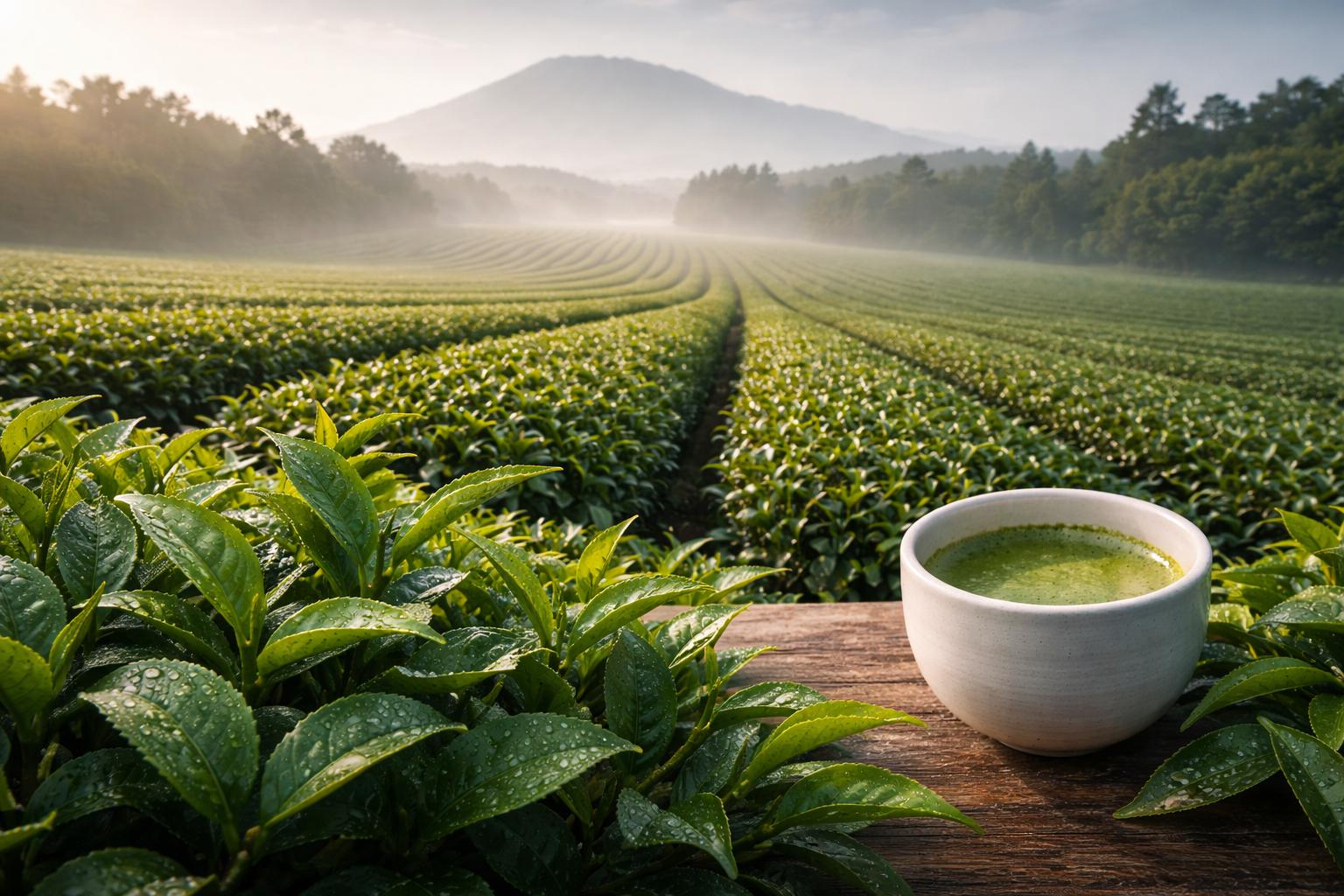
There are geographical reasons why Jeju has earned its reputation as a premium tea-producing region. Hallasan creates sharp temperature variations across the island's mid-mountain areas, while sea fog rolling in from all directions provides natural shading for an average of 25 days a year. That fog shields the tea leaves from direct sunlight, reducing bitterness and bringing out a natural sweetness. Jeju's volcanic soil has exceptionally high porosity and contains ten times more organic matter than ordinary soil. These conditions combine to create an environment well-suited for producing high-quality matcha.
In 2023, Osulloc relocated its secondary processing facility from North Chungcheong Province to Jeju, completing a production chain that now handles everything from leaf cultivation to finished product packaging entirely on the island. It became, in every sense, a genuinely Made in Jeju tea.
What Jeju Green Tea Goes Into
The range of products made from Jeju matcha is wider than most people expect — from Jeju-exclusive items available only at the Tea Museum, to products sold at stores and online nationwide.
Matcha powder is the most straightforward. Deep and clean in flavor, it works well in lattes and milk teas. The Matcha Pavé Sand — a matcha biscuit sandwich filled with matcha chocolate — is one of the Tea Museum's signature souvenirs. Green tea ice cream is one of the best-selling items at the museum and has become something of a ritual for Jeju visitors. The blended tea lineup is also popular: 'Samdayeon Jeju Yonggul', with notes of Jeju cedar and yuzu, and 'Camellia Gotjawal', blending camellia flower and pineapple with black tea, are consistent sellers. Among them, the pear-scented 'Moonlit Walk' generates over 6 billion won in annual sales from a single product.
The Tea Museum also serves matcha noodles — fresh handmade noodles prepared daily using a recipe by Michelin-starred chef Kim Do-yoon, available in three styles: warm broth, cold broth, and mixed. It's a deliberate move to use matcha as a cooking ingredient, not just a drink.
The Tea Museum Becomes a Jeju Essential
Opened in 2001, the Osulloc Tea Museum was Korea's first tea museum. Located in Andeok-myeon, Seogwipo, the building itself was designed in the shape of a tea bowl, set against a backdrop of sweeping green tea fields. Admission is free. The view of the tea fields through the floor-to-ceiling windows has been widely shared on social media, and the museum has long since become a fixture on the Jeju travel itinerary. Visitors walking through the fields with green tea ice cream or green tea roll cake in hand is now a completely ordinary sight.