


Inside a Korean Temple Stay: Dawn Bells, Silence, No Phones
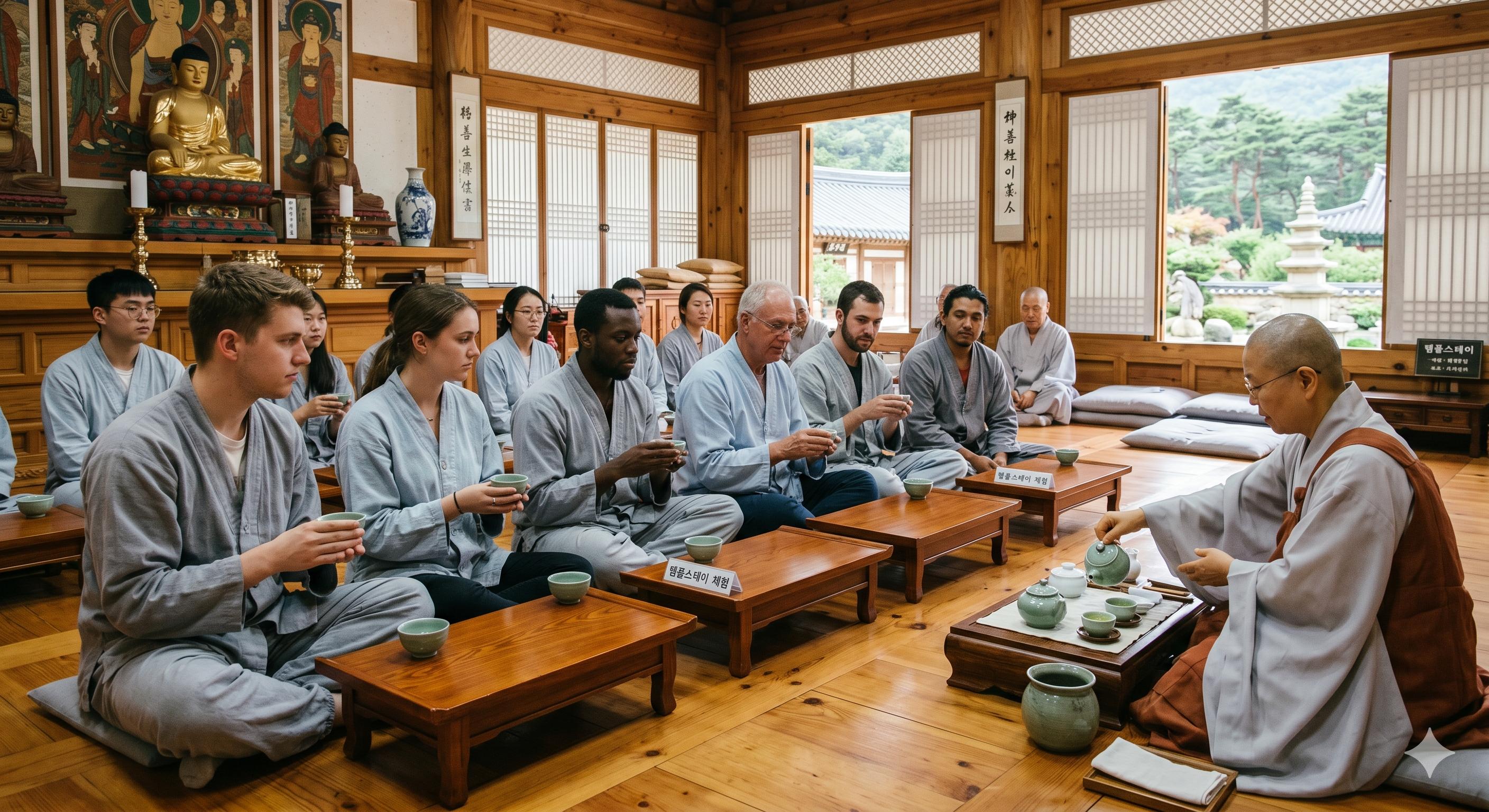
Temple Stay is a traditional cultural experience program where visitors directly experience the daily life of Buddhist practitioners inside Korean
In This Article
Temple Stay Is Not Just Sleeping at a Temple
Temple Stay is a traditional cultural experience program where visitors directly experience the daily life of Buddhist practitioners inside Korean temples.
According to templestay.com, the program is introduced as a traditional cultural experience based on 1,700 years of Korean Buddhist history and the daily routines of monks. It is distinct from ordinary lodging or wellness retreats.
The program began during the 2002 Korea-Japan World Cup as a way to introduce Korean traditional culture to international visitors. It is now operated at 162 temples nationwide. The OECD has previously selected the program as a creative and competitive cultural tourism product.
What the Program Usually Looks Like
Temple Stay programs are generally divided into three formats: one-day programs, experiential programs, and relaxation programs.
One-day programs usually include short experiences such as temple tours, meditation, tea ceremonies, and making lotus lanterns or Buddhist prayer beads.
Experiential programs vary by temple and season, often including barugongyang meals, 108 prostrations, cultural heritage tours, and forest experiences.
Relaxation-style programs allow visitors to spend their free time independently outside of mandatory ceremonies and meals. Specific schedules differ from temple to temple.
The First Shock for Travelers Is the Wake-Up Time
Early morning Buddhist chanting ceremonies mark the beginning of the temple day.
templestay.com describes the dawn ceremony as the ritual that opens the mountain temple’s day alongside the sound of the large temple bell. For foreign visitors accustomed to urban schedules, the timetable itself often feels unfamiliar.
The ceremony is structured as participation rather than observation. Visitors begin the day in the same space and rhythm as the monks themselves.
Barugongyang: A Meal With Nothing Left Behind
Barugongyang is the formal monastic meal ritual conducted with traditional Buddhist bowls known as baru.
templestay.com explains barugongyang as a monk’s dining practice centered on gratitude for food and the principle of avoiding waste.
Participants take only as much food as they need and are expected to leave nothing behind. Vegetarian temple cuisine is typically served.
For many foreign participants, it becomes one of the most unfamiliar — yet most memorable — parts of the experience.
Why Smartphones Become the Hardest Part
Official programs are centered around chanting, meditation, and temple etiquette, naturally reducing smartphone use throughout the stay.
Rules differ by temple, and some locations restrict phone use in certain areas. Not every temple enforces strict confiscation policies.
Among foreign visitors, the experience is often described as a form of digital detox.
Why Foreign Visitors Keep Seeking the Experience
templestay.com describes the program as being open to visitors from all nationalities and cultural backgrounds.
In contrast to Korea travel content centered around K-pop and K-dramas, Temple Stay offers an experience built around slowing down.
Mountain temples, fixed schedules, silence-focused routines, and vegetarian temple cuisine combine into an environment very different from urban tourism.
Interest continues growing among foreign visitors looking for a different way to experience Korea beyond city sightseeing.