


Why Korean Pharmacies Sell So Much Skincare
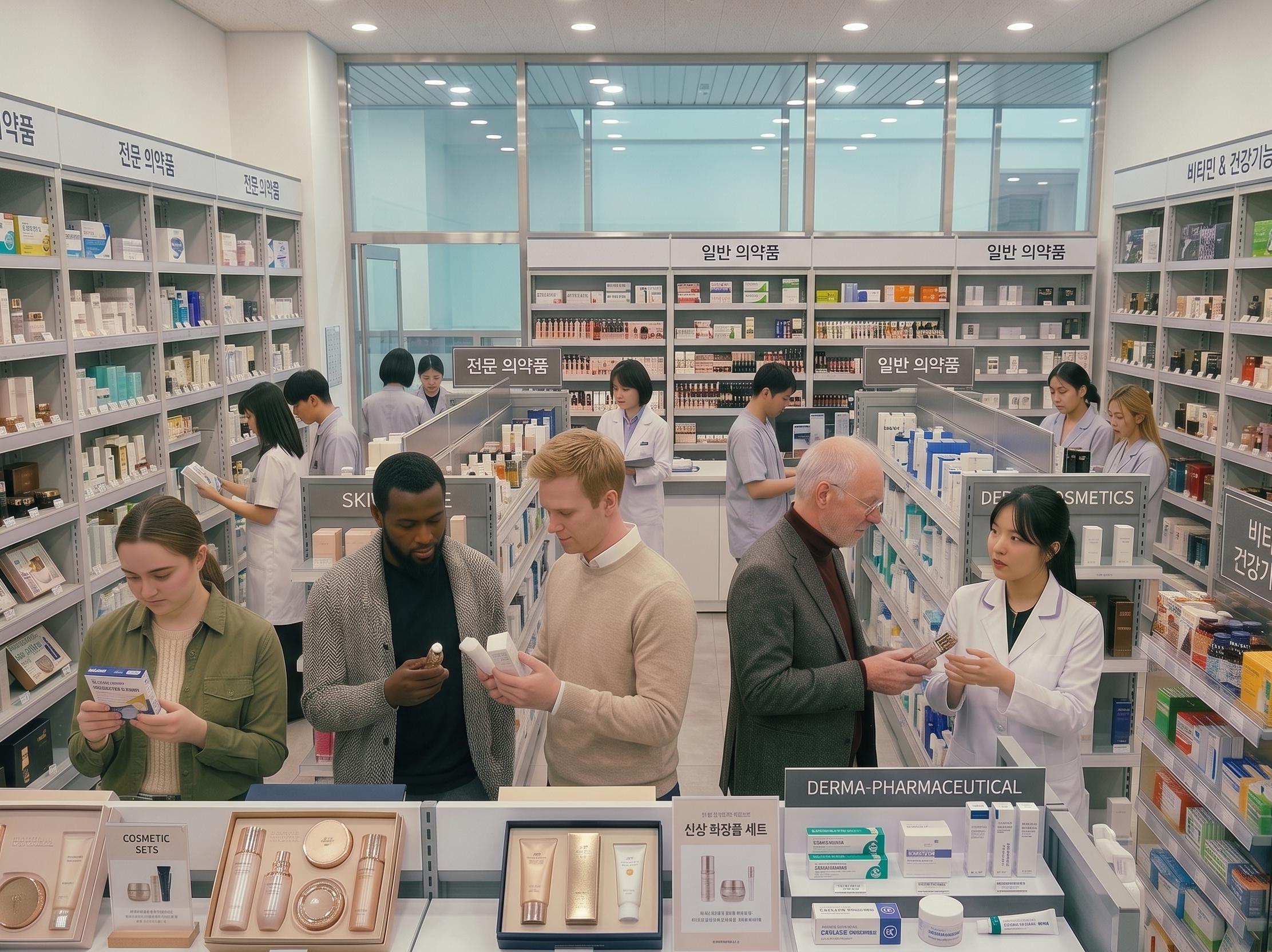
Many foreign visitors experience the same moment of confusion when entering a Korean pharmacy for the first time.
In This Article
Why Do Korean Pharmacies Sell Skincare?
Many foreign visitors experience the same moment of confusion when entering a Korean pharmacy for the first time.
They walk in expecting cold medicine or digestive tablets, only to find that much of the store is filled with skincare products instead. Recovery creams, skin barrier creams, low-irritation sunscreens, cica lines, and derma cosmetic products are displayed alongside medicine.
This structure is not accidental. In Korea, skincare is not viewed purely as a beauty activity. It is often treated more like an everyday health habit that requires consistent maintenance. Managing skin condition is widely considered part of overall self-care and health management.
As a result, buying skincare products in the same place as medicine feels natural to Korean consumers.
Pharmacies near dermatology clinics show this culture most clearly. Patients commonly stop by after treatments to purchase soothing products or recovery creams. Some pharmacies operate almost like post-procedure skincare stores.
What Is “Derma Cosmetics”?
One phrase appears repeatedly inside Korean pharmacies and skincare stores: “Derma Cosmetics.”
The term combines “Dermatology” and “Cosmetics,” referring to functional skincare products associated with medical or dermatological concepts.
In Korea, the term has evolved beyond simple marketing language and become a practical consumer category. Buyers often look for products tested for low irritation, products designed to restore the skin barrier, formulas suitable for sensitive skin, or products safe to use after dermatological procedures.
The derma cosmetics category grew particularly around pharmacies and dermatology clinics. For many foreign visitors, the idea of purchasing skincare inside a pharmacy rather than a cosmetics store can feel unusual. In Korea, however, the category itself developed together with pharmacy culture.
Why Are Recovery Creams and Soothing Products Everywhere?
Recovery creams and soothing products occupy one of the largest sections inside Korean pharmacies.
In Korea, recovery creams are not treated as simple moisturizers. They have effectively become their own skincare category.
One reason is Korea’s highly active dermatology treatment culture. Laser procedures, chemical peels, acne extraction, and microneedling treatments such as MTS are relatively common.
After these procedures, consumers often look for products that calm irritation and support skin recovery. Korean consumers tend to view the entire recovery phase as part of the skincare routine itself. Receiving treatment and purchasing post-treatment skincare products are considered part of one connected process.
As a result, “recovery” and “soothing” became independent demand categories within Korean skincare culture. Beauty enhancement and skin recovery exist inside the same consumer flow, and pharmacies became one of the main retail channels absorbing that demand.
Which Ingredients Catch Foreign Tourists’ Attention?
One ingredient foreign tourists frequently encounter in Korean pharmacy skincare products is madecassoside.
Derived from Centella Asiatica, the ingredient is commonly associated with soothing irritated skin, supporting the skin barrier, and reducing redness. Entire product categories — including cica creams, Centella ampoules, and barrier creams — are built around it.
Korean pharmacies are increasingly becoming part of the beauty-shopping route for foreign tourists. Trust in Korea’s dermatology culture, relatively accessible pricing, and fast product turnover are often cited as reasons for visiting.
Foreign visitors also appear increasingly interested in post-procedure skincare products and derma cosmetic lines specifically. However, precise tourism statistics regarding these purchases remain limited, and much of this trend is currently observed at the anecdotal level.
Why the Line Between Beauty and Medicine Feels Blurred
Understanding K-Beauty requires understanding one important assumption: in Korea, beauty and skin health are not clearly separated concepts.
In many countries, beauty is associated primarily with makeup and appearance styling. In Korea, maintaining skin condition itself is often viewed as the foundation of beauty.
This perspective directly shapes consumer habits. Maintaining the skin barrier, minimizing irritation, and improving skin resilience become everyday skincare goals. Preventive care also plays a major role. Many consumers prefer continuous management that prevents skin problems before they appear.
Pharmacies naturally became part of this structure. Seeing medicine and skincare products inside the same retail space does not feel unusual in Korea.
Korean pharmacies therefore function not only as medicine retailers, but also as one of the distribution channels within the broader K-Beauty ecosystem. For foreign visitors, this unfamiliar scene often becomes one of the clearest windows into how Korean skincare culture actually works.