


K-beauty’s Next Stage: From Skin to Inner Wellness
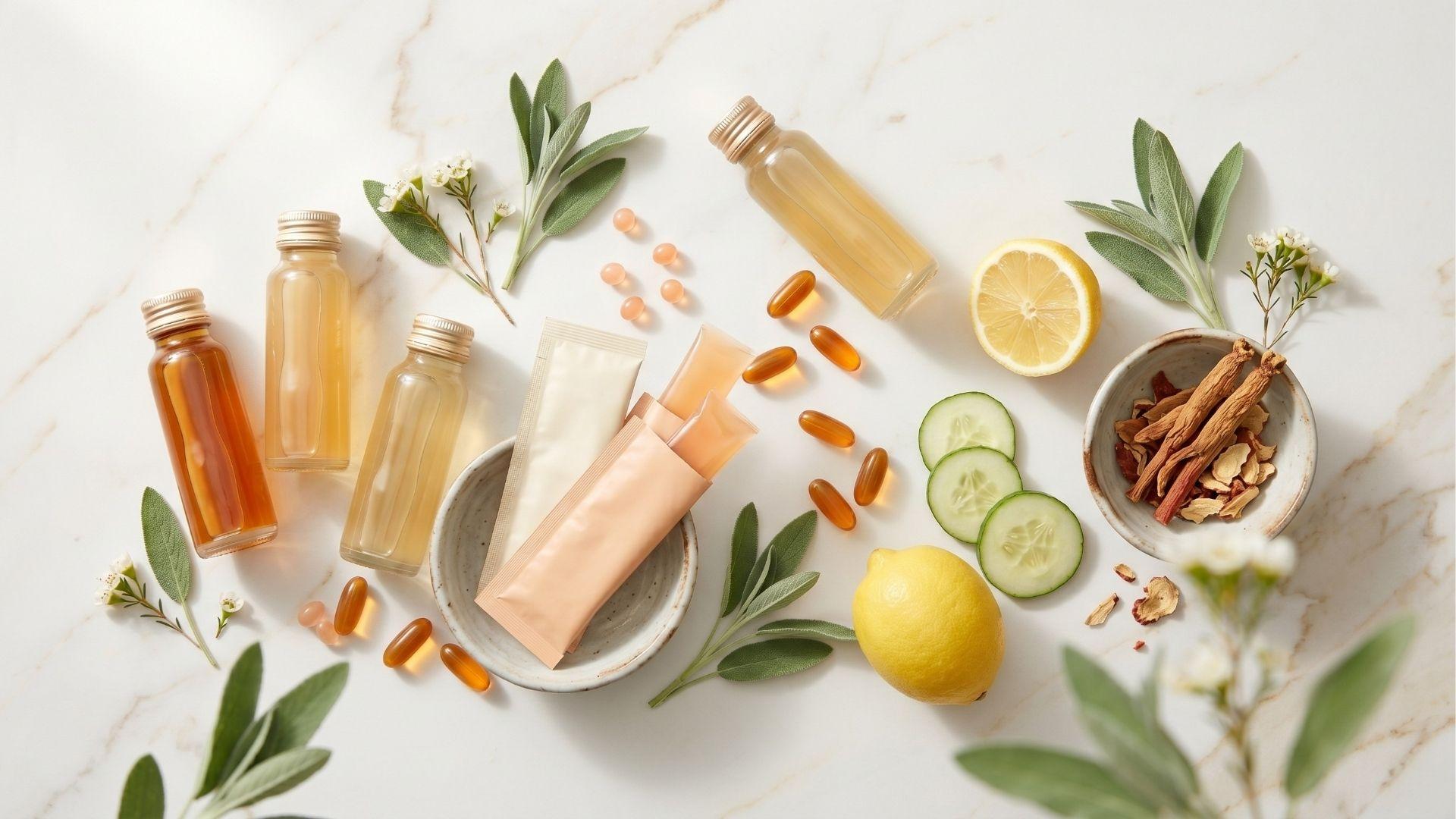
For years, K-beauty has been closely associated with multi-step skincare routines—toners, essences, sheet masks, and sunscreen layered with precision.
In This Article
For years, K-beauty has been closely associated with multi-step skincare routines—toners, essences, sheet masks, and sunscreen layered with precision. That image still defines much of the category, but it no longer tells the full story. In Korea, beauty is increasingly understood as something that begins before anything is applied to the skin.
Korean Beauty Culture Has Always Included What You Consume
The idea that skin reflects internal health is not new in Korea. Traditional Korean medicine has long emphasized the connection between diet, digestion, circulation, and skin condition. What has changed is how this idea has been translated into modern consumer products.
Collagen drinks, probiotic supplements, glutathione products, fermented enzyme supplements, and red ginseng-based wellness items are now commonly found alongside skincare products in Korean beauty retail spaces. In Korea, this category is broadly referred to as inner beauty, and it has grown from a niche segment into a more established part of the beauty market.
Korean consumers increasingly view topical skincare as only one part of a larger system. The logic is straightforward: what is applied to the skin targets the surface, while what is consumed is associated with internal support. Both approaches are seen as complementary rather than separate.
The Products Koreans Are Actually Taking
Collagen drinks and gummies are among the most visible products in the category. The collagen supplement market in Korea has grown steadily in recent years, particularly in ready-to-drink and single-serve formats designed for daily routines. Marine-derived collagen is widely used, often associated with purity and absorption preferences.
Probiotics represent another major segment. The link between gut health and overall well-being is widely discussed in Korea, and probiotic sachets have become a common daily supplement. Brands such as Lacto-fit are widely recognized for convenient single-dose formats designed for everyday use.
Glutathione has gained strong attention in recent years as a beauty supplement ingredient. It is commonly marketed in capsule, drink, and dissolvable strip formats. Products in this category are often positioned around antioxidant support and skin appearance-related benefits.
Red ginseng occupies a distinct category due to its long history in Korean health culture. Rather than being a trend-driven ingredient, it represents a traditional wellness product that has been adapted into modern supplement and beauty-oriented formats.
Where These Products Are Sold
Olive Young has significantly expanded its inner beauty category in recent years. The selection now includes collagen supplements, probiotics, biotin, hyaluronic acid capsules, and combination products designed for daily routines.
Convenience stores in Korea also carry a limited range of inner beauty products, particularly collagen drinks and probiotic sachets. These are often positioned as on-the-go items and may appear in promotional bundles.
Pharmacies generally offer a broader selection of higher-strength or more specialized supplement products. Availability varies by location, but urban and tourist-area pharmacies tend to carry a wider range of wellness-focused items.
The Global Expansion of K-Wellness
K-beauty has become a major global category, particularly in the United States, where it has reached multi-billion-dollar scale in recent years according to industry estimates. Alongside this growth, interest in Korean wellness products is also increasing.
Korean supplement and wellness brands such as BB Lab, Lacto-fit, and Esther Wellness are beginning to expand into international markets through online platforms and global retail channels. This includes marketplaces such as Amazon and social commerce platforms like TikTok Shop, as well as selected offline retail distribution.
The underlying approach behind these products emphasizes prevention and maintenance rather than reactive care. Instead of focusing only on addressing visible skin concerns, the broader philosophy is centered on supporting long-term conditions associated with skin and overall well-being.
K-beauty reshaped how skincare routines are understood globally. The emerging K-wellness trend extends that logic further, suggesting that the routine itself begins much earlier than topical skincare alone.