


Inside Korea’s Clinic-at-Home Skincare System
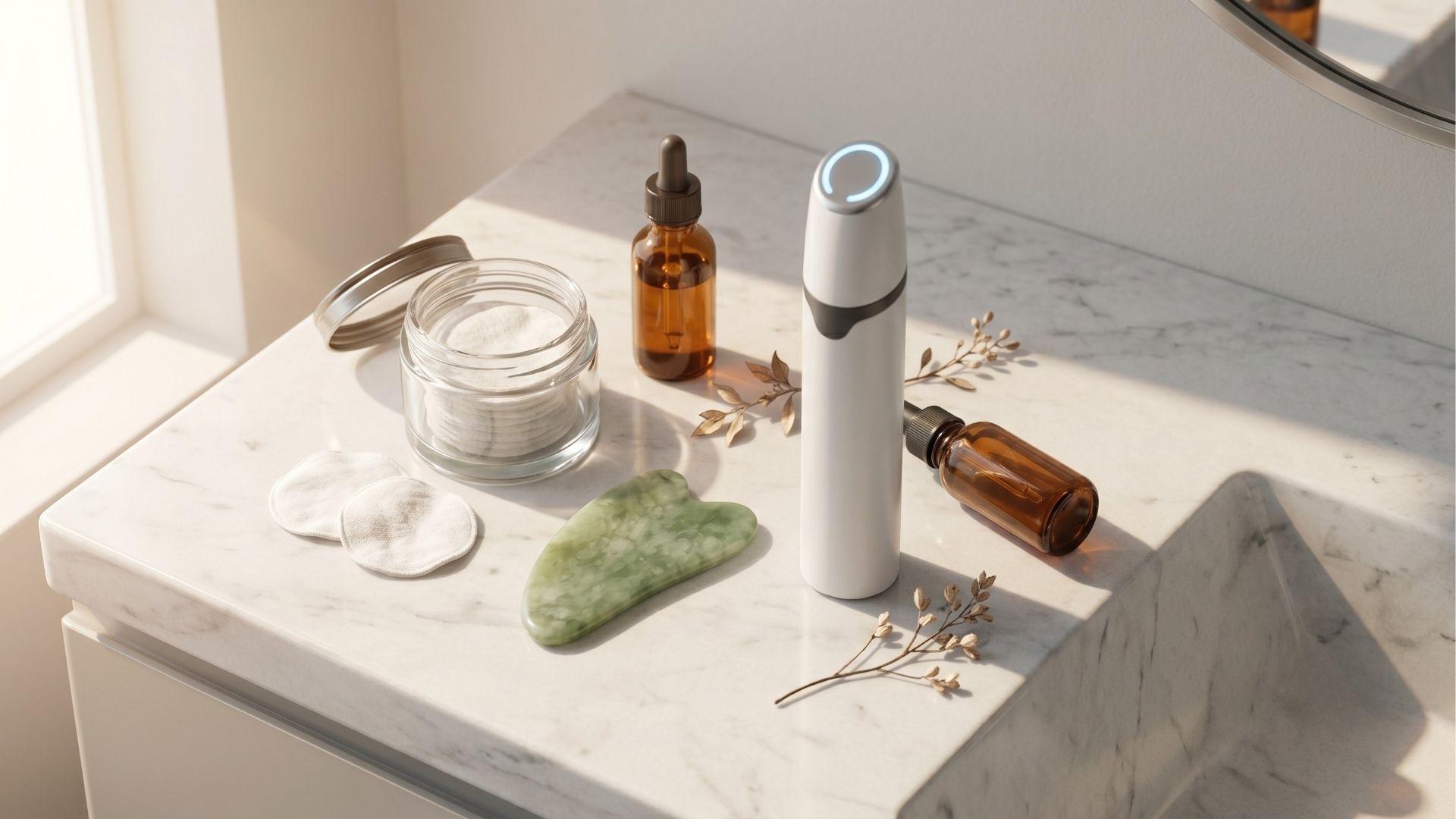
Korean skincare has often evolved alongside dermatology and cosmetic science, sometimes adopting clinic-inspired technologies for at-home use.
In This Article
Korean skincare has often evolved alongside dermatology and cosmetic science, sometimes adopting clinic-inspired technologies for at-home use. While the global perception of skincare once centered on basic routines, Korea has long developed more layered approaches involving barrier care, hydration strategies, and device-assisted routines.
In 2026, the distinction between at-home skincare routines and professional treatments continues to narrow in consumer perception. What was once exclusive to clinics is increasingly being adapted into daily home care practices.
The Philosophy Behind Korean Home Care Is Prevention, Not Correction
A defining principle in Korean skincare culture is maintenance rather than reactive treatment. Instead of addressing visible concerns after they appear, routines are often designed to support skin condition before issues become more noticeable.
In Korean beauty marketing, this approach is sometimes described as “slow aging”, referring to long-term skin maintenance habits rather than quick fixes.
As a result, Korean home care routines often resemble simplified spa-style protocols. Toner pads streamline multiple steps into one application. Manual tools such as gua sha are used for facial massage techniques. Devices provide technology-assisted routines that were once limited to professional settings. Most routines are designed to be completed in a relatively short daily timeframe.
Toner Pads Combine Multiple Steps Into One Format
Korean toner pads are a widely used skincare format that combines convenience with treatment-oriented formulations. Each container typically includes pre-soaked pads infused with toner-like essences that may include hydration, mild exfoliating agents, and selected active ingredients.
Used after cleansing, a single pad can function as a hydrating toner step while also delivering lightweight treatment ingredients. In some routines, pads are also used as short-contact mini masks by placing them on targeted areas of the face.
Commonly used ingredient trends in recent years include soothing botanical extracts such as heartleaf, hydrating agents like multi-weight hyaluronic acid, and various skin-conditioning compounds used in cosmetic formulations. Brands such as Anua, Goodal, and COSRX have helped popularize toner pads internationally as part of Korean skincare routines.
Gua Sha and Facial Rollers as Manual Skincare Tools
Gua sha is a traditional East Asian facial massage technique adapted into modern skincare routines. It typically uses a smooth stone tool to apply gentle pressure along facial contours, often over oils or serums to reduce friction.
In at-home routines, gua sha is commonly used as a facial massage practice that may help temporarily reduce the appearance of puffiness and support relaxation of facial muscles. It is most often used in short morning routines.
Facial rollers offer a simplified alternative that requires less technique and are often used as an entry point into manual facial massage. Both gua sha tools and rollers are widely available in Korean beauty retail channels, including Olive Young.
More recently, variations in materials and shapes have emerged, reflecting ongoing interest in combining traditional-inspired tools with modern design approaches.
Beauty Devices Bring Technology Into At-Home Skincare
One of the most notable developments in Korean home care is the rise of skincare devices designed for at-home use. These tools incorporate technologies such as LED light, microcurrent, radiofrequency (RF), and electrical muscle stimulation (EMS).
Medicube’s AGE-R Booster Pro is one of the most widely recognized examples. It includes multiple modes such as LED-based care, microcurrent, EMS, and additional settings designed to support skincare routines and product application. Some versions connect to mobile applications for usage tracking and guidance.
LED masks are also commonly used in at-home routines. These devices use different wavelengths of light, with red light often associated in dermatological research with skin renewal-related processes, and blue light commonly used in routines targeting acne-prone skin.
LG Pra.L, developed by LG Electronics, represents a technology-driven approach to skincare devices. It applies consumer electronics engineering to at-home beauty tools using RF and EMS-based systems designed for routine maintenance.
These devices vary significantly in price depending on features and functionality, typically ranging from entry-level devices to higher-end models that require a more substantial investment. Many users treat them as long-term personal care tools rather than short-term purchases.
How These Layers Work Together in Daily Practice
Korean home care routines are often structured across three complementary layers: topical products, manual techniques, and technology-assisted devices.
Topical products such as toner pads, serums, and moisturizers provide hydration and active ingredients. Manual tools like gua sha and facial rollers are used for facial massage practices. Devices are used to support skin conditioning routines through various forms of energy-based technology.
These elements are generally not considered replacements for one another. Instead, they are combined depending on individual routines and preferences. A well-formulated product still depends on proper application and skin condition, while devices and tools are typically used to complement topical care.
The Korean approach to home skincare is therefore best understood as a system of layered practices rather than a collection of isolated products. The results are often framed as emerging from the interaction between these different components.