


Bangjja Yugi(방짜유기): Why Korea's Golden Bowl Has Been Used for Over a Thousand Years
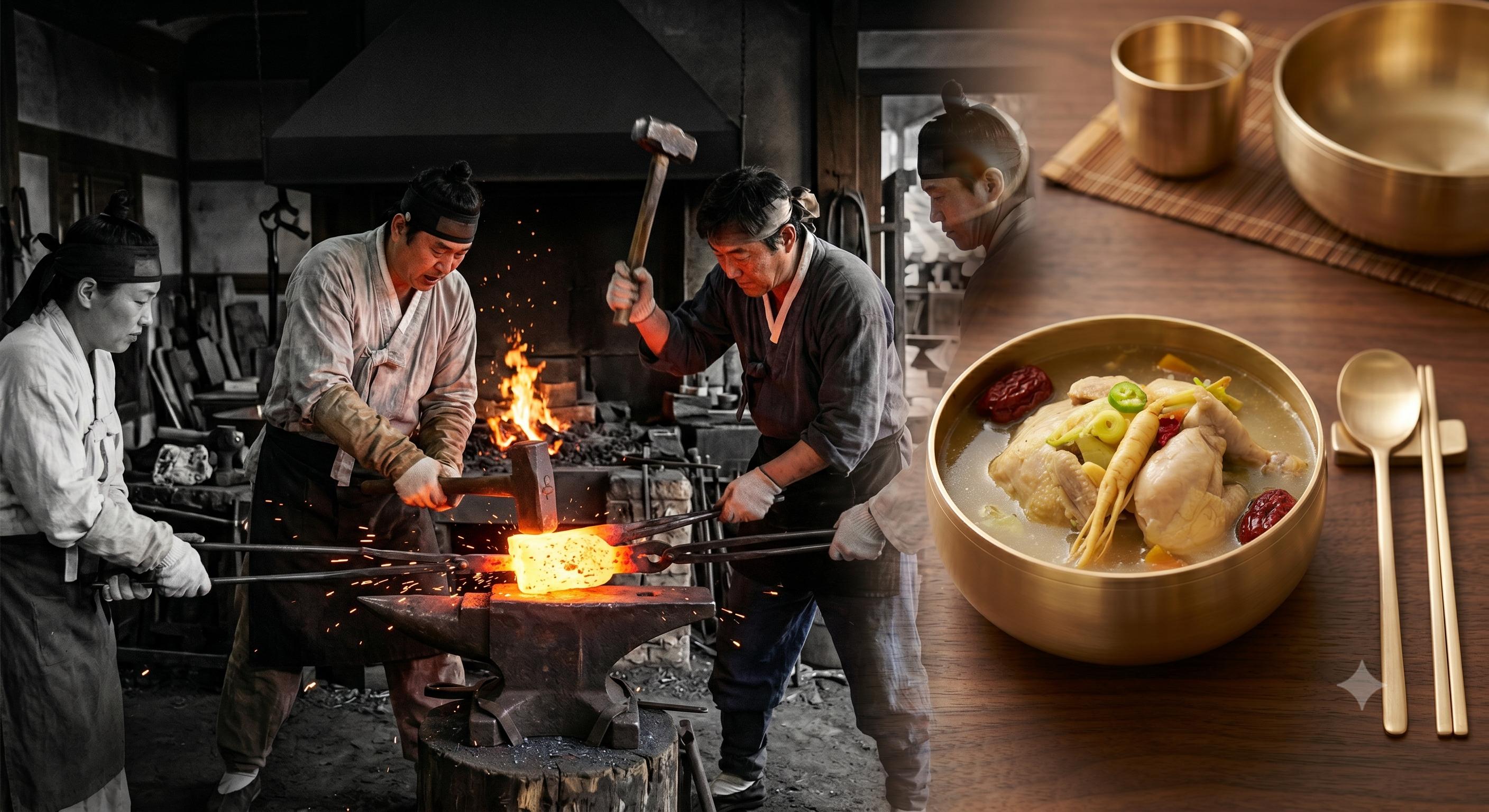
In traditional Korean restaurants, visitors are sometimes served food in unusually heavy bowls with a muted golden shine.
In This Article
The Heavy Golden Bowls Found in Traditional Korean Restaurants
In traditional Korean restaurants, visitors are sometimes served food in unusually heavy bowls with a muted golden shine. Many foreigners assume these are decorative serving dishes. In reality, they are part of a metalworking tradition that has survived in Korea for more than a thousand years.
The name is Bangjja Yugi (방짜유기) — forged Korean bronze ware once used on the tables of the Joseon royal court and now appearing again in modern fine dining restaurants.
The “Unbreakable” Ratio — The Secret of 78 and 22
The defining characteristic of Bangjja Yugi is its alloy ratio: approximately 78% copper and 22% tin.
The metal is heated above 1,200°C and repeatedly hammered into shape by multiple artisans working in rhythm together, a process known as “jilmeok.” Unlike ordinary cast bronze products, Bangjja Yugi is forged entirely through heating and hammering.
In modern metallurgy, this ratio is known for producing unusual material behavior. Bronze with this composition is normally considered brittle and difficult to forge, which is why casting is more common. Bangjja artisans, however, use heat treatment and repeated hammering to create a material that becomes both durable and slightly flexible at the same time.
The process relies heavily on timing, sound, temperature, and the synchronized rhythm of human workers rather than automated machinery. That dependence on human technique remains one of the defining features of the craft.
The Royal Tableware Once Used to Detect Poison
During the Joseon Dynasty, Bangjja Yugi was widely used by the royal court and aristocratic households for practical reasons as well as status.
According to historical accounts, the surface of the bowl was believed to darken when exposed to toxic or spoiled substances, allowing it to function as a form of poison detection on royal dining tables. This was part of actual court dining practices, not merely folklore. However, the precise scientific relationship between discoloration and toxin detection still requires modern verification.
Some modern laboratory tests have confirmed other properties associated with Bangjja Yugi. Studies and demonstrations have reported antibacterial effects against pathogens such as E. coli O-157 and Vibrio bacteria over several hours. The bowls are also known for thermal conductivity that helps retain both heat and cold efficiently.
Soup remains warm longer, while chilled dishes stay cool. That balance of practicality and craftsmanship is one reason the metalware survived on Korean dining tables for centuries despite the rise of stainless steel and plastic.
From Royal Cuisine to Michelin-Star Restaurants
Bangjja Yugi is still commonly found in high-end Korean restaurants today. Its heavy weight and muted golden color are often associated with refinement and formality in Korean dining culture.
In recent years, examples of Bangjja Yugi appearing in Michelin-starred restaurants in cities such as New York and Paris have also been reported. Chefs have shown interest in the visual contrast created when modern Western fine dining is served in traditional Korean bronze ware.
The bowls are also gaining attention for their sound. When struck lightly, Bangjja Yugi produces a long, clear resonance that some people compare to singing bowls used in meditation practices.
The Artisans Keeping the Craft Alive
Bangjja Yugi remains difficult to mass-produce. The process requires experienced artisans, physically demanding labor, and long production times.
Today, traditional workshops continue mainly in parts of Chungcheongnam-do and a small number of specialized craft studios across Korea. In Seoul’s Insadong district, visitors can still see and handle Bangjja Yugi products in person.
Recently, the craft has also expanded into modern lifestyle design. Contemporary versions now include bronze cups, dessert bowls, café tableware, and minimalist interior objects aimed at younger consumers.
What began as royal tableware has gradually evolved into both a luxury dining object and a living example of Korea’s traditional metallurgy.