


Korea's Four Native Dog Breeds
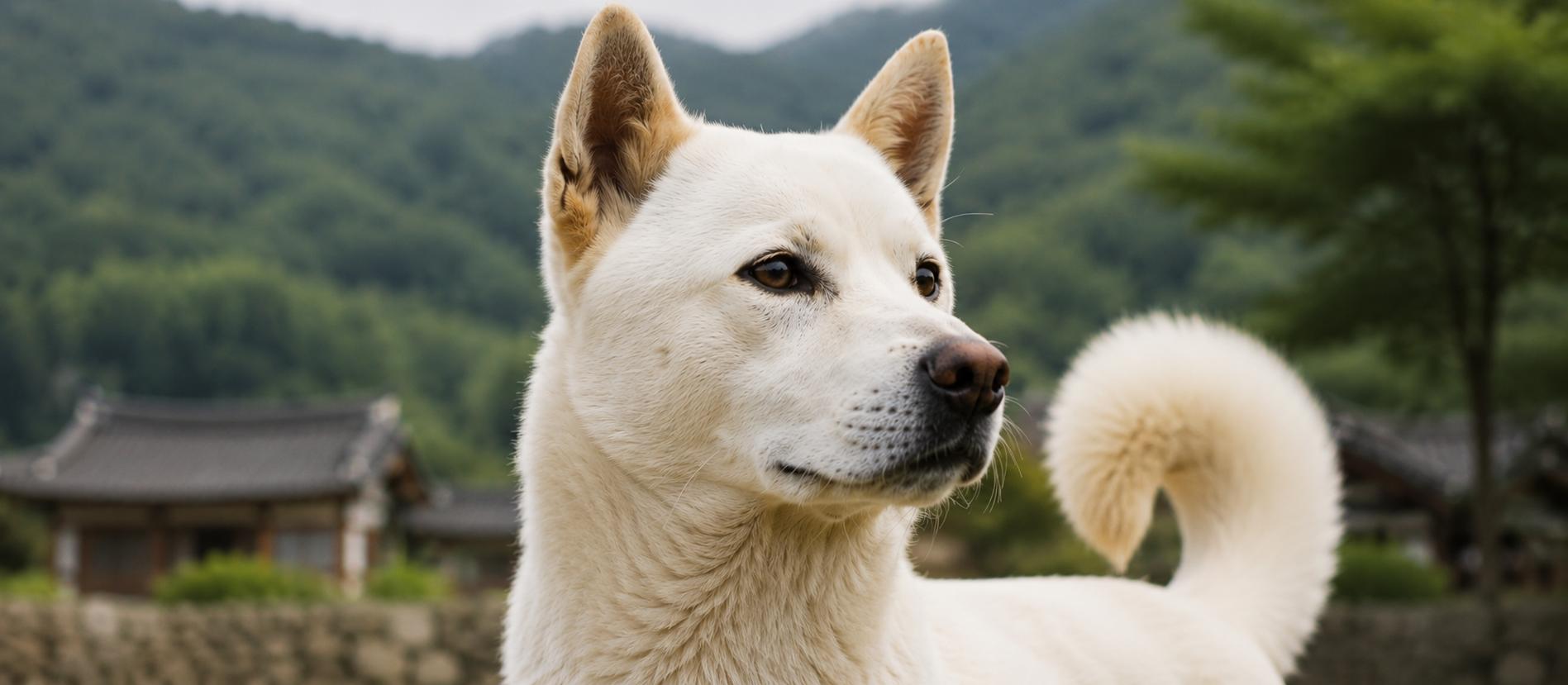
Korea has dog breeds that have lived alongside its people for thousands of years. The Jindo, Pungsan, Sapsali, and Donggyeongi — all four are designated national natural monuments…
In This Article
Korea's Native Dog Breeds
Korea has dog breeds that have lived alongside its people for thousands of years. The Jindo, Pungsan, Sapsali, and Donggyeongi — all four are designated national natural monuments, and each carries a distinct appearance, temperament, and history. In a pet market now dominated by foreign breeds, these dogs remain rooted in Korean history and culture in a way that no imported breed ever could be.
Jindo — Korea's Most Celebrated Dog
The Jindo originates from Jindo Island off the southwestern coast of South Korea. The island's geographic isolation kept the breed's bloodline relatively pure for centuries, with little crossbreeding from outside. It is designated Natural Monument No. 53, and is the only Korean dog breed to have received international recognition.
Jindos are known for their loyalty, intelligence, and courage. They are famously devoted to a single owner — so much so that when ownership changes, they often refuse to adapt and will attempt to return to their original home. Stories of Jindos walking hundreds of kilometers back to their first owners have been documented and passed down over generations. Their hunting instincts are also strong; they have historically been used as skilled hunting dogs, capable of taking down prey far larger than themselves.
Pungsan — The Dog from North Korea
The Pungsan originates from the Pungsan region of South Hamgyong Province, in what is now North Korea. If the Jindo is the representative dog of the South, the Pungsan holds the same position in the North. The parallel is so well established that it has become a kind of shorthand: one country, two dogs. At a historic inter-Korean summit, North Korea presented the South with a pair of Pungsan dogs as a gift — a gesture significant enough to make international news.
The Pungsan is a large, powerfully built breed that was developed for hunting in the harsh mountain terrain of northern Korea. It is said to have been bold enough to track tigers — a claim that speaks to the conditions it was bred for. Despite its fierce reputation in the field, it is generally gentle with its owner. One distinctive physical trait: even in adulthood, its ears remain slightly folded rather than fully erect.
Sapsali — The Ghost-Chasing Dog
The name Sapsali carries its meaning directly: "sal" (煞) refers to bad luck or evil energy, and "sap" (揷) means to drive it away. The dog that chases away spirits. For centuries, Koreans kept Sapsali in their courtyards believing the breed would ward off malevolent forces and protect the household. It is designated Natural Monument No. 368.
The Sapsali's appearance is immediately distinctive. Its entire body is covered in long, dense fur that frequently falls over its eyes entirely. Old texts compared it to a lion — a reference to its large, shaggy head. Despite its imposing look, the breed is loyal and courageous. During the Japanese colonial period, Sapsali were killed in large numbers for their fur, bringing the breed close to extinction. Recovery efforts in the decades since have brought them back, but the near-loss remains part of the breed's history.
Donggyeongi — The Tailless Dog of Gyeongju
The Donggyeongi comes from Gyeongju, the ancient capital of the Silla Kingdom, and is designated Natural Monument No. 540. Its most immediately recognizable feature is its tail — or rather, the absence of one. Donggyeongi are born with either no tail at all or an extremely short one. This is not the result of docking; it is a natural genetic trait that the breed has carried for over a thousand years. Clay dog figurines excavated from sixth-century Silla tombs show the same bobtail profile, placing the breed firmly within Korea's ancient history.
DNA analysis has shown that the Donggyeongi and the Jindo separated from a common ancestor approximately 900 years ago. Unlike most other Korean native breeds, the Donggyeongi tends to be relatively open toward people and adapts more readily to human interaction. It is the smallest of the four native breeds and, aside from its missing tail, closely resembles the Jindo in appearance.