


Seoul Now Has a River Bus. Here's How to Use It.
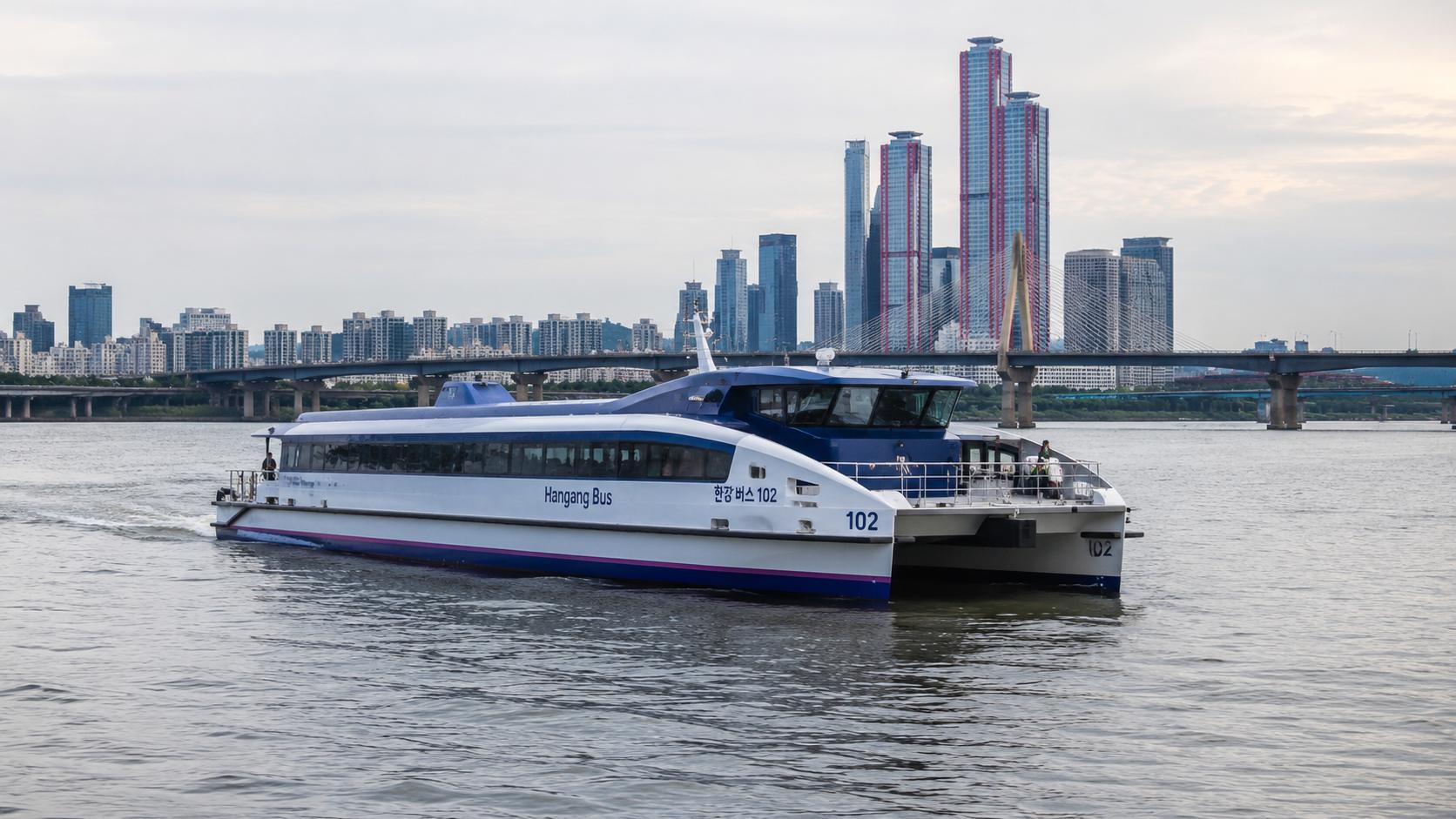
Seoul added a new mode of public transport in September 2025: a ferry service running along the Han River from Magok in the west to Jamsil in the east.
In This Article
Seoul added a new mode of public transport in September 2025: a ferry service running along the Han River from Magok in the west to Jamsil in the east. It is called the HANGANG BUS (한강버스), and it is exactly what it sounds like — a bus that travels by water. For visitors to Seoul, it is also one of the more unusual ways to see the city.
What the Han River Bus Actually Is
The Hangang Bus is an electric-powered ferry service introduced by the Seoul city government along a 28.9-kilometer stretch of the Han River. It connects seven stops — called piers or SEONCHAKJANG (선착장) — running from Magok in the west through Mangwon, Yeouido, Apgujeong, Oksu, Ttukseom, and Jamsil in the east.
The service launched officially on September 18, 2025, after a summer trial period. The vessels were introduced as environmentally friendly ferries designed to reduce emissions compared to conventional river transport. Seoul positioned the service as both a commuter transport option and a leisure and tourism experience — a combination that makes it practical for locals while also offering visitors a different way to experience the city.
As of March 2026, the route operates as two separate lines: an eastern line running between Jamsil and Yeouido, and a western line between Magok and Yeouido. Each line currently operates multiple daily services.
The Route and Stops
The seven piers along the route each sit alongside Han River parks, making them natural starting or ending points for a riverside walk, a cycling trip on a rented TTAREUNGI (따릉이) bike, or a picnic. Public bike-share stations are located at every pier, and connecting bus routes link most piers to the nearest subway station.
Yeouido is the central hub where the eastern and western lines meet, making it the most convenient boarding point if you want to travel in either direction. From Yeouido, you can reach Jamsil — the departure point for Lotte World and the Olympic Park area — or head west toward Mapo and eventually Magok, near Seoul's newer business districts.
The river journey itself is the point. From the water, Seoul looks different — the skyline, the bridges, the parks along the banks. It is a perspective that is simply not available from the road.
How to Use It
No advance booking is required. The Hangang Bus operates like standard public transport — arrive at the pier, tag your transit card or purchase a ticket at the pier terminal, and board when your vessel arrives. Numbered tickets are distributed at the pier for busier periods, so arriving a few minutes early is advisable on weekends.
Cash payment is generally not accepted. A T-money transit card, a credit or debit card with transit functionality, or Seoul's climate card (GIHUDONGHAENG CARD, 기후동행카드) all work at the terminal. The Hangang Bus is integrated into Seoul's standard transit system, which means transfers from subway or bus within a set time window are eligible for the standard transit discount.
Operating hours are generally from around 10:00am to between 8:00 and 9:00pm, though schedules vary by route and day of the week. Check the official Hangang Bus website before visiting to confirm the latest timetable.
Fares and Payment
The standard adult fare is 3,000 won per boarding. Youth fares (ages 13 to 18) are 1,800 won, and children (ages 6 to 12) pay 1,100 won. These rates are comparable to Seoul's express bus fares and are considerably cheaper than tourist cruise alternatives on the same river.
Holders of the Gihudonghaeng Card — Seoul's integrated climate-friendly transit pass — can ride the Hangang Bus at no additional cost, as it is included in the card's coverage. The 30-day pass costs 67,000 won without bike share and 70,000 won with unlimited Ttareungi access included. For visitors staying in Seoul for a week or more and using public transit frequently, the card can represent significant savings.
Tips for Visitors
The Hangang Bus is most useful as a leisure trip rather than a point-to-point commute for visitors. A full end-to-end journey can take well over an hour depending on stops and operating conditions, offering extended views of the river and city that no other transit option provides.
Weekday mornings and afternoons are quieter. Weekends and public holidays draw larger crowds, particularly at Yeouido and Jamsil. If you plan to combine the ferry with a Han River picnic — ordering delivery food to the park via an app, which is standard practice in Seoul — the Ttukseom and Yeouido piers have large riverside parks directly adjacent to their boarding points.
The official Hangang Bus website provides route maps, schedules, and service updates in both Korean and English. Route maps, real-time vessel location, and up-to-date schedules are all accessible there before or during your visit.