


Why Travelers Are Flying to Seoul Just to Find Their Perfect Color
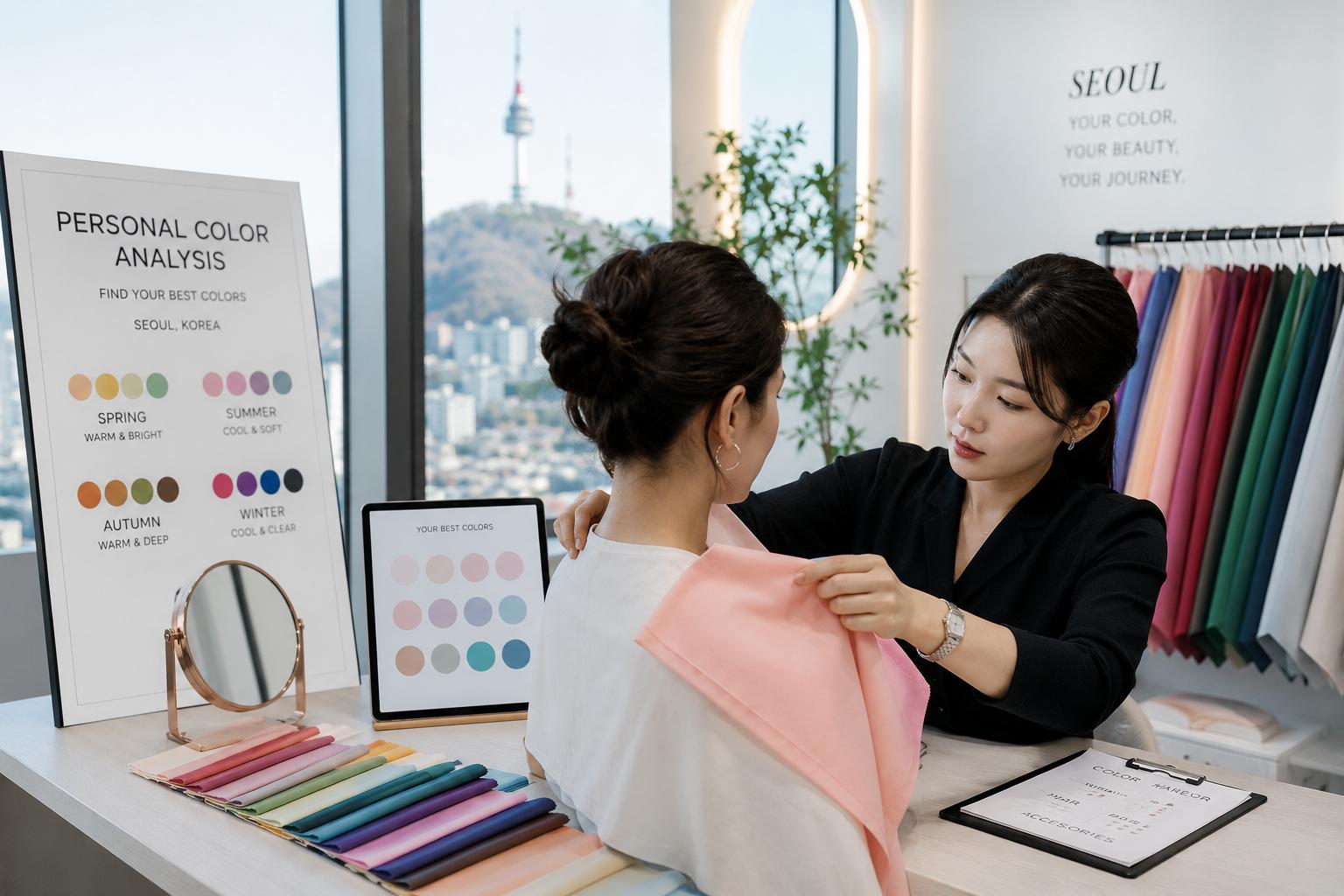
Outside personal color diagnosis shops across Seoul, foreign tourists wait in line. Appointments are fully booked weeks in advance.
In This Article
Outside personal color diagnosis shops across Seoul, foreign tourists wait in line. Appointments are fully booked weeks in advance. What they travel to Korea to experience is not simply a color recommendation — it is data about how to look their best.
Personal color analysis examines an individual's unique physical characteristics — skin tone, eye color, and hair color — to determine which color families suit them best. Results are categorized into four seasonal types (Spring, Summer, Autumn, Winter) and divided into cool and warm tones. A trained consultant drapes dozens of colored fabrics against the client to determine their type. A session typically takes one to two hours.
Pricing varies by package. Group sessions for two to three people run approximately 40,000 to 70,000 KRW per person. One-on-one standard consultations range from 80,000 to 120,000 KRW. Full styling packages that include makeup and body frame analysis can exceed 150,000 KRW. On average, most sessions fall between 50,000 and 150,000 KRW per person, depending on the consultant's experience and the scope of the analysis.
Why Korea, Specifically
Personal color theory itself developed in the United States during the 1980s. What Korea did was integrate it into popular culture and scale it into a recognizable industry.
K-pop artists began publicly sharing their personal color results and incorporating them into their styling choices. As fans followed, the practice spread rapidly. When an idol reveals they are a "cool-tone Summer," fans visit diagnosis shops to find out whether they share the same type. TIME reported that personal color analysis going viral has been a contributing factor in Korea's tourism boom.
Layered onto this is Korea's longstanding cultural emphasis on appearance and image. In Korean society, how one presents oneself has long been understood as part of social competitiveness. Personal color became a tool for scientifically defining one's "optimized style." The Journal of the Korean Fashion Design Association (Vol. 19, No. 2) describes this as a phenomenon linked to a desire to move beyond passively following trends and toward building a personal brand.
How One Diagnosis Changes How You Shop
There is data suggesting that personal color diagnosis meaningfully affects consumer behavior. Approximately 78% of people who have undergone a diagnosis reported greater satisfaction with their purchases afterward, according to K-Trendy News. Having a clear standard — "I won't buy colors that don't match my tone" — reportedly reduces impulse purchases and increases confidence in decision-making.
The industry has adapted quickly. Major beauty retailers such as Olive Young have standardized product displays by cool and warm tones. Beauty brands have segmented their lineups by lightness and saturation, and have begun using diagnosis data to develop AI-based personal color recommendation algorithms, according to K-Trendy News. Consumer diagnosis results are feeding directly into brand product strategy in real time.
A Diagnosis That Became a Tourist Attraction
According to reporting by Maeil Business Newspaper (April 14, 2024), some personal color diagnosis shops in Korea are now receiving over 1,000 foreign visitors per month. Tourists from Japan, Southeast Asia, North America, and elsewhere have begun including personal color consultations as a core part of their Seoul itinerary.
MBC every1's Welcome, First Time in Korea? (EP.396) featured foreign visitors experiencing a personal color diagnosis for the first time. The episode captured their reactions to both the process and the results. This segment is frequently referenced as an example of growing international interest in the practice. (Specific viewer responses depicted in the episode would require direct verification.)
For many visitors, the diagnosis has moved beyond a simple experience to become a purpose of travel itself. The results often lead directly into beauty and fashion shopping in areas like Myeongdong, Seongsu, and Hongdae — creating a connected consumer circuit that has contributed to rising sales in related sectors.
When Color Starts Driving Consumer Choices
Observers note that personal color is expanding beyond beauty into fashion, fragrance, and interior design. Analysis from K-Trendy News suggests that color has become a meaningful variable influencing economic decisions among Korean consumers. As the idea that knowing one's type leads to better purchasing choices becomes more established, personal color appears to be developing into something beyond a passing trend — a functioning infrastructure within Korean consumer culture.