


Why Korea’s Giant Bakery Cafés Are Taking Over the Experience Economy
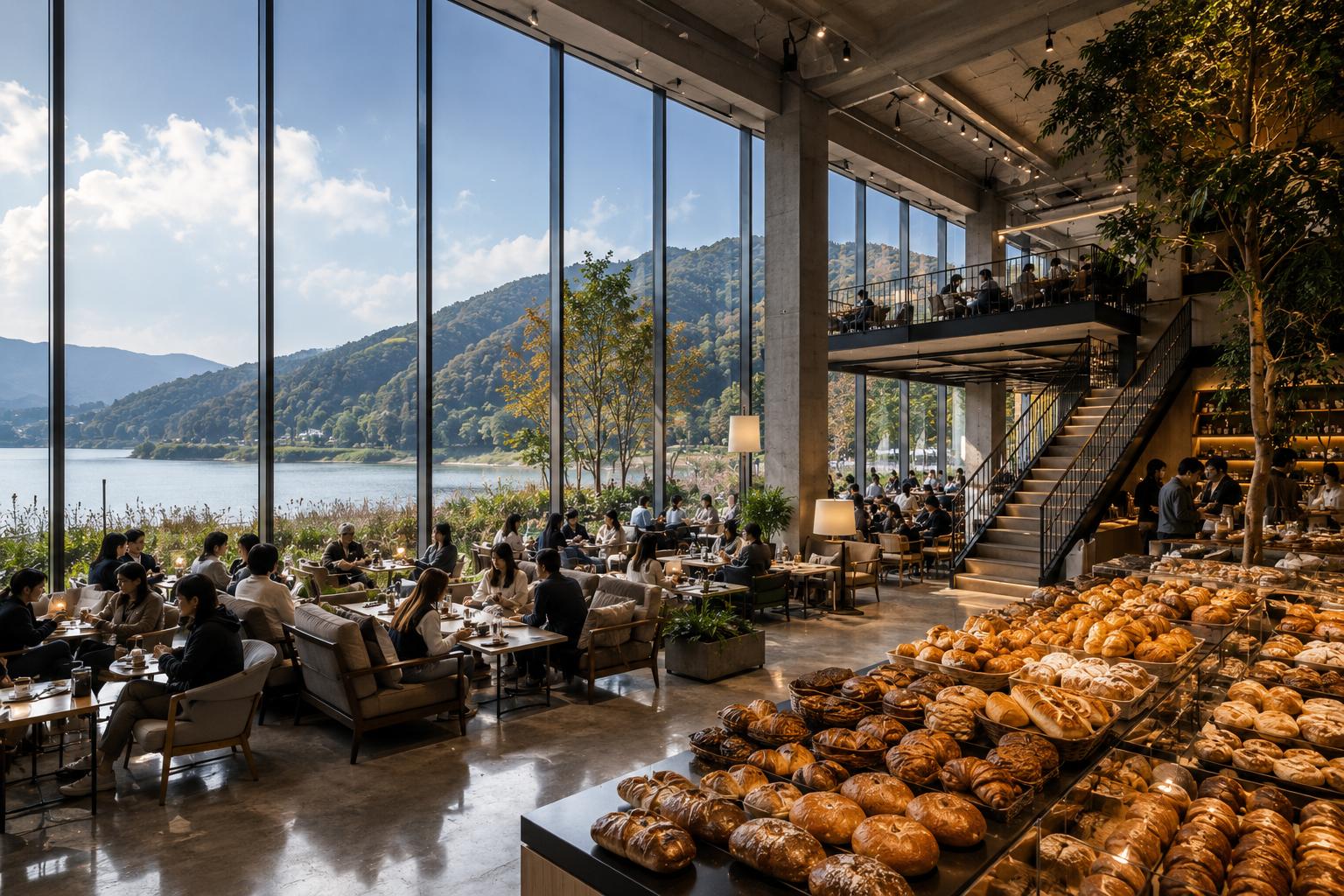
On weekends, many Koreans head to the outskirts of the city — not for a hike or a scenic village, but for a café.
In This Article
On weekends, many Koreans head to the outskirts of the city — not for a hike or a scenic village, but for a café. A very large one.
Stepping inside, visitors are greeted by the scent of freshly baked bread, soaring ceilings, and floor-to-ceiling windows that open onto gardens or countryside views.
Over the past several years, one of the most visible trends in Korea's food and beverage industry has been the rise of the large-format bakery café. These are no longer simply places to eat and drink — they have become destinations in their own right, functioning as cultural spaces that draw visitors from across entire regions.
Why has this particular format taken hold so strongly in Korea, growing from a trend into something closer to a new standard? At the center of the answer are two ideas: the drive, and the consumption of space.
A New Kind of Day Trip Built Around the Drive
Korea's large bakery cafés are rarely located in city centers. Instead, they tend to appear on the outskirts of towns, along riversides, or at the foot of hills — places that require a deliberate journey to reach. This positioning connects directly to a broader cultural shift in how Koreans approach short leisure trips.
The concept known informally as a shortcation — a brief, nearby getaway as an alternative to longer travel — has become a recognizable part of contemporary Korean leisure culture. For people who want a change of mood without the cost or time commitment of a full trip, a café an hour or two outside the city offers an efficient and satisfying answer.
Infrastructure plays a significant role as well. Large bakery cafés almost always provide generous parking, a feature that matters considerably in a country where car ownership is widespread. The availability of easy parking in a thoughtfully designed suburban setting often gives these cafés a practical edge over smaller city locations.
Consuming Space, Not Just Coffee
If earlier generations of Korean cafés were primarily places to drink coffee, today's large bakery cafés operate around a different premise: the space itself is the product.
Visitors are not paying solely for what is in their cup. They are paying for the interior design, the landscaped gardens, the architectural details, and the overall atmosphere — an environment curated to be visually and emotionally distinct from everyday urban life.
The scale and design of these spaces also carry social meaning. In a culture where shared visual documentation of daily life is widespread, a dramatic interior or a carefully tended garden functions as a setting — a backdrop against which a particular image of leisure and refinement can be captured and shared. The café visit becomes a statement as much as an experience.
Why Bakery? The Strategy Behind the Bread
As cafés grow in physical scale, sustaining them on beverage sales alone becomes increasingly difficult. Operating large properties — whether in terms of land, construction, or staffing — requires a more diversified revenue approach. Bakery offerings provide a practical solution.
Freshly baked goods increase the average amount a customer spends per visit. Rather than leaving with a single drink, customers are likely to add bread, pastries, or a small meal to their order, raising the overall value of the transaction.
Bakery items also encourage customers to stay longer. When a café can serve as a light meal destination rather than just a coffee stop, visitors tend to linger. Longer visits generally correlate with higher satisfaction, and satisfied visitors are more likely to return — or to recommend the place to others.
The Bigger the Rest, the Bigger the Relief
The large bakery café format did not emerge in isolation. It reflects something specific about the conditions of contemporary Korean life: the density of urban environments, the pressures of a competitive social atmosphere, and the ongoing search for spaces where slowing down feels genuinely possible.
A café with expansive interiors and views of open land offers something that the city often cannot — a physical sense of release. The size of the space signals, in some tangible way, that there is room to breathe.
In this sense, the success of large bakery cafés is about more than business strategy or food trends. It reflects a broader pattern in how Korean society is currently navigating the relationship between daily pressure and the need for rest — and how much physical space people feel they need around them to experience that rest as real.
The steady stream of weekend drivers heading toward a vast café on the outskirts of the city suggests that, for now at least, bigger continues to feel better.