


SIKHYE(식혜): The Sweet Rice Drink Koreans Always Order at the Jjimjilbang
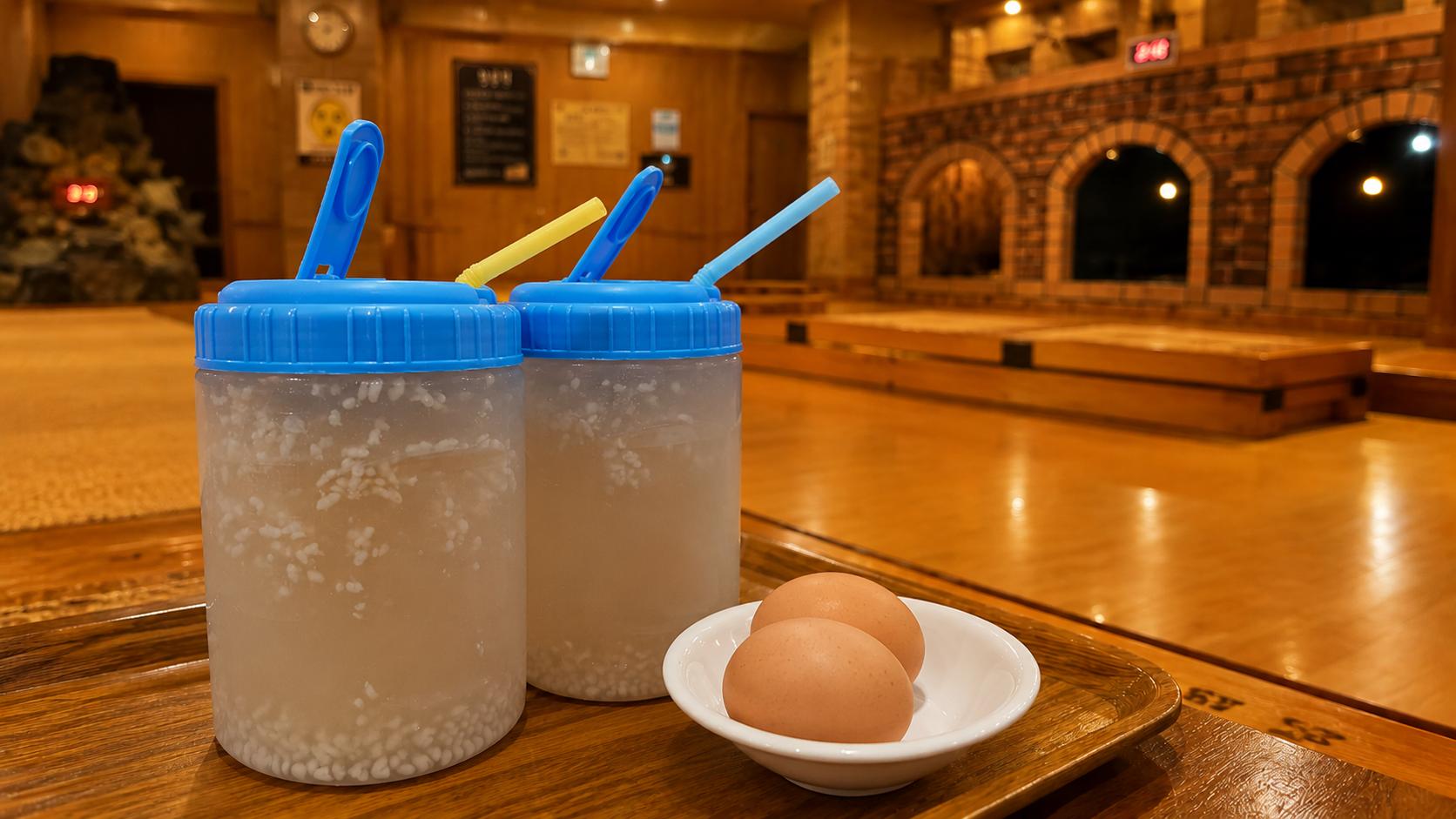
Walk into any Korean JJIMJILBANG (찜질방) — a public sauna and bathhouse — and within minutes you will see it.
In This Article
Walk into any Korean JJIMJILBANG (찜질방) — a public sauna and bathhouse — and within minutes you will see it. A cold cup of something pale yellow, sweet, with a few grains of rice floating at the bottom. People drink it sitting on the heated floor, wrapped in matching cotton uniforms, doing nothing in particular. The drink is SIKHYE (식혜), and in Korea, it is as inseparable from the jjimjilbang as the heat itself.
The Drink That Belongs to the Jjimjilbang
There are foods that exist everywhere but belong somewhere specific. Sikhye belongs to the jjimjilbang. You can buy it in cans at a convenience store, find it at holiday tables, and make it at home — but the version that most Koreans remember is the one drunk cold from a plastic cup while still sweating from the sauna, sitting on warm floors in a room full of strangers doing exactly the same thing.
It is one of those combinations — the place and the food — where neither fully makes sense without the other. Koreans who have spent time in a jjimjilbang will tell you that sikhye after the sauna hits differently than sikhye anywhere else. The contrast between the heat of the body and the cold sweetness of the drink is part of what makes it work.
What Sikhye Actually Is
Sikhye is a traditional Korean sweet rice beverage. It is made by combining cooked rice with malt water — water steeped with sprouted barley — and allowing enzymes in the malt to naturally break down the rice starches over several hours at a warm temperature.
The result is lightly sweet, faintly grainy, and unlike most drinks commonly found in Western food culture. It is not a juice, not a tea, not a dessert soup. It sits in its own category — a drink that is also almost a food, cold and clean with a quiet sweetness that does not overwhelm.
The small grains of rice floating in the cup are not accidental. They are a deliberate feature. Part of the pleasure of sikhye is scooping up a few grains with each sip. The texture is soft, barely there, and adds something to the drinking experience that the liquid alone does not provide.
Why It Tastes Like It Does
Sikhye is sweet without being heavy. Part of its sweetness comes from the enzymatic breakdown of rice starches, which gives the drink a lighter and cleaner taste. The sweetness fades quickly on the palate rather than lingering, which is part of why sikhye works so well after a heavy meal or a long sauna session.
Some versions are flavored with ginger, which adds a faint warmth and spice that balances the sweetness. Others use pumpkin or other ingredients. But the classic version — plain, pale yellow, cold, with floating rice — is the one most Koreans picture when they hear the word sikhye.
Sikhye at the Holiday Table
The jjimjilbang is not the only place sikhye belongs. At CHUSEOK (추석) and SEOLLAL (설날) — Korea's two major traditional holidays — sikhye appears on the table alongside SUJEONGGWA (수정과), a cinnamon and persimmon punch, as a traditional after-meal drink.
After a holiday meal that typically involves hours of cooking and multiple heavy dishes, sikhye serves a specific purpose. Its mild sweetness and light body make it a natural palate cleanser. It signals the end of the meal without adding weight to an already full table. In Korean food culture, where the progression of a meal is carefully considered, sikhye at the end of a holiday spread is a quiet but deliberate choice.
For many Koreans, the taste of sikhye is tied directly to these holiday memories — the crowded family table, the aftermath of a long day of cooking and eating, and the moment when the meal finally winds down and something cold and sweet is passed around.
Why This Drink and This Place Found Each Other
The pairing of sikhye and the jjimjilbang is not a marketing decision. It makes physical sense. After spending time in a hot sauna, the body craves something cold and sweet. Sikhye is both. Its light sweetness replenishes energy without feeling heavy, and the cold temperature provides immediate relief after the heat.
The jjimjilbang is also a space built around doing nothing slowly. Koreans go there not to rush but to rest — lying on heated floors, moving between different temperature rooms, spending hours in a state of deliberate stillness. Sikhye fits naturally into that slower rhythm. It is not a drink you gulp. You hold the cup, take slow sips, and let the sweetness settle.
In most Korean jjimjilbangs, sikhye is available at a small snack counter alongside GYERAN (계란) — hard-boiled eggs — and other simple snacks. These are the unofficial foods of the jjimjilbang, and sikhye is usually the centerpiece of that small menu.
A Simple Drink That Carries a Lot of Memory
Sikhye is not a complicated drink. The ingredients are humble — rice, barley malt, water, a little sugar. The flavor is gentle. It does not announce itself. And yet it keeps appearing at the moments Koreans remember most clearly: the jjimjilbang trip with family, the holiday meal that went on too long, the winter evening when someone passed around a cold cup at the end of a warm gathering.
That is the pattern with Korean comfort foods. The ingredients are simple, the taste is familiar, and the memory attached to it is the point. Sikhye is not remarkable for what it contains. It is remarkable for where it keeps showing up, and what those moments mean to the people who were there.