


Jeolpyeon — The Korean Rice Cake Stamped with Patterns
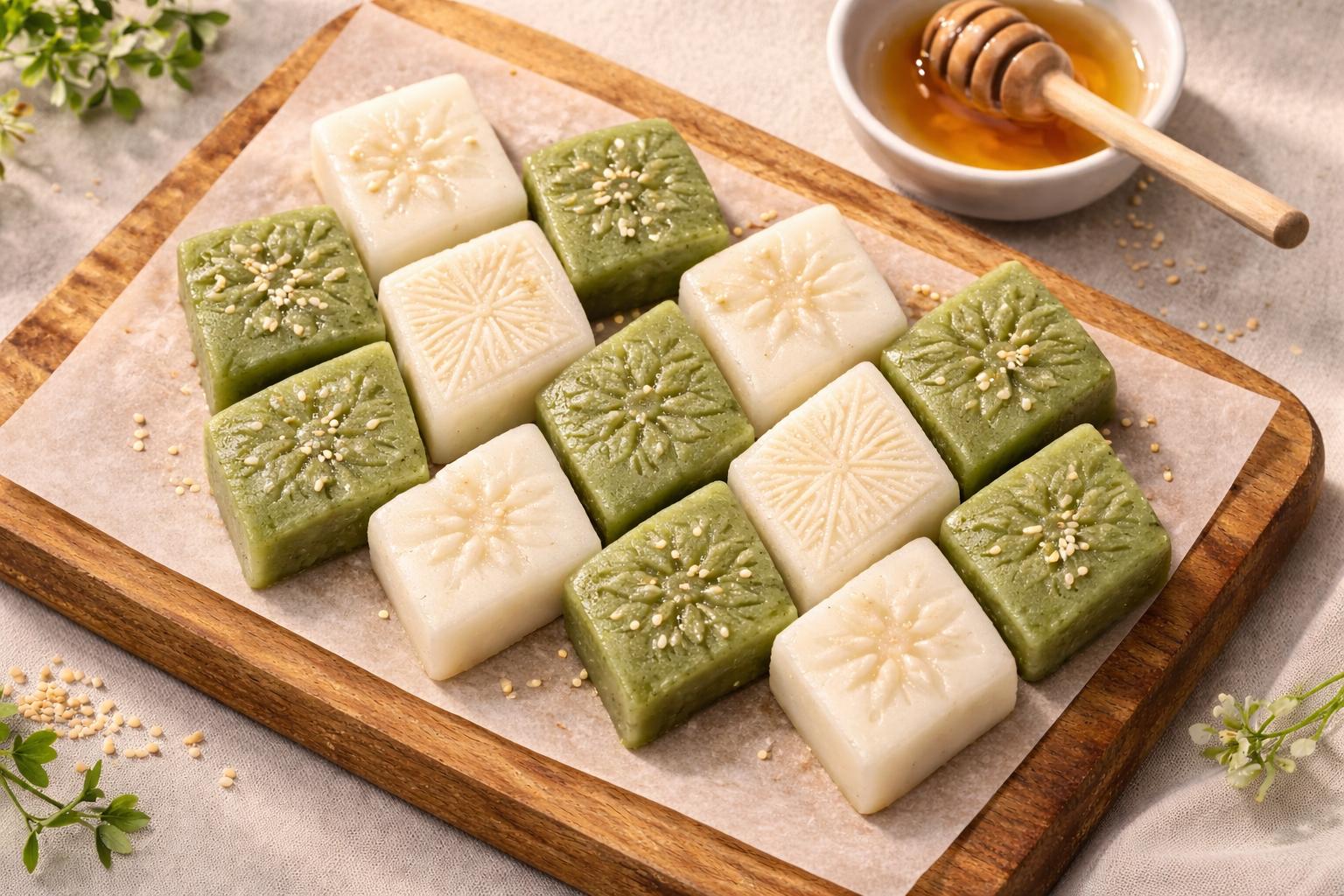
Among Korea's traditional rice cakes, there are some with flowers or geometric patterns pressed into the surface.
In This Article
Jeolpyeon — The Korean Rice Cake Stamped with Patterns
Among Korea's traditional rice cakes, there are some with flowers or geometric patterns pressed into the surface. That's jeolpyeon. Made on a white or pale green base and stamped with intricate designs, it's almost too pretty to eat — and it comes with several centuries of history behind it.
What Is Jeolpyeon?
Jeolpyeon is made by steaming non-glutinous rice flour, pounding it until chewy, and then pressing a wooden stamp called a tteoksal into the surface to create a pattern. The name comes from jeolgi — the Korean word for seasonal turning points — reflecting the idea that this was a rice cake eaten in tune with the seasons. The flavor is chewy and plain, and it is usually eaten with sesame oil brushed on top, or dipped in honey. Color variations exist too: adding mugwort produces a green jeolpyeon, while gardenia gives it a yellow tint.
When Is It Eaten — and What Does It Taste Like?
Jeolpyeon is closely tied to Korea's major rituals and ceremonies. It appears on ancestral memorial tables and was placed on the wedding ceremony table as well. At traditional weddings, jeolpyeon was shaped into a pair of roosters — one male, one female — to represent the couple. On Seollal, the Lunar New Year, many households made jeolpyeon alongside garaetteok. It was also commonly given to neighbors when moving into a new home or marking a new beginning. Today it still appears regularly on ceremonial tables and during holidays.
The taste is chewy and plain. There's almost no sweetness, which can catch first-time eaters off guard — it has none of the fillings of a chapssal-tteok and none of the coating of injeolmi. It's essentially the flavor of rice itself. That plainness is why it's almost always eaten with something alongside it: sesame oil brushed over the surface adds a nutty aroma and a shine, and honey or grain syrup provides the sweetness the cake itself doesn't have. Freshly made jeolpyeon is soft and chewy, but it firms up over time. In texture it's comparable to Japanese mochi, though noticeably less sweet and more neutral in flavor.
How Is It Made?
The process breaks down into three main stages. First, non-glutinous rice is washed, soaked, and ground into flour. That flour is packed into a steamer and cooked through. Once steamed, the dough is pounded — with a mortar and pestle or a mallet — until it develops enough elasticity. Finally, it's pulled into portions and the tteoksal stamp is pressed firmly into the surface to leave the pattern. The designs carved into tteoksal vary: flowers, fish, and characters meaning longevity or fortune are among the most common. In older households, a family's tteoksal was passed down through generations, each one carrying its own specific pattern.