


Why K-Pop Idols Perform Before the Broadcast Even Begins
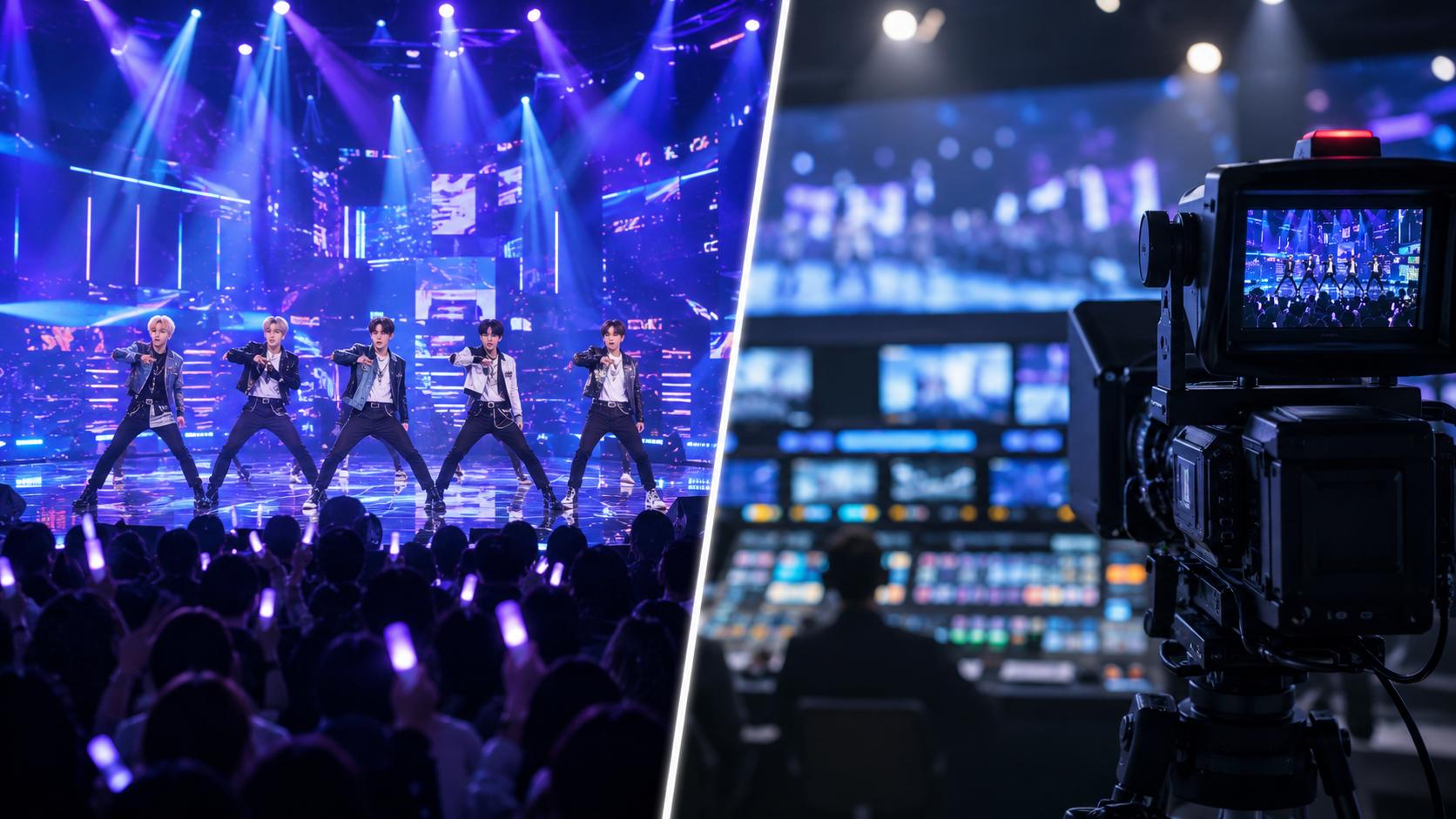
Most K-pop music show performances air after already being recorded earlier the same day, a behind-the-scenes system that shapes everything from idol schedules to fan culture.
In This Article
When you watch a K-pop idol perform on a music show, there is a good chance you are watching something that was recorded earlier. The stage feels live. The crowd is real. The energy looks immediate. Yet many performances shown on Korean music television are filmed hours before they appear on air. This is not a hidden industry secret. It is simply part of how the system operates.
The Broadcast You Think Is Live
Korean music shows such as
That does not mean every performance is pre-recorded. Some special stages, award announcements, and selected performances are presented live. However, pre-recording remains an important part of the production process for many artists and songs.
Why Pre-recording Exists
The system exists for several practical reasons. Korean music shows feature numerous artists every week, each requiring unique stage designs, lighting setups, and camera movements. Producing all of this entirely live would make scheduling extremely difficult.
Pre-recording gives producers greater control over the final broadcast. Camera shots can be refined, timing can be adjusted, and technical issues can be minimized. The result is a smoother viewing experience for audiences at home.
Artist schedules also play a major role. During a comeback period, K-pop groups often balance music shows, interviews, fan events, commercial shoots, and international activities. Pre-recording allows broadcasters to capture performances when artists are available while maintaining the show's fixed broadcast schedule.
Why International Fans Are Often Surprised
Many international fans search questions such as "Why are K-pop music shows pre-recorded?" or "Are K-pop performances live?" because the broadcasts look remarkably immediate. The answer is that the system prioritizes production quality and scheduling efficiency rather than attempting to create an illusion. Even when a performance is recorded in advance, the audience reactions, fan chants, and stage execution remain authentic.
How a Music Show Day Actually Works
A typical music show day begins early. Artists arrive at the broadcasting station for rehearsals, where they review camera positions, stage movements, lighting cues, and choreography.
The pre-recording session follows. This is not simply a rehearsal. It is a full production performance filmed using the same equipment and camera direction that viewers will later see on television.
Once the recording is complete, there may be several hours before the official broadcast begins. During the live broadcast window, some performances may still take place in real time, particularly for major artists or special segments. However, many of the performances shown during the program were filmed earlier in the day.
What It Costs the Performers
Performing the same song repeatedly is physically demanding. During a comeback period, idols may perform a title track during rehearsal, again during pre-recording, and potentially once more during a live segment.
This routine is repeated across multiple music shows every week. Promotional periods commonly last four to six weeks, creating a demanding cycle of travel, rehearsals, performances, and media appearances.
Choreography that appears effortless on screen often requires significant endurance. Costumes, accessories, and footwear are designed primarily for visual impact rather than comfort. Maintaining vocal stability and performance energy under those conditions requires considerable discipline.
Why Fans Attend Pre-recordings
Korean fans are highly familiar with the pre-recording system. Many dedicated fans consider attending a pre-recording a special experience because audiences are often smaller and closer to the stage.
Fan communities frequently organize attendance for both pre-recordings and broadcast sessions. Fan chants and audience participation remain an important part of the atmosphere, and supporters often coordinate their efforts knowing that a pre-recorded performance may later be seen by millions of viewers.
A Production System Shaped by K-pop
Music television around the world uses a mixture of live broadcasts, edited performances, and pre-recorded segments. However, Korean music shows have developed a particularly sophisticated system built around the intense promotional schedules of idol groups and the high production standards expected by audiences.
What makes the system interesting is not that it hides anything from viewers. The practice is widely known among fans. What stands out is how effectively it balances production quality, artist schedules, and audience expectations. Whether a stage was filmed moments ago or hours earlier, the excitement that viewers feel remains very real.