


Dubu Kimchi(두부김치): The Ultimate Reward Koreans Crave After a Grueling Mountain Hike
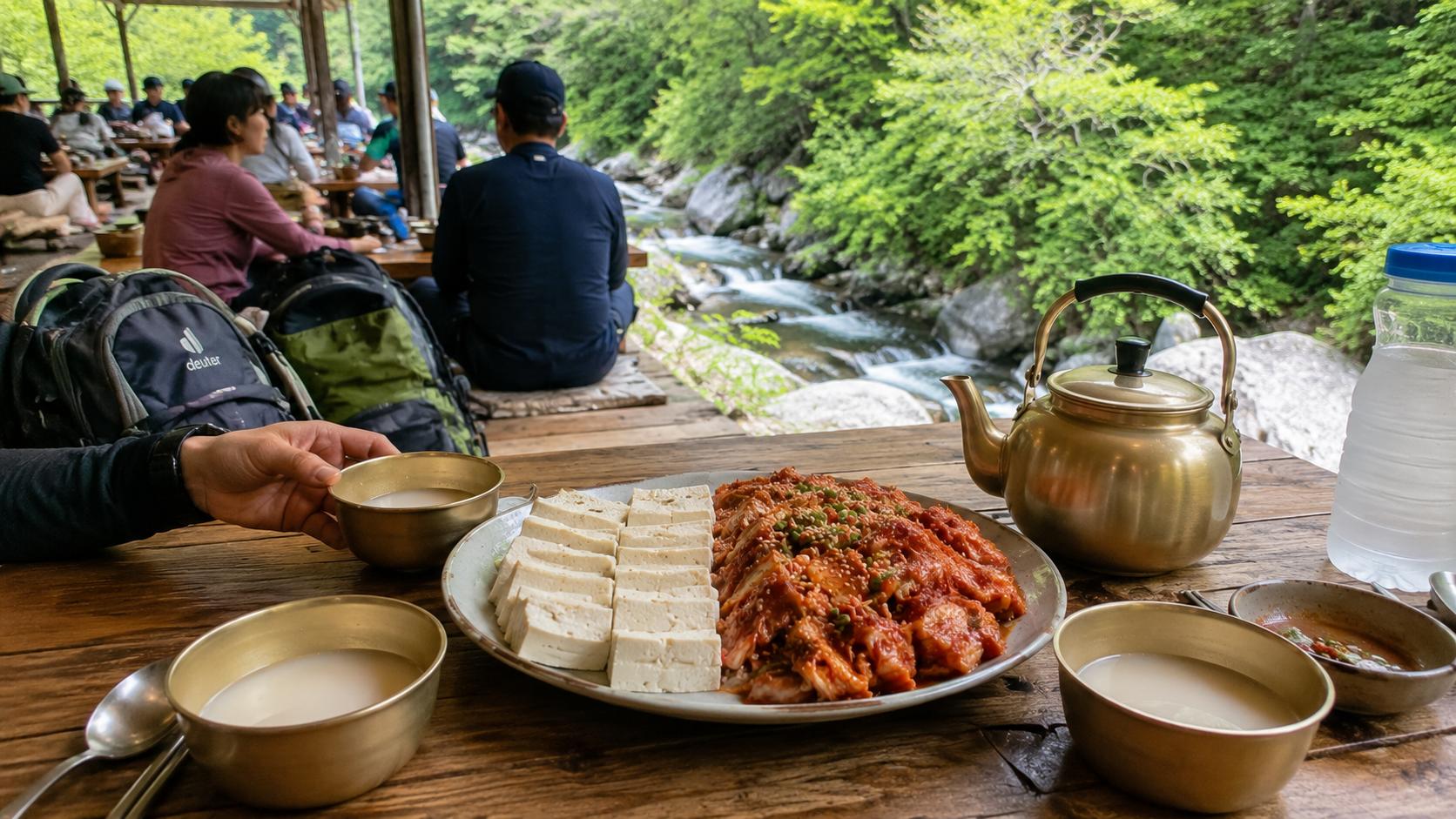
For South Koreans, the true reward of a grueling mountain hike doesn't lie at the summit, but at the rustic restaurants waiting at the base. Meet Tofu Kimchi and Makgeolli—the ultimate "Hike & Eat" comfort food pairing that heals the body and soul with warm, protein-rich tofu, spicy stir-fried kimchi, and a chilled glass of milky rice wine.
In This Article
In many parts of the world, hiking is viewed strictly as an intense athletic endeavor or a quiet communion with nature. In South Korea, however, hiking is part of a deeply social, multi-sensory lifestyle ritual. On any given weekend, mountains like Bukhansan and Inwangsan are packed with hikers who are all secretly anticipating the same thing: the legendary, comforting feast that awaits them at the bottom of the trail.
The True Purpose of a Korean Hike
This cultural phenomenon is affectionately dubbed "Hike to Eat." The open-air taverns tucked away near the mountain exits form an essential piece of Korea’s comfort food infrastructure. Sitting on wide wooden decks (pyeongtsang) right next to a flowing mountain stream, exhausted hikers clink traditional brass bowls filled with milky rice wine, transforming a physical workout into a cozy, communal celebration.
The Golden Balance of Dubu Kimchi
The undisputed king of this post-hike menu is Dubu Kimchi (두부김치). The dish is a masterclass in texture and temperature balance. Thick blocks of raw, fresh tofu are lightly blanched until steaming hot and pillow-soft. This mild, clean, and protein-packed base is paired with a mountain of aged kimchi, stir-fried in sesame oil with savory bits of pork. Wrapping a piece of spicy, smoky kimchi around the velvety, warm tofu creates a perfect explosion of flavors.
Makgeolli: Chilled Milky Carbonation
No Dubu Kimchi feast is complete without Makgeolli (막걸리), Korea's oldest traditional alcohol. Made from fermented rice, it is unfiltered, giving it a characteristic 유백색 (opaque, milky-white) appearance. Often described by foreigners as a refreshing, fizzy alcoholic milkshake, it boasts a low ABV (around 6%), a subtle sweetness, and a gentle lactic acid tang. It cuts through the rich heat of the fried kimchi perfectly, instantly replenishing tired muscles.
An Outdoor Wellness Ritual
Beyond the incredible taste, this meal functions as a profound therapeutic ritual. Tofu provides high-quality vegetable protein and calcium for muscle recovery, while fermented kimchi delivers a powerful dose of gut-healthy probiotics. Paired with the natural amino acids found in Makgeolli, this combination represents a brilliant, centuries-old approach to wellness that makes your body feel thoroughly detoxified and deeply nourished after a strenuous climb.
Why Global Gen Z is Trading Clubs for Peaks
For international Gen Z travelers looking to experience authentic Seoul life, joining the weekend hiking crowds has become a massive trend on social media. Sitting outdoors, surrounded by rustling leaves and the lively chatter of local hikers, while sharing a bottle of Makgeolli over a steaming plate of tofu is the ultimate form of analogue romance. It proves that Korea's most enduring comfort food isn't just about surviving the day—it is about sharing a slow, deeply satisfying reward with friends.