


Hyehwamun (혜화문): The Hidden Gate of Old Seoul
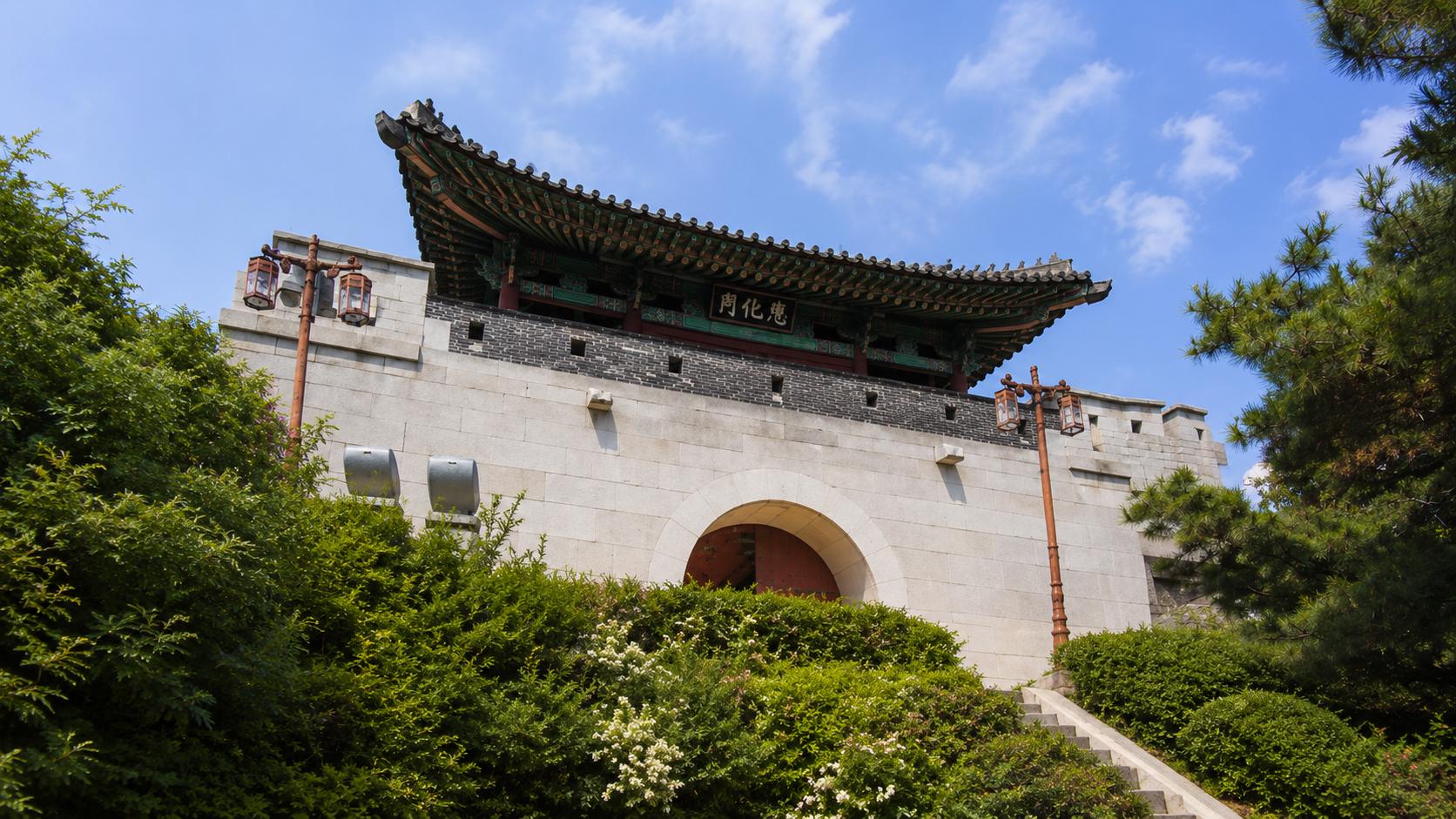
While global travelers flock to the grand palaces of Seoul, a hidden masterpiece of the Joseon Dynasty quietly guards the city's northeastern hills. Hyehwamun, originally known as the Dongsomun (Eastern Small Gate), is far more than an ancient stone passage. From its historic role as a bustling lifeline for common citizens to the surreal folklore painted inside its arch, this resilient gateway offers a rare, intimate glimpse into Korea's living cultural heritage.
In This Article
The True Lifeline of the Joseon Commoners
Constructed in 1396 during the fifth year of King Taejo's reign, Hyehwamun was designated as one of the "Four Small Gates" (Saminmun) of the Seoul City Wall. While the fortress city featured grand main gates for royals and official envoys, it was the smaller gates like Hyehwamun that bore witness to the authentic daily pulse of ancient Seoul. Officially named to represent the "spreading of grace and transformation," it quickly earned the practical nickname "Dongsomun" among locals.
Hyehwamun held immense strategic and social importance due to the permanent closure of Sukjeongmun, the formal North Gate, which was shuttered due to geomantic beliefs regarding negative yin energy. As a result, Hyehwamun became the primary northeastern gateway out of the capital. Every morning, a vibrant stream of merchants, farmers hauling regional produce from Yangju and Pocheon, and everyday citizens passed beneath its stone archway, making it a crucial socio-economic artery of the dynasty.
The Secret of the Phoenix: Defending with Folklore Art
Step directly beneath the heavy stone vaulted ceiling of Hyehwamun, look up, and you will encounter a striking anomaly. Unlike major fortress gates like Sungnyemun or Heunginjimun, which traditionally feature magnificent dragons painted on their ceilings to symbolize royal power and rain-making protection, Hyehwamun features a beautifully detailed painting of a pair of phoenixes (Bonghwang).
This artistic choice is rooted in an enchanting piece of Korean folklore. Historically, the valley just outside Hyehwamun was densely populated by large, aggressive flocks of wild birds that routinely damaged local crops and terrorized the residential livestock. To counter this avian nuisance, Joseon ancestors cleverly painted the phoenix—the mythical king of all birds—on the gate's ceiling. It was a brilliant blend of spiritual defense and whimsical protective art, meant to suppress the wild birds' chaotic energy and safeguard the neighborhood's livelihoods.
Destruction, Resilience, and the Modern Heritage Walk
Like many of Seoul's precious architectural treasures, Hyehwamun suffered severe hardships during the 20th century. In 1928, during the Japanese colonial era, the gate's wooden pavilion was completely dismantled under the guise of expanding urban streetcar lines and widening roads. Ten years later, its historical stone archway was entirely leveled. For decades, this vital piece of history existed only in old black-and-white photographs and the memories of local elders.
However, the spirit of the gate could not be erased. In 1992, following meticulous historical research, Hyehwamun was proudly reconstructed slightly north of its original foundation. Today, it serves as a spectacular anchor point for the famous Seoul City Wall trail. For modern global travelers seeking an alternative to crowded commercial tourist spots, hiking from the trendiness of Daehangno up to the serene stone ramparts of Hyehwamun offers an unforgettable journey where ancient defensive poetry seamlessly merges with the bustling, contemporary skyline of Seoul.