


How K-Pop Fandoms Turned Subway Stations into Global Galleries
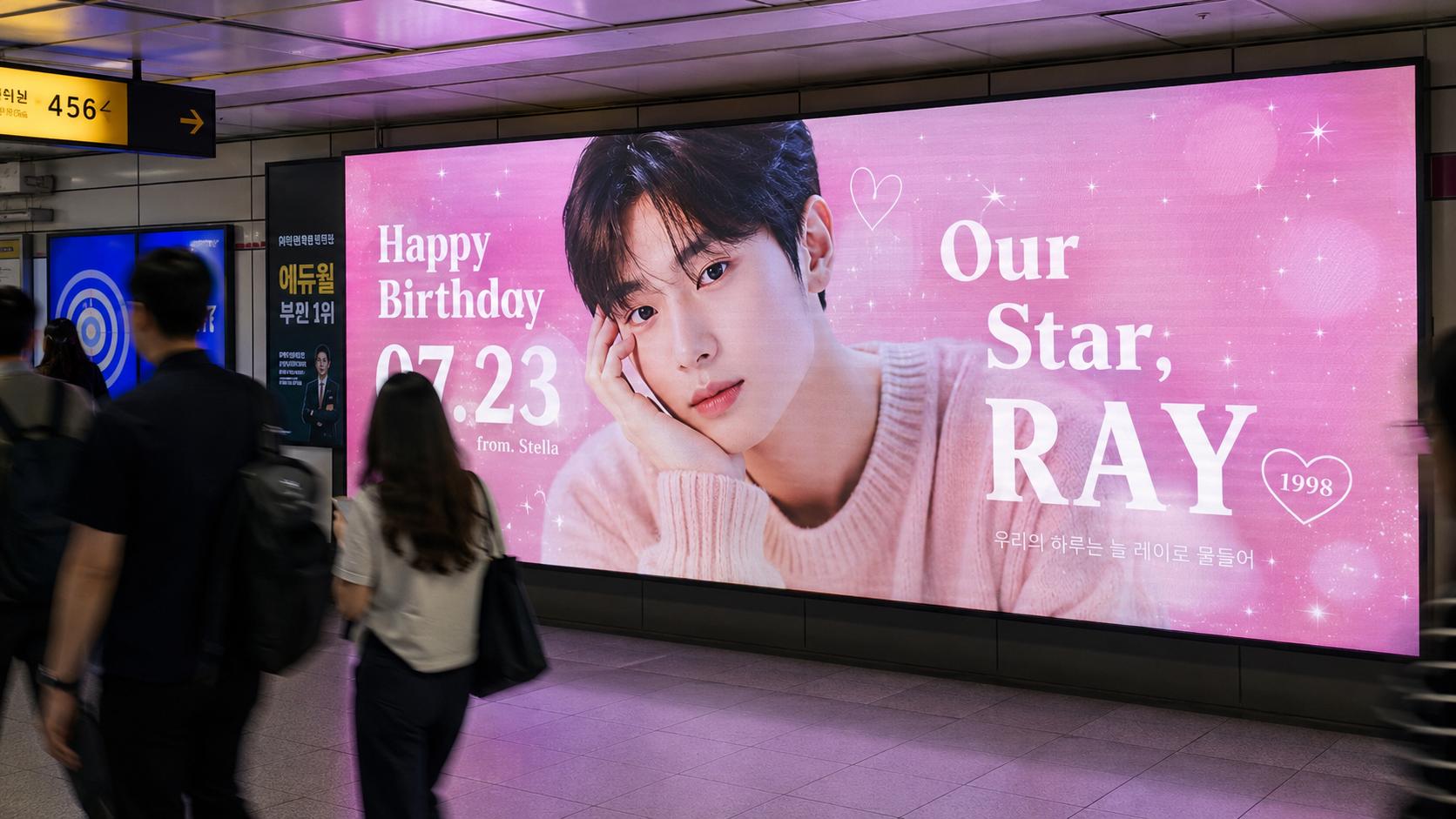
When global travelers step off the trains at major Seoul subway stations like Hongdae, Samseong, or Gangnam, they are met with an unexpected spectacle: massive, high-definition LED screens glowing with birthday wishes and comeback congratulations for K-pop stars. To the uninitiated, this looks like a massive corporate marketing campaign. In reality, these are "Fandom Ads"—user-generated, crowdfunded phenomena where everyday consumers step into the shoes of global marketing directors, turning public transit spaces into collective cultural galleries.
In This Article
The Decentralized Agency: Crowdfunding the Public Square
In standard commercial industries, advertising is a top-down affair. Corporations pay massive sums to agencies to broadcast products to passive audiences. K-pop subverts this logic entirely. A significant percentage of the digital billboards wrapping around Seoul’s infrastructure are designed, financed, and executed by the fans themselves.
Through decentralized global networks and dedicated crowdfunding apps like 'FannStar' or 'Idolchamp,' thousands of fans from Brazil to France pool micro-donations together. Within weeks, an online community raises tens of thousands of dollars. They then hire professional designers, negotiate contracts with Seoul Metro’s ad networks, and secure prime media real estate. It is a highly organized, democratic marketing apparatus run entirely on collective passion.
The Architecture of Intimacy: From Subways to Times Square
Why do fans spend hard-earned money to buy public billboards? The answer lies in the unique emotional economy of K-pop. Unlike western celebrity culture, which often thrives on distance, K-pop is built on the concept of mutual growth and shared journey. Billboards are physical manifestations of a fandom’s devotion, serving as public love letters that say, "We support you, and we want the world to see you."
This spatial phenomenon isn't confined to Korea. When a group hits a milestone, global fandoms routinely book the iconic mega-screens of New York’s Times Square, London’s Piccadilly Circus, or Tokyo’s Shibuya Crossing. However, the heart of this ritual remains the Seoul subway system. It is a common occurrence for idols themselves to quietly visit these subway ads late at night, taking photos to share on social media, thereby completing a unique cycle of digital and physical intimacy.
The Rise of the 'Prosumer': Shifting Power in the Entertainment Industry
From an industrial perspective, fandom ads represent the ultimate evolution of the "Prosumer"—a consumer who actively participates in the production and marketing of the product they consume. By bypassing traditional management agencies, fans act as independent public relations firms. They dictate which members get visibility, drive organic public relations during comebacks, and directly influence a group's brand reputation metrics.
This shifting dynamic has forced entertainment companies to adapt. Agencies now coordinate closely with major fan unions, providing official HD concept photos and timing promotional schedules around these user-generated public galleries. It proves that the true engine behind the global soft power of K-content isn’t just corporate strategy, but a highly sophisticated, hyper-engaged consumer ecosystem.
FrontLens Walker’s Guide: Seoul’s Ultimate Fandom Art Trails
For international travelers looking to experience this vibrant urban subculture firsthand, you don't need a ticket to a concert. Seoul’s transit lines offer a free, ever-changing contemporary art exhibition. FrontLens recommends taking a dedicated transit route to witness the peak of this phenomenon.
Start your journey at Samseong Station (Line 2), adjacent to COEX. This station boasts some of the widest and most expensive digital media tunnels in the country, frequently occupied by major global fandoms. Next, hop on Line 2 and head to Hongik University (Hongdae) Station. As a hub for Gen Z and youth culture, the walkways here are permanently lined with artistic video displays. Conclude your tour by walking through the historic, multi-tiered underground plazas of Myeongdong Station (Line 4), where international fan clubs put up stunning global scale greetings for their favorite artists.