


Inside the K-POP Trainee System: A Day of Training, Evaluation, and Preparation
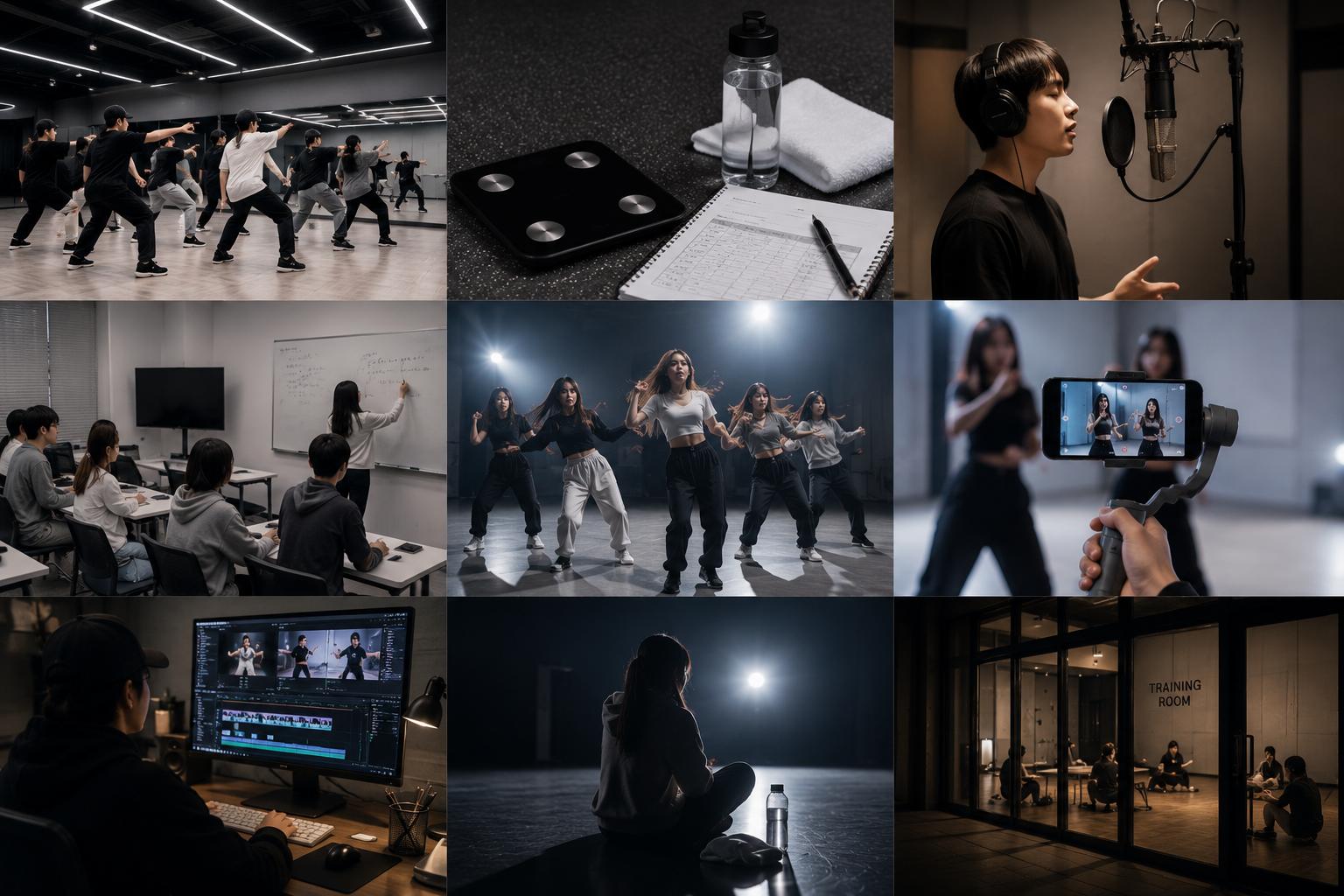
Behind the dazzling lights of a K-pop stage lies a world most fans never see: the daily grind of trainees who spend months—sometimes years—honing their craft before ever getting a chance to debut. From synchronized choreography drills to regular evaluations and digital media training, this is what a day in the life of a K-pop trainee actually looks like.
In This Article
Morning: Physical Conditioning and Fundamentals
A trainee's day begins with attendance check and daily preparation. In the K-pop industry, physical fitness and visual presentation are considered critical components of stage performance.
Many agencies regularly monitor trainees' weight and body composition to support healthy activity and stage readiness. Under the guidance of specialists, trainees follow structured diet and exercise plans.
After arriving, trainees warm up thoroughly through stretching to prevent injury, then wake their voices with diaphragmatic breathing and vocal exercises—laying the groundwork for the intensive day ahead.
Afternoon: Vocal, Language, and Media Training
The afternoon is when agency-provided specialist instructors take center stage. Alongside vocal and dance training, the curriculum has expanded in recent years to reflect K-pop's increasingly global footprint and the demands of the digital media landscape.
A typical afternoon training schedule might look like this:
- 1:00 PM – 3:00 PM: Individual vocal and rap training (pitch, vocal production, and song interpretation)
- 3:00 PM – 5:00 PM: Global competency building (foreign language classes including English, Japanese, and Chinese)
- 5:00 PM – 6:00 PM: Media literacy and digital content creation
As K-pop's reach has grown worldwide, foreign language instruction has become a significantly larger part of the curriculum. Some agencies have also introduced training in short-form content creation, live broadcasting, and social media communication—skills aimed at helping trainees build meaningful connections with fans well before their debut.
Evening: Synchronized Choreography Practice
After dinner, the focus shifts to group dance training—arguably the defining visual element of K-pop performance. Trainees work meticulously to align formations, fingertip angles, eye lines, and jump heights.
Through this process, trainees not only sharpen their individual technique but also develop a natural sense of timing and harmony with their fellow group members. It is a segment of the day that demands both intense concentration and considerable physical endurance.
Night: Evaluations and Self-Directed Practice
Even after the official schedule ends, many trainees remain in the practice room for self-directed training. A key driver of this extra effort is preparation for the agency's regular evaluation system—often held monthly—which determines a trainee's standing and prospects within the company.
- Evaluation performance prep: Trainees rehearse assigned songs or prepare original performances designed to showcase their individual strengths and personality.
- Video self-monitoring: Setting up a tripod in front of the practice room mirror, trainees film themselves and review footage to identify and correct the weaknesses flagged by their instructors.
- Sustained self-discipline: In preparation for internal debut selection auditions, trainees push themselves late into the night to reinforce fundamentals and raise their overall skill level.
The lights in the practice room often stay on long after the official day is done. For trainees heading back to the dorm in the small hours, the hope of one day debuting is what keeps them going.
The crowns worn by K-pop artists on the global stage are built on a foundation of discipline, repetition, and countless unseen hours of practice. Part of why fans around the world connect so deeply with idol groups—beyond the music itself—is that the sincerity of that effort comes through in every performance.