


The Hwahae Effect: How a Beauty App Impacted the Korean Cosmetics Market
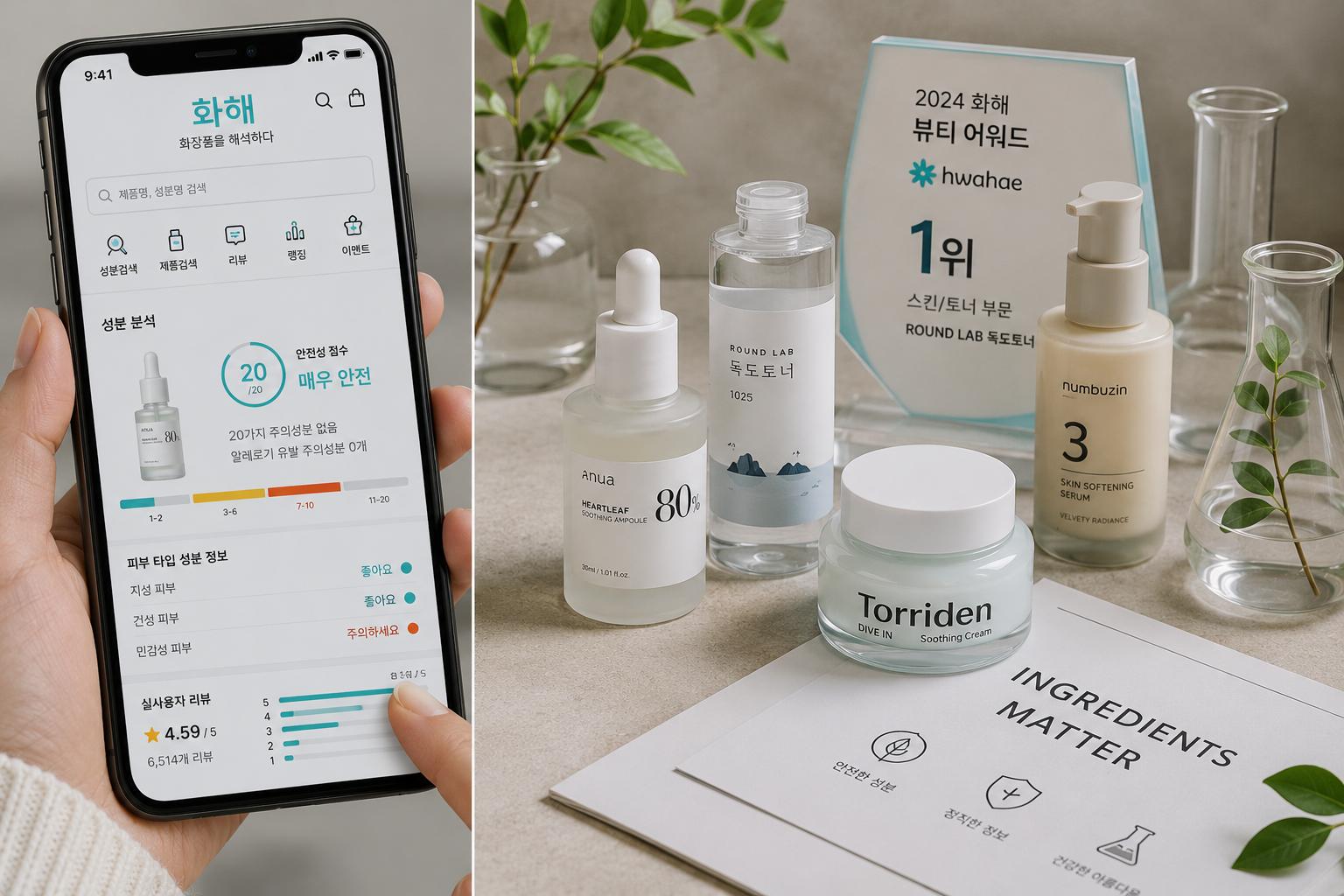
Korean beauty consumers don't just follow trends—they read the label. The rise of Hwahae, a mobile beauty platform built around ingredient analysis, has reshaped how people in Korea choose skincare and cosmetics, giving an edge to smaller brands that lead with science rather than star power.
In This Article
The Information Gap That Sparked a Platform
The Korean cosmetics market was long shaped by glossy advertising and brand prestige. For most consumers, the full ingredient list printed on the back of a product was effectively unreadable—a dense column of chemical names with little context for what they actually meant for your skin.
This information asymmetry set the stage for Hwahae (화해), whose name is short for hwajangpumeul haeseokhada (화장품을 해석하다), meaning "to interpret cosmetics." By visualizing publicly available data—including ingredient safety references from the U.S.-based non-profit Environmental Working Group (EWG)—in a format accessible to everyday consumers, Hwahae helped usher in a new era of ingredient-conscious beauty shopping in Korea.
It should be noted that this shift was not the result of Hwahae alone. The growth of Olive Young, the spread of SNS review culture, and the influence of beauty content creators all played significant roles in moving the market in this direction.
How Consumer Behavior Shifted
The widespread adoption of ingredient-checking apps brought meaningful changes to how Korean consumers research and purchase cosmetics.
Ingredient-first decision making: Shoppers began looking beyond marketing claims to check whether a product contained specific active ingredients or flagged substances. For many, the question "does this suit my skin type?" started to carry as much weight as brand recognition.
Personalized skin-type filtering: Consumers with dry, oily, or sensitive skin gained the ability to intuitively filter out products containing ingredients known to irritate their skin type. This encouraged more self-directed product discovery rather than reliance on word-of-mouth alone.
Real-user review ecosystems: The accumulation of verified user reviews within the platform gave prospective buyers a way to gauge real-world performance before purchasing, reducing the risk of costly mismatches between product promises and personal results.
A New Path for Indie Beauty Brands
One of the more structural changes brought about by ingredient-focused platforms was a gradual loosening of the large-brand dominance that had long defined the Korean cosmetics industry.
Historically, survival in the market required access to large distribution networks and significant marketing budgets. But as ingredient quality and positive user reviews became legitimate trust signals, smaller brands—including names such as Round Lab, Torriden, Anua, and Numbuzin—began building recognition through platform rankings and word of mouth, eventually expanding into major offline retailers like Olive Young.
The Hwahae Beauty Awards, based on aggregated platform data, became a particularly valued credential for emerging brands. A strong placement in the awards offered a form of third-party product validation that smaller companies could use actively in their marketing materials.
The Clean Beauty Ripple Effect
As consumer awareness around ingredients grew, the manufacturing and R&D side of the beauty industry—including the ODM and OEM sectors that underpin much of K-Beauty production—began to respond.
Some smaller and newer brands started incorporating ingredient safety benchmarks from platforms like Hwahae into their product development process from the outset. This contributed to increased research into lower-irritation formulations and bio-based alternative ingredients.
Over time, this dynamic contributed to the spread of a clean beauty sensibility within Korea's domestic market and helped position K-Beauty as a participant in the global clean beauty conversation—though the extent of that positioning continues to evolve alongside consumer expectations worldwide.