


The Vinyl Resurgence: Inside South Korea’s Booming LP Bar Culture
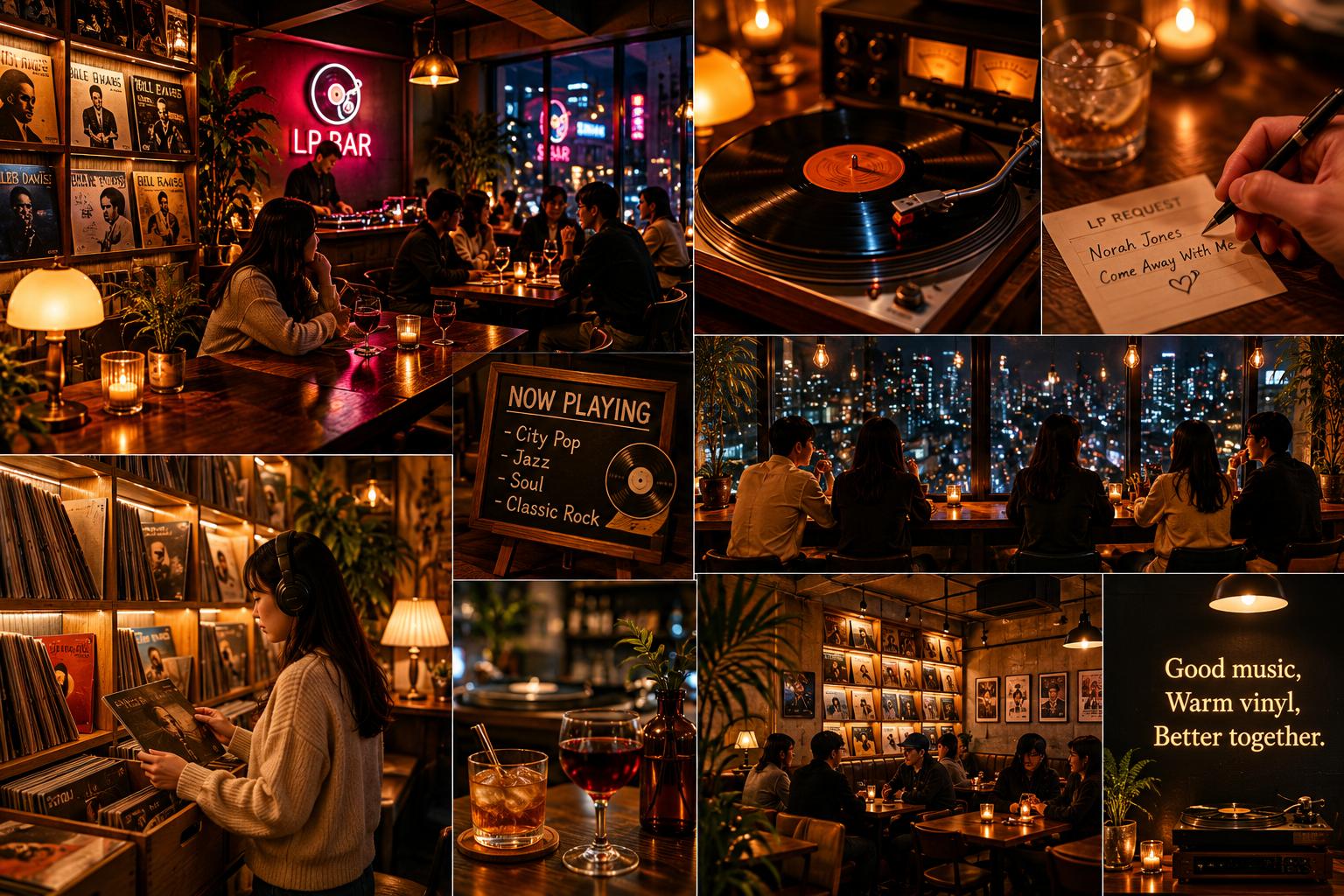
In an age when any song is a tap away, a quiet revolution is happening in Korea's back alleys. LP bars—venues built around the warm crackle of vinyl records—have grown from a niche nostalgia trip into a full-blown cultural movement, drawing everyone from middle-aged record collectors to curious Gen Z visitors discovering analog sound for the very first time.
In This Article
A Different Appeal for Every Generation
LP bars (LP Bar) are venues centered on playing vinyl records—physical discs that must be carefully placed on a turntable, cleaned, and lowered with a needle before a single note plays. What makes this scene particularly interesting is that it speaks to very different audiences at the same time, for very different reasons.
For Koreans in their 40s and 50s, an LP bar is a place of reunion with personal memory. It recalls the era of music cafés (음악다방, eumak dabang), where customers used to write song requests on slips of paper and hand them to the DJ. Hearing an old pop ballad or a classic Korean trot song in this setting can feel like a quiet emotional homecoming amid a busy modern life.
For those in their 20s and 30s, who grew up with digital audio only, the experience is something else entirely—a novelty. The visual impact of floor-to-ceiling walls lined with vinyl sleeves, the almost meditative act of watching a record spin on a turntable (a practice locals sometimes call "pan-meong," or "record-gazing"), and the deliberate inconvenience of writing out a song request by hand on paper—all of this becomes a kind of playful, tactile ritual that streaming platforms simply cannot offer.
From Listening Rooms to Concept Bars
Today's LP bars have moved well beyond the image of a dimly lit room with old speakers and cold beer. The scene has diversified into distinct types, each with its own identity.
Traditional retro LP bars still operate around walls packed with tens of thousands of collected records, running almost entirely on audience requests, and playing mostly 70s and 80s Korean pop, classic rock, and vintage pop songs. These are the venues closest to the original format.
Jazz and city-pop vinyl bars tend to lean into a more minimal, design-conscious aesthetic, attracting a younger crowd with curated playlists built around 1980s Japanese city pop (J-Pop), jazz, and soul.
High-end listening bars (청음 바, cheong-eum ba) take a different direction altogether, investing in premium audio systems, vacuum-tube amplifiers, and acoustically treated rooms, with programming centered on classical music, jazz, and audiophile reference recordings.
The newer wave of vinyl bars—concentrated in neighborhoods like Hongdae, Seongsu, Hannam, and Euljiro—have repositioned the LP bar as a sensory cultural space: natural wine and handcrafted cocktails replace the old beer-and-soju formula, the lighting is carefully designed, and the music is meant to be genuinely listened to, not just heard in the background. This wider trend also overlaps with a measurable rise in vinyl record and turntable sales among younger consumers, pointing to a broader revival of record-collecting culture.
Digital Fatigue and the Comfort of Analog
Some cultural observers interpret the LP bar trend as a response to what might be described as "digital fatigue"—a growing weariness with algorithm-driven, infinite-scroll listening that leaves little room for intention or presence.
Streaming platforms offer unlimited music, but the very abundance can become exhausting. In an LP bar, the experience works differently. The faint surface noise of a vinyl record—that familiar warm crackle—the physical ritual of cleaning the disc and lowering the needle, and the shared experience of listening to the same song in the same room with strangers: these elements combine to create a quality of immersion that digital listening rarely provides.
In this sense, the LP bar offers something quietly counter-cultural: the choice to be deliberately slow, deliberately present, and deliberately connected to the people and the music in the room.