


Songpyeon (송편): The Taste of Korean Thanksgiving
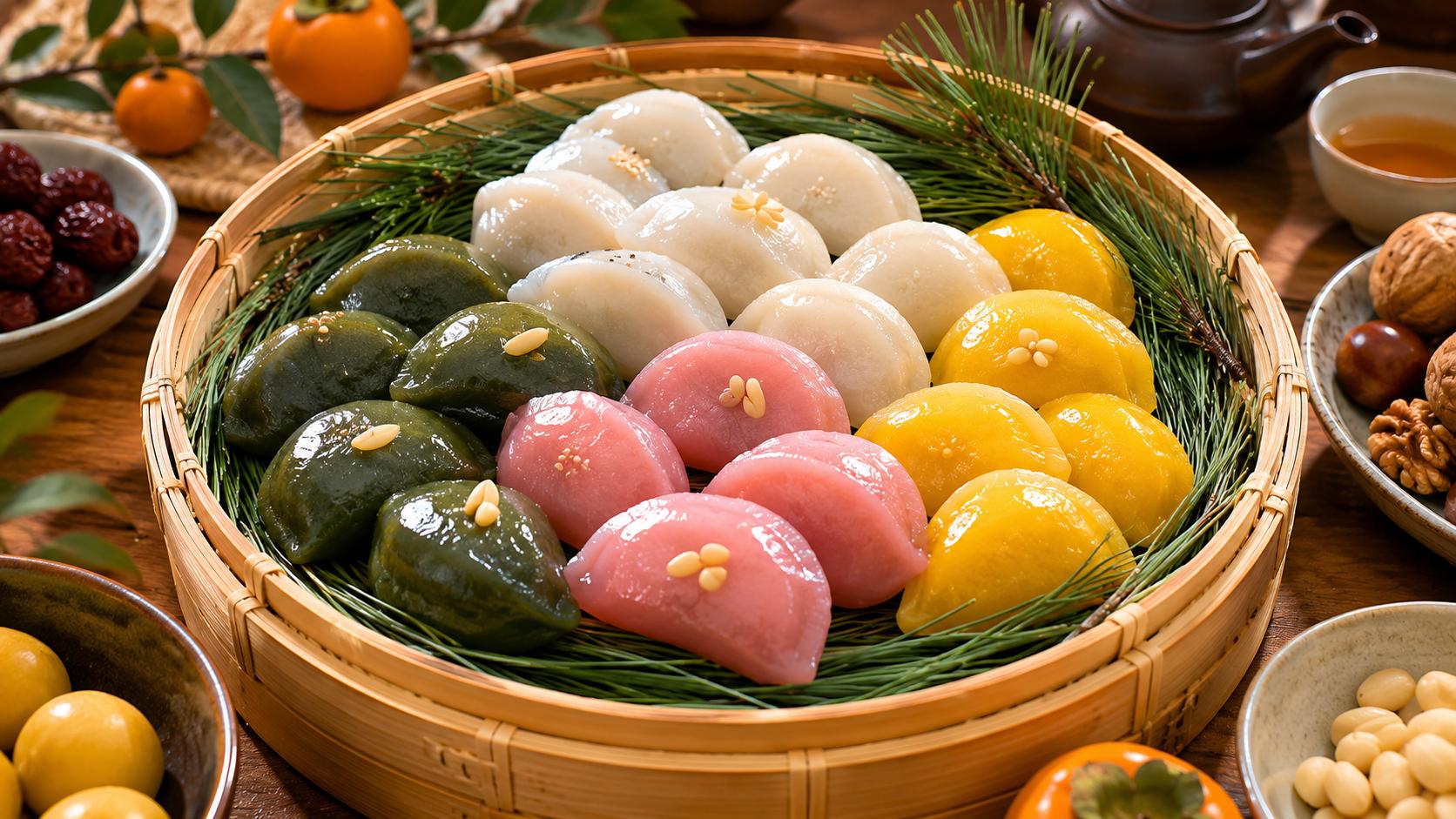
As the sweltering Korean summer gives way to the golden winds of autumn, a quiet, tactile transformation takes place in kitchens across the peninsula. Families gather around low tables, their hands dusted with rice flour, meticulously shaping small, crescent-shaped rice cakes nested on a bed of fresh pine needles. This is "Songpyeon"—the ultimate edible icon of Chuseok (Korean Thanksgiving). Far from being just a festive dessert, Songpyeon is a profound milestone of K-comfort food, encapsulating autumn’s bounty, ancestral gratitude, and a deeply comforting family ritual where hopes for the future are literally molded by hand.
In This Article
The Crescent Metaphor: Molding Hope into Rice Dough
Unlike Western pastries that often rely on perfectly symmetrical round shapes, Songpyeon is intentionally sculpted into a crescent moon. This design choice carries a beautiful philosophical paradox rooted in ancient Korean folklore. While a full moon has already reached its peak and is destined to wane, a crescent moon represents the promise of growth, filling up, and future prosperity.
By stuffing the translucent rice dough with sweet fillings like nutty sesame seeds, sweetened clay beans, or rich chestnut paste, Koreans are symbolically packing their homes with abundance. The sensory comfort of biting into a freshly steamed Songpyeon—where the chewy exterior gives way to a sudden burst of warm, sugary sweetness—functions as a literal and emotional reward for a year of hard labor.
The Forest on a Plate: The Science and Soul of Pine Needles
What truly elevates Songpyeon into a distinct category of comfort food is its intimate relationship with nature, specifically the pine tree. "Song" in Songpyeon literally translates to pine. The rice cakes are arranged on a thick layer of freshly harvested pine needles inside a bamboo steamer. As the steam rises, the needles release phytoncides and essential oils that permeate the dough.
This process serves both a pragmatic and a spiritual purpose. Scientifically, the natural compounds in pine needles act as an organic preservative, preventing the rice cakes from spoiling during the warm autumn days. Spiritually and sensorially, it infuses the kitchen with a crisp, earthy forest aroma. Eating Songpyeon is an immersive experience; the faint, balsamic undertone of pine balances the sweetness of the filling, grounding the consumer in the specific terroir of the Korean autumn.
Handmade Interventions in a Digital Age
The preparation of Songpyeon is notoriously labor-intensive, requiring dough to be repeatedly kneaded with hot water to achieve its signature elasticity. In an era where modern supermarkets offer pre-packaged, machine-made alternatives, the act of making Songpyeon from scratch has become a radical choice of love and family preservation.
There is an old, endearing Korean proverb: "If you shape Songpyeon beautifully, you will meet a beautiful spouse or give birth to a beautiful child." This playful myth turns the kitchen floor into a gentle arena of intergenerational competition and teasing. Grandmothers guide the clumsy fingers of grandchildren, mothers correct the shapes made by fathers, and the collective focus required to seal the sweet fillings without tearing the dough fosters a rare, screen-free intimacy. The comfort of Songpyeon is baked into these imperfect shapes—each one uniquely displaying the thumbprint of the family member who made it.
A Seasonal Sanctuary for Wandering Souls
For the modern, urban Korean who may live miles away from their hometown in a solitary studio apartment, the taste of Songpyeon is a powerful emotional anchor. It is the food of homecoming. Even for those who cannot make the physical journey back for Chuseok, sharing a small plate of these pine-scented cakes with friends or colleagues brings an instant sense of belonging and sanctuary.
In a world that transitions at breakneck speed, Songpyeon remains beautifully tied to the natural rhythm of the Earth. It reminds us that after the long, grueling heat of summer, there is always a harvest waiting—and a community ready to share it. It stands as a delicious testament to the fact that the most enduring comfort is often found in the traditions we preserve with our own two hands.