


Seoul's Car-Free Bridge Festival: A Weekend Guide
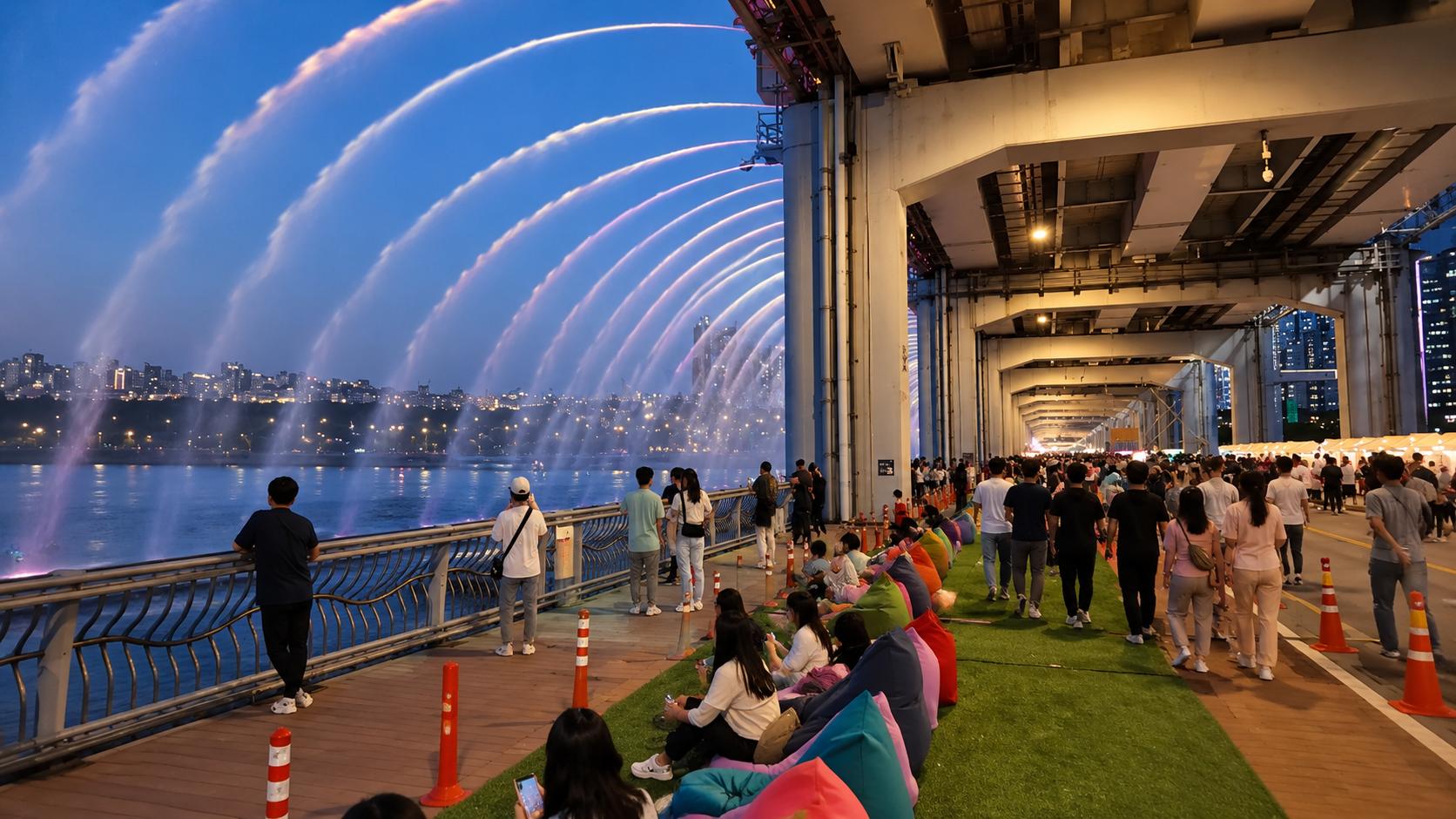
In most global metropolises, major multi-lane avenues and river bridges are treated as rigid, untouchable channels reserved exclusively for automotive transit. Yet, on sunny weekends, South Korea’s capital systematically erases vehicular traffic to pull off a stunning urban magic trick. Through massive civic initiatives like the "Jamsu Bridge Car-Free Festival" and Gwanghwamun's pedestrian transformations, hundreds of thousands of citizens lay down picnic mats on open asphalt, read books in pop-up libraries, and enjoy night markets. This radical reclamation of public space offers a captivating look into Seoul's fluid urban design, driven by unparalleled administrative execution and a deeply shared civic consciousness.
In This Article
Erasing the Commute: The Weekend Transformation of Asphalt
To understand the modern identity of Seoul is to witness its relentless speed. It is a city engineered for hyper-efficiency, where ten-lane highways slice through the urban core to keep the economic engine roaring. However, when the weekend arrives, a fascinating counter-narrative unfolds. The very asphalt that served as a chaotic conduit for millions of roaring cars is abruptly silenced, entirely handed over to families, artists, and strollers.
Seoul's "Car-Free Zones" are not mere neighborhood block parties; they are monumental re-engineering of the city’s natural flow. From the historic avenues of Gwanghwamun to the wide bridges spanning the Han River, the city intentionally chokes automotive convenience to prioritize human connection. For international visitors accustomed to the car-centric layouts of Western capitals, seeing children run freely across empty urban highways is an inspiring vision of a citizen-first smart city.
The Jamsu Bridge Experiment: From Traffic Route to River Runway
The crown jewel of this pedestrian movement is the celebrated "Jamsu Bridge Car-Free Festival" (잠수교 뚜벅뚜벅 축제). Jamsu Bridge, the unique lower tier of the double-decker Banpo Bridge, sits just meters above the rushing water of the Han River. On designated Sundays, the city shuts down all vehicular access, instantly transforming this concrete infrastructure into a vibrant eco-friendly marketplace and a massive cultural stage.
The transformation is breathtakingly diverse. One segment of the bridge becomes an open-air reading room lined with beanbags and turf, while another plays host to a sprawling nighttime food truck market showcasing regional treats. The bridge has even been transformed into a high-fashion runway, proving that municipal property can serve as a canvas for world-class cultural expressions. It turns a simple crossing into a dynamic destination.
The Fluid Administration: The Logistics of Instant Public Spaces
What captivates urban planners worldwide is the sheer logistical precision required to pull off these immediate transitions. Shutting down critical arterial transport routes in a city of ten million residents usually triggers administrative gridlock. Yet, Seoul’s municipal government manages these massive weekly diversions with the surgical precision of a tech startup.
Utilizing real-time big data, smart traffic light synchronization, and rapid deployment teams, the city reroutes tens of thousands of vehicles and bus lines seamlessly. Pop-up infrastructure—including thousands of books, seats, food kiosks, and security barriers—is deployed at dawn and entirely vanished by midnight, leaving the road clean for the Monday morning rush hour. It is a striking demonstration of adaptive, agile urban management.
High Trust Infrastructure and the Zero-Trash Phenomenon
Ultimately, the success of Seoul's asphalt playgrounds depends on a factor that cannot be bought or engineered: an exceptionally high level of civic consciousness. Despite welcoming millions of visitors over the festival seasons, these macro-scale street events operate with virtually no vandalism, zero security incidents, and an astonishingly low amount of litter.
Through the "Leave No Trace" collective mindset, citizens voluntarily sort their recycling at mobile eco-stations, and families diligently clean their immediate picnic areas before leaving. This unique dynamic represents an unwritten social contract: the municipal government trusts the community with premium, unguarded access to the city’s finest infrastructure, and in return, the citizens treat the public domain with utmost respect. Seoul proves that a city truly thrives when it stops locking its spaces down and begins letting its people in.