


Naengmyeon (냉면): Korea’s Favorite BBQ Ending
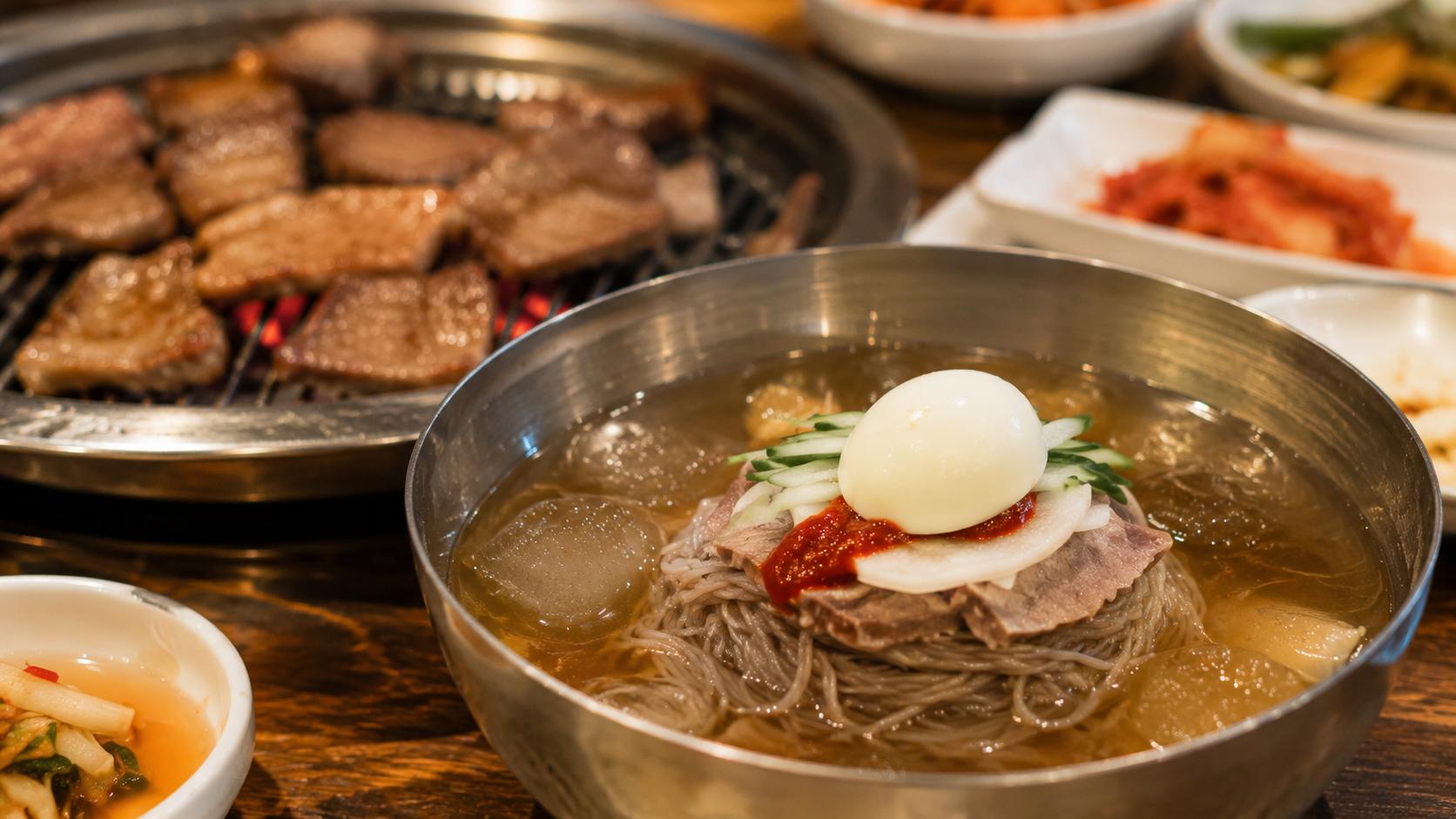
In the West, a heavy steak dinner typically concludes with a sweet dessert—perhaps a slice of cake or a scoop of ice cream. But in South Korea, the grand finale of a rich, sizzling barbecue feast is an entirely different kind of indulgence: a bowl of ice-cold noodles. To the uninitiated, ordering a dish filled with beef broth ice cubes right after devouring mounds of hot, fatty pork belly seems like a gastronomic contradiction. Yet, for Koreans, this ritual is an absolute necessity. This article explores the cultural phenomenon of "Seon-Yuk-Hu-Myeon," the culinary art of wrapping hot meat around freezing noodles, and the brilliant, palate-cleansing logic behind Korea’s favorite post-barbecue tradition.
In This Article
The Paradox of the Savory, Ice-Cold Dessert
When a Korean barbecue meal nears its end, the server will almost instinctively ask the table a definitive question: "Would you like your meal now?" For international diners who thought the grilled meat *was* the meal, this can be confusing. What follows is not a pastry cart, but a choice between a bubbling stew or Naengmyeon—chewy buckwheat noodles served in a tangy, partially frozen broth.
Transitioning directly from a blistering hot charcoal grill to a sub-zero bowl of noodles feels like an extreme temperature shock. However, this pairing is a beloved cultural institution. The immediate contrast of temperature and texture turns what could be a heavy, overwhelming meal into an incredibly refreshing experience.
Seon-Yuk-Hu-Myeon: First the Meat, Then the Noodles
This dining sequence is captured in a centuries-old Korean phrase: "Seon-Yuk-Hu-Myeon" (先肉後麵), which literally translates to "First meat, then noodles." Historically, nobles and epicures in the Joseon Dynasty recognized that wealthy feasts featuring heavy meat dishes required a lighter, carbohydrate-based finish to balance the body's internal energy.
In modern Korean dining, this rule has evolved into an essential ritual. It respects the progression of the palate. Starting with rich, savory, umami-packed proteins allows diners to appreciate the pure flavor of the meat when their hunger is sharpest, while leaving the clean, refreshing noodles to round out the experience when the stomach is nearly full.
The Art of Yuk-Ssam: The Hot-and-Cold Chemistry
The true magic of this tradition occurs at the intersection of the two courses, giving birth to a brilliant eating method known as "Yuk-Ssam" (wrapping meat around noodles). Experienced diners always leave a few pristine, highly caramelized pieces of grilled galbi (marinated short ribs) or pork belly on the edge of the grill specifically for this moment.
By taking a piece of piping hot, sweet-and-savory meat and wrapping it tightly with a bundle of ice-cold, springy noodles, you create a perfect harmony of contrasts. The heat of the meat slightly softens the chill of the noodles, while the snappy chew of the buckwheat cuts through the tender grain of the pork or beef. It is a masterclass in culinary balance—sweet, salty, hot, and cold all in a single bite.
The Culinary Reset: Form Follows Flawless Digestion
Beyond the incredible taste pairing, there is a deep, pragmatic logic to finishing a barbecue feast with Naengmyeon. Eating large quantities of rich, fatty meat can leave the mouth coating and the stomach feeling heavy—a state Koreans refer to as "neukki-hada" (greasy or cloying).
The cold, vinegar-infused beef or dongchimi (water kimchi) broth acts as a structural palate cleanser. The acidity from the fermented broth, combined with a sharp kick of mustard oil, actively cuts through the residual grease on the tongue and stimulates digestion. Ultimately, Naengmyeon is the ultimate culinary reset button, ensuring that you leave the table feeling incredibly light, refreshed, and completely satisfied.