


Jangseung (장승): The Traditional Korean Guardian of the Village
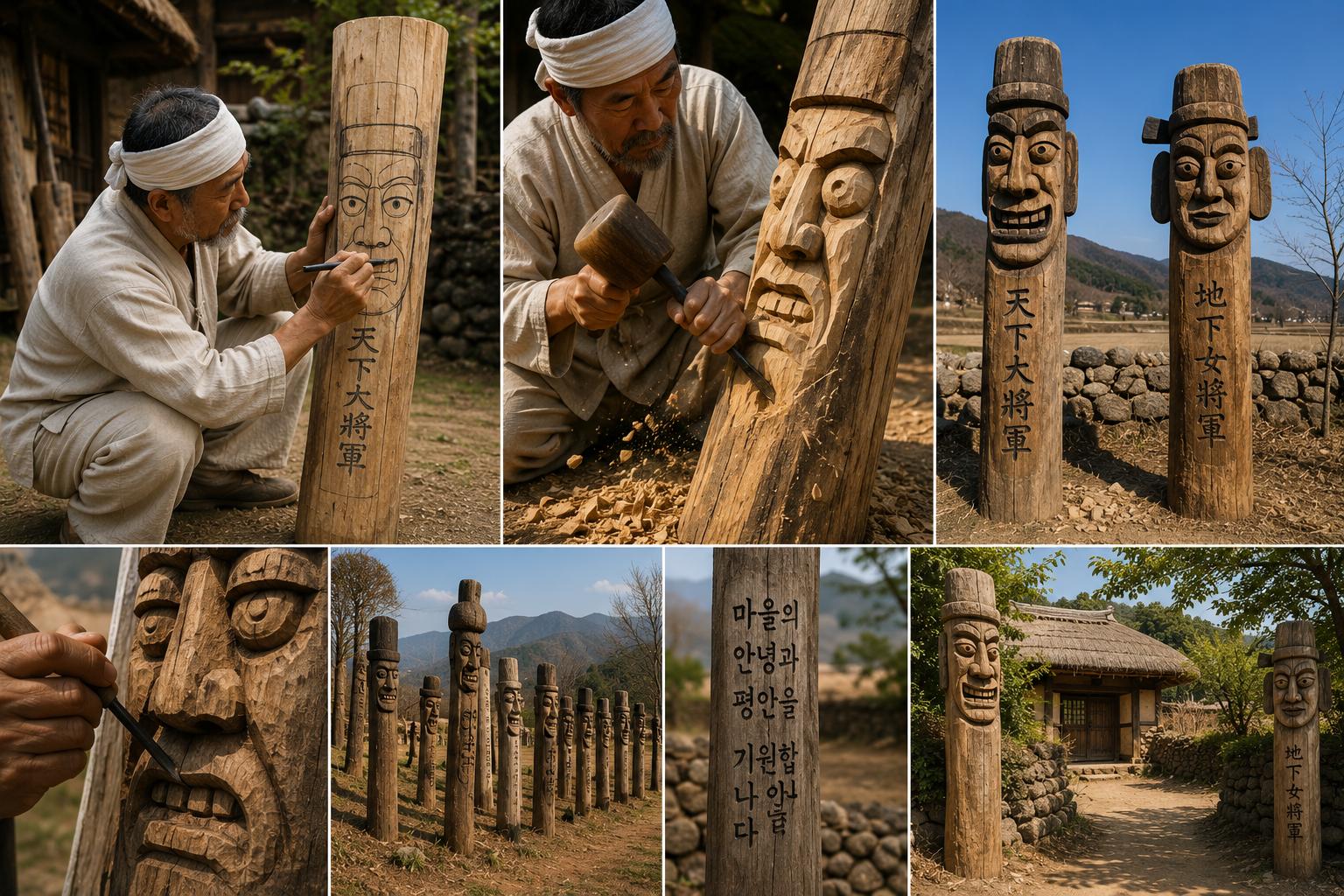
Jangseung, traditional Korean guardian posts, were carved from wood to mark village boundaries and pray for peace. We explore the craftsmanship and cultural significance of these iconic protectors.
In This Article
What Is a Jangseung?
Jangseung are products of traditional folk belief, erected at village entrances to ward off evil spirits and protect the peace of the community. The process of carving faces into wood and installing them as village guardians is both an artistic activity and an expression of communal spirit, reflecting the desire of Koreans to coexist with nature.
Wood Selection and Sketching
The first step in making a Jangseung is selecting suitable wood. Various timbers such as pine or oak were used depending on the region, and it is important to preserve the wood's natural form and grain as much as possible. The size and shape of the Jangseung are conceptualized based on the location of installation and the characteristics of the village, followed by a rough sketch.
Humorous Carving
The essence of Jangseung production lies in carving expressions that are both rustic and humorous. Bulging eyes, firmly closed mouths, and comical expressions demonstrate the unique aesthetic of Jangseung. This is the distinct charm of the Jangseung, which is felt as a familiar neighbor while being an object of solemn faith. The traditional technique involves breathing life into the wood by preserving its rough texture rather than performing fine, detailed carving.
Symbol of Protection and Boundaries
In many regions, a pair consisting of the "General of the Heavens" (Cheonha-daejanggun) and the "General of the Underworld" (Jiha-yeojanggun) were erected, representing heaven and earth, respectively. Beyond protecting the village, Jangseung also served as milestones, informing visitors of the village's boundaries. While widely seen in rural villages across Korea, some regions erected "stone Jangseung." The Dol Hareubang of Jeju Island also shares a similar context as a village guardian.
Artistry Rooted in Community Wishes
Today, the tradition of Jangseung production is maintained by artisans dedicated to preserving folk culture. It is a rustic yet sincere art form that projects the wishes of the people onto natural materials, rather than a refined craft. The Jangseung, carved with great care, served as a sturdy shield for villagers in the past and continues to remind us of the origins of Korean aesthetics today.