


Eocheoguni: Korea’s Strangest Expression
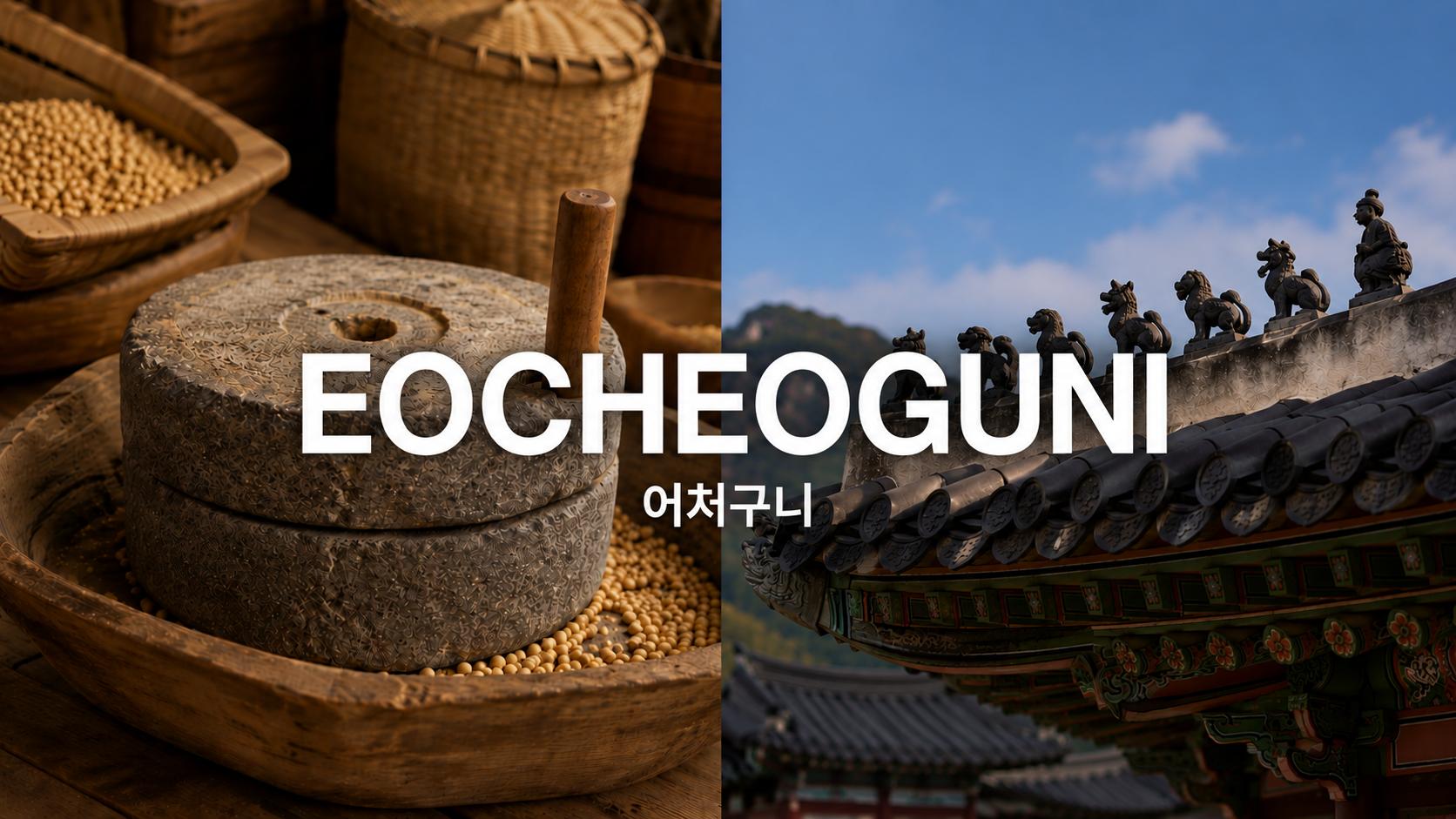
If you hang around South Koreans for even a single day, you will inevitably hear the phrase "Eocheoguni-ga eopda" (어처구니가 없다). Used to express pure flabbergasted disbelief when something is utterly absurd or ridiculous, this idiom is deeply embedded in daily K-talk. Yet, ask a local what an "Eocheoguni" actually is, and you will likely get a blank stare. The linguistic history of this word uncovers a brilliant, hyper-local design mystery rooted in traditional Korean architecture and daily life. Whether it refers to the essential wooden handle of a traditional stone mill or the protective clay figurines perched on royal palace roofs, the "Eocheoguni" represents the ultimate structural irony: a tiny, easily forgotten detail that, if left behind, completely paralyzes the entire system.
In This Article
The Missing Millstone Handle: A Kitchen Nightmare
The first popular origin story of Eocheoguni takes us back to the traditional Korean kitchen, centered around the "Maetdol" (맷돌)—a heavy, dual-layered stone wheel used to grind beans and grains. To operate this massive stone contraption, one absolutely requires a sturdy, small wooden handle fastened to the top stone. That crucial handle is historically called the Eocheoguni. Imagine a Joseon-era home preparing for a massive family feast; they haul out the heavy, hundred-pound stone wheel, soak the beans, gather the family, and right as they prepare to grind—they realize someone forgot to bring the tiny wooden handle. The entire operation is instantly gridlocked by a minor oversight. This exact flavor of ridiculous frustration is why Koreans shout "Eocheoguni-ga eopda" when a grand plan fails due to a silly, missing piece.
The Roof-Top Avengers: Forgotten Palace Protectors
The second, highly cinematic theory shifts the lens from the humble kitchen up to the majestic ridges of royal palaces like Gyeongbokgung. Look closely at the sloping hip-roofs of Korean royal structures, and you will see a neat line of small, baked clay figurines staring down at the courtyard. Historically known as "Jabsang" (잡상), these characters are actually based on ancient folklore, including characters from the famous novel *Journey to the West*, stationed up high to ward off evil spirits and fire-demons. Folklore suggests that royal builders occasionally completed an entire, breathtaking palace pavilion, packed up their tools, looked up, and gasped in horror upon realizing they forgot to place these vital spiritual sentinels on the roof. Leaving a royal building unprotected from evil spirits due to a final, careless omission was the ultimate "absurd mistake."
The Architectural Philosophy of the 'Tiny Detail'
What makes the concept of Eocheoguni so fascinating to global design enthusiasts is what it reveals about historical Korean functionalism. Both theories celebrate a culture that understands that macro-grandeur is entirely dependent on micro-precision. A palace isn’t truly functional without its spiritual clay sentries; a massive stone tool is just an immobile rock without its wooden peg. This linguistic emphasis teaches a beautiful lesson in humility and thoroughness, reminding us that the truest test of craftsmanship lies not in the sprawling canvas, but in the final, unglamorous finishing touch.
Modern Eocheoguni: The Dopamine Deficit of Absurdity
In the hyper-fast digital landscape of modern South Korea, the spirit of Eocheoguni has evolved into a beloved cultural meme. When a tech platform crashes due to a single line of typos, or when a heavily anticipated K-pop music video drops with an accidental green-screen error, netizens instantly flood the comments section with "Eocheoguni." It has transformed from a structural or culinary crisis into a collective social sigh. By understanding this single word, international fans gain a direct backstage pass into the witty, high-standard psyche of a nation that demands perfection, yet completely cherishes the hilarious humanity found in life's most ridiculous, missing handles.