


Ssireum: Korea’s Ancient Art of Strength and Balance
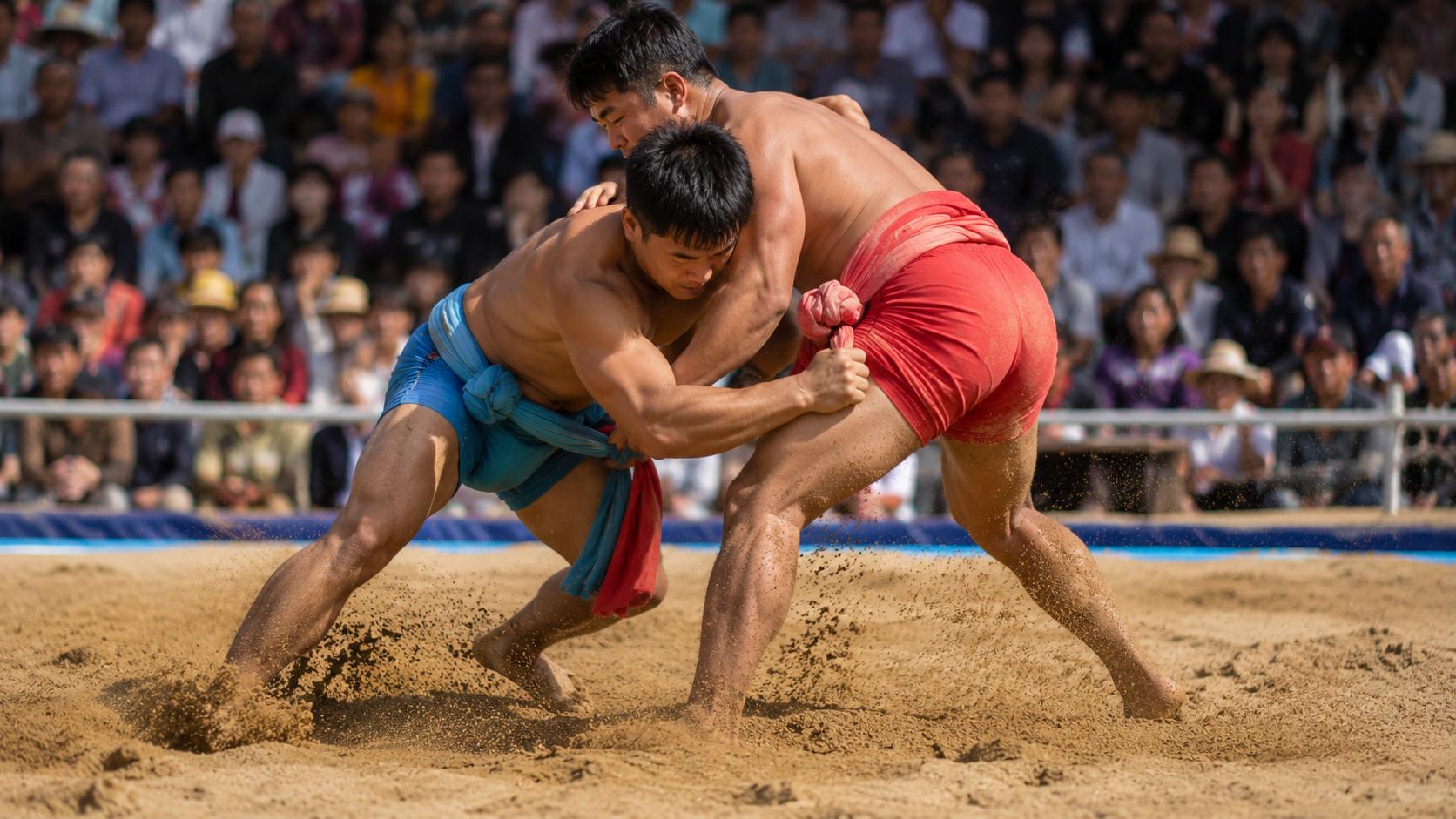
Unlike combative sports designed to inflict physical harm, Korean Ssireum (Traditional Korean Wrestling) is a grand celebration of physical balance, mutual respect, and tactile communication. Inscribed collectively by South and North Korea on the UNESCO Representative List of the Intangible Cultural Heritage of Humanity in 2018, Ssireum stands as a historic bridge of shared cultural identity. Performed on a circular sand pit, this ancient sport requires competitors to lock holds on each other’s fabric belts, known as Satba, relying entirely on core strength, leverage, and 55 distinct codified techniques to topple the opponent. This feature delves into the philosophical foundations of the Satba, the agrarian festival roots of the sport, and its enduring status as a living artifact of Korean history.
In This Feature
A Shared Cultural Bridge Across Borders
Ssireum occupies a unique position in global heritage as the first-ever joint inscription by South and North Korea on the UNESCO Intangible Cultural Heritage list. In 2018, recognizing that a divided peninsula still shared an identical ancestral pulse, the international community officially recognized the sport under the joint title of "Traditional Korean Wrestling (Ssireum/Ssirum)." For over a millennium, regardless of shifting geopolitical borders, the fundamental rules, terminology, and social functions of Ssireum have remained virtually unchanged. It is a powerful testament to the enduring continuity of Korean culture, proving that the shared heritage of the sand pit transcends modern political division.
The Philosophy of Satba: Equilibrium and Empathy
The defining characteristic of Ssireum is the Satba—a long, sturdy fabric band wrapped around the competitor's right thigh and waist. Unlike Western wrestling formats where combatants engage from a distance, Ssireum players (Ssireum-seonshu) begin the match already kneeling and tightly grasping each other's Satba. This initial interlocking forces an immediate, intimate connection where both athletes feel the opponent’s center of gravity, breathing pattern, and muscular tension before the whistle even blows. The sport strictly prohibits striking, choking, or twisting joints; a victory is achieved solely by forcing any part of the opponent's body above the knee to touch the sand, making it an exceptionally safe, harmonious, and empathetic form of physical competition.
From Ancient Tomb Walls to Village Festivals
The lineage of Ssireum is meticulously documented across centuries of Korean art and architecture. The earliest visual evidence dates back to the 4th and 5th centuries, depicted vividly on the stone murals of the Anak Tomb No. 3 and Gakjeochong (Tomb of Wrestling) from the ancient Goguryeo Kingdom. Centuries later, during the Joseon Dynasty, the legendary genre painter Kim Hong-do captured the electric energy of a bustling holiday tournament in his masterpiece, Ssireum. Historically timed with major agrarian celebrations like Dano (Spring Festival), Chuseok (Autumn Harvest), and Baekjung, villages would host massive open-air matchups. The ultimate victor was crowned the "Cheonhasjangsa" (Under-Heaven Strongman) and awarded a live **breeding bull**—the ultimate prize in an agricultural society, symbolizing wealth, vitality, and farming prosperity.
Safeguarding a Living Communal Treasure
Designated as South Korea's National Intangible Cultural Heritage No. 131, Ssireum is classified as a "heritage without a specific individual titleholder." Because the sport was practiced naturally across every neighborhood, valley, and schoolyard for generations, the entire public functions as its custodian. Today, the Korea Ssireum Association and regional academies actively modernize the sport through formalized weight classes and high-production broadcasts, yet the core ancestral rituals remain untouched. Athletes still step barefoot onto the pure sand, bow deeply to their opponents, and shake off the dust together after a fall. By preserving this democratic, non-violent spirit, Ssireum continues to remind the modern world that true strength lies not in breaking an opponent, but in mastering the subtle physics of balance and connection.