


Surak Hu: Seoul’s Hidden Forest Retreat Above the City
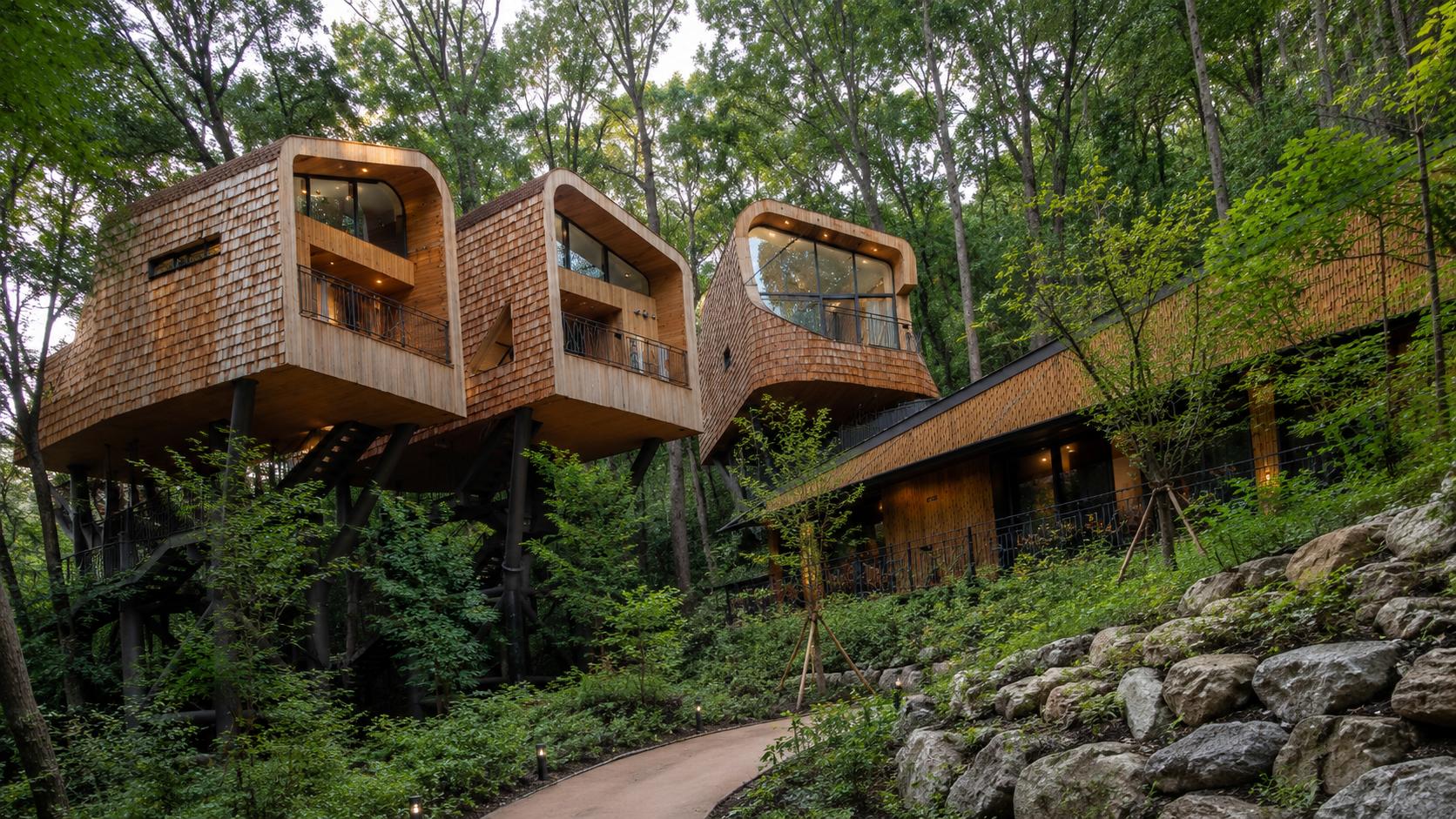
Just steps away from the neon-lit exits of Seoul’s subway Line 4 lies a geographical anomaly that subverts the very definition of a metropolis. Surak Hu, Seoul’s first official municipal forest resort, has quietly opened on the rugged slopes of Mount Surak. Amidst a city defined by soaring concrete apartment complexes, this eco-sanctuary introduces a radical shift in urban architecture: three minimalist wooden treehouses suspended a staggering 14 meters above the forest floor. Blending seamlessly into the ancient cedar canopy, these elevated pavilions offer a suspended escape where the hum of the city is completely replaced by the rustle of leaves. Yet, gaining entry to this architectural oasis requires passing through a uniquely Korean digital trial—a high-stakes booking war so intense it mirrors the ticketing frenzy of a K-pop stadium concert. This feature steps into Seoul’s sky-high sanctuary to explore the architecture of absolute isolation.
In This Feature
The Geometry of the 14-Meter Canopy
The crowning achievement of Surak Hu is not just its preservation of nature, but how it structuralizes human presence within it. Rather than clearing the land to build traditional cabins, the architects chose to elevate the experience—literally. The resort’s signature treehouses are perched 14 meters in the air, nestled like minimalist bird nests between towering cedar and pine trees. Constructed from warm, sustainable timber with expansive glass facades, these structures are engineered to sway almost imperceptibly with the mountain wind. Inside, the design is fiercely minimal, stripping away domestic clutter so that the eye is forced outward, directly into the infinite layers of emerald leaves. To stay here is to exist in a state of architectural levitation, balanced precisely between the earth and the sky.
The Subway-to-Sanctuary Paradox
What makes Surak Hu profoundly radical is its extreme proximity to intense urbanization. Historically, a "forest retreat" in South Korea meant a multi-hour drive to the deep valleys of Gangwon Province. Surak Hu demolishes this geographic barrier. Located within walking distance of Buramsan Station, it creates a startling juxtaposition. A commuter can step off a crowded, hyper-efficient subway train, walk past convenience stores and apartment blocks, and within fifteen minutes, find themselves standing over a pristine mountain stream surrounded by dense, unbothered wilderness. The architecture acts as a decompression chamber, proving that true wilderness does not require vast distances—only clever spatial boundary-making.
The Three-Minute Ticketing War
However, because this sanctuary is so accessible, accessing it has become one of the most competitive endeavors in modern Seoul lifestyle. The moment the monthly reservation window opens on the national booking platform, hundreds of thousands of hyper-connected Seoulites engage in what locals call a "ticketing war." Mirroring the frantic digital scramble for major pop concerts or limited-edition fashion drops, the treehouses at Surak Hu routinely sell out entirely within three minutes. Fingers hover over screens, refreshing at millisecond intervals, as internet speed and sheer luck determine who wins a night of quietude. This fierce digital competition highlights a poignant truth about modern Seoul: the ultimate luxury is no longer material wealth, but a rare slice of absolute silence and disconnected time.
A New Paradigm for Urban Wellness
As cities globally grapple with burnout and the density of urban living, Surak Hu offers a compelling blueprint for the future. It suggests that municipalities must treat vertical nature not as a distant luxury, but as a vital piece of urban infrastructure. By utilizing the vertical space of the mountain canopy, the resort maximizes the psychological impact of the forest while minimizing its environmental footprint. When night falls over Mount Surak, and the subtle, warm lights of the treehouses glow gently through the dark branches, the sprawling metropolis below completely vanishes. For the lucky few who won the booking war, the 14-meter-high refuge becomes more than a cabin; it stands as a monument to the enduring human need to look up, log off, and breathe.