


Why Food Deliveries in Korea Are Left Outside the Door
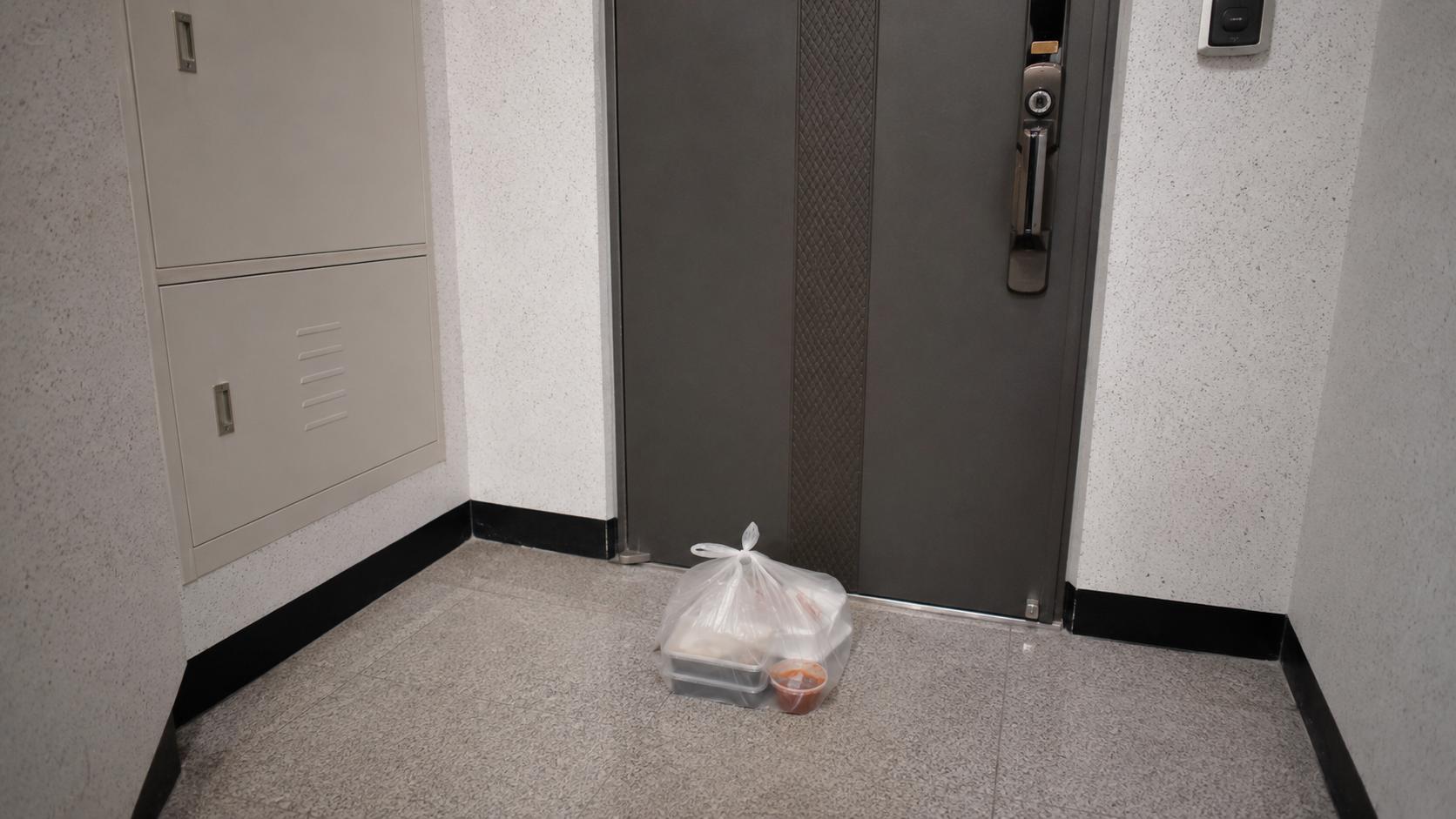
For most urban dwellers around the world, ordering takeout comes with an unspoken script of hyper-vigilance: tracking the courier’s GPS coordinates, rushing to the intercom at the first ring, and accepting the package directly from hand to hand to ensure it isn’t stolen or ruined. But in South Korea, a completely different, silent ritual unfolds millions of times a day. A smartphone notification pings, accompanied by a simple photo of a steaming bag of fried chicken resting on a communal hallway floor. Long before global lockdowns normalized "no-contact delivery," Koreans had already perfected the art of leaving food completely unattended outside their apartment doors. This feature steps into the corridors of Seoul’s high-rises to dissect the sociology behind this phenomenon—a cultural habit powered by absolute social trust, hyper-efficient logistics, and a distinct preference for frictionless, non-face-to-face interaction.
In This Feature
Why Food Deliveries in Korea Are Left Outside the Door
To understand why thousands of dollars worth of high-end tech, luxury goods, and hot meals sit unguarded in Korean apartment hallways daily, one must look past the convenience and into the collective psyche. The phrase "Please leave it at the door" (문 앞에 두고 가세요) is a ubiquitous digital checkbox on Korean delivery apps. It reflects a lifestyle where the physical presence of a delivery rider is deliberately minimized, transforming a commercial transaction into a seamless, automated background process. What strikes global expats as an extreme security risk is, to locals, merely the default standard of modern urban living.
The Architecture of Unwavering Social Trust
The primary anchor of this culture is an unparalleled level of public safety and civic accountability. In many global metropolises, a package left on a doorstep for even ten minutes invites the risk of "porch pirates." In South Korea, however, the theft of doorstep deliveries is exceptionally rare. This structural safety is reinforced by two elements: a deep-seated cultural respect for other people's property and a dense, ubiquitous network of high-definition CCTV cameras lining every apartment corridor, elevator, and street corner. The invisible infrastructure of absolute trust ensures that a hot bowl of jajangmyeon will remain precisely where it was placed, untouched by anyone other than the rightful recipient.
The Infrastructure of the Instant Feast
Sustaining this doorstep culture requires a hyper-optimized logistical engine. Long before the global pandemic forced western delivery platforms to adapt, South Korea’s delivery ecosystem—anchored by tech giants like Baedal Minjeok (Baemin) and Coupang Eats—was already operating at a breakneck pace. The dense vertical layout of Korean residential areas allows riders to navigate high-rises with extreme speed. Because food is prepared, dispatched, and delivered within a tight 20-to-30-minute window, it arrives at the doorstep pipe-hot. Leaving it outside isn't a compromise on quality; the logistical efficiency guarantees that the meal experiences virtually zero thermal loss during its brief stay on the floor.
The Untouched Threshold: A New Paradigm of Privacy
Beyond safety and speed, the doorstep delivery phenomenon highlights a distinct shift toward "Untact" (non-face-to-face) culture. In a fast-paced, hyper-connected society where emotional labor and social fatigue are common, the threshold of the home has become a sacred sanctuary. Interacting with a stranger while wearing loungewear or disrupting the quietude of a household is viewed as an unnecessary social friction. By choosing to have meals left outside, Koreans opt for absolute domestic privacy. The doorstep serves as a clever spatial boundary—a neutral zone where commerce ends, absolute safety is presumed, and personal relaxation can begin without interruption.