


The Korean Jelly That Tastes Like Almost Nothing — and That's the Point
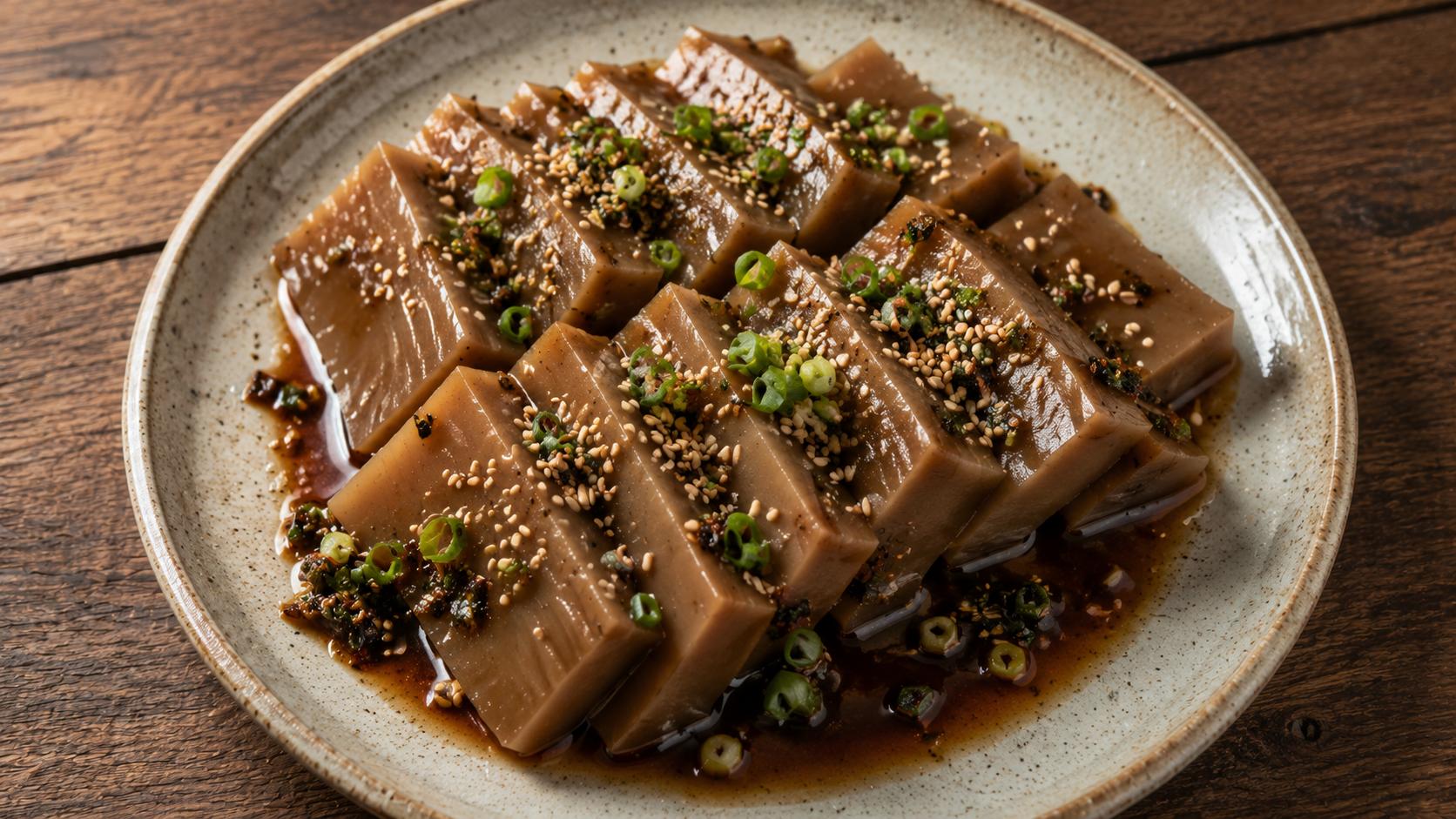
Dotorimuk is a nearly flavorless Korean jelly made from acorn starch, born out of famine but now a beloved post-hike tradition paired with makgeolli and pajeon.
In This Article
Dotorimuk — Korea's Acorn Jelly
In autumn, it's common to see people in Korea's mountains picking up acorns off the ground. What looks like squirrel food has actually been a Korean food source for centuries. The acorns are ground down, leached, and boiled into a soft, jiggling jelly called dotorimuk. The flavor is faint and slightly bitter, but for Koreans, it's also a dish loaded with nostalgia.
The History Behind It
The earliest documented account of dotorimuk dates back to the Japanese invasions of Korea during the Joseon Dynasty. When King Seonjo fled north to escape the invading forces, food shortages left villagers with little to offer the king and his entourage — so they hurriedly made dotorimuk and served it to him. He reportedly found it surprisingly good, and it became a dish served at the royal table afterward. What makes dotorimuk especially distinctive is how rarely this practice shows up outside Korea. One known exception is a small region in Kochi Prefecture, Japan, where Korean prisoners of war taken during the same 16th-century invasions settled and continued making it — the Japanese version is called kashi-tofu, or "acorn tofu."
How It's Made
Making dotorimuk from scratch is labor-intensive. Acorns are gathered, washed, and dried, then shelled and checked individually — a surprising number turn out to be hollow or insect-damaged. The nutmeat is ground into a paste, mixed with water, and left to settle repeatedly over several days. Each round of soaking pulls out more of the tannins responsible for the acorn's bitter, astringent taste — the water turns brown each time and gets discarded until the bitterness fades. The remaining starch is boiled into a thick paste, poured into a mold, and left to cool until it sets into a firm, wobbly jelly with a caramel-brown color. Most people today buy the acorn starch powder pre-made and skip the weeks-long leaching process entirely.
What Does It Taste Like?
Dotorimuk is nearly flavorless on its own — soft, cool, and faintly nutty with a slight astringency that lingers afterward. The texture is the most notable thing about it: smooth, slightly bouncy, and a bit slippery, closer to a firm gelatin than anything sweet. Some foreigners trying it unseasoned have described the taste as similar to cork — not an unreasonable comparison, since both acorns and cork come from oak trees. Because the jelly itself carries so little flavor, it's almost always served with a seasoning sauce made from soy sauce, gochugaru chili flakes, garlic, and sesame oil. A cold version called dotorimuk-sabal — acorn jelly served in a cold broth with vegetables — is especially popular in summer. Thinly sliced and dried, it becomes mukmallaeng-i, which trades the jelly's softness for a chewier texture used in seasoned side dishes or soups. In Korea, the most iconic way to eat it is after a hike: nearly every mountain has a restaurant at its base serving dotorimuk alongside pajeon savory pancakes and makgeolli rice wine — a combination that has become a ritual of its own.
Is It Good for You?
Dotorimuk is low in calories and high in water content, which has made it a popular diet food in Korea. The tannins in acorns are also traditionally believed to have a binding effect that helps with diarrhea. At the same time, those same tannins bind to minerals like iron and calcium, which means people with anemia or osteoporosis are generally advised to limit how often they eat it, since frequent consumption could interfere with mineral absorption.