


Planning a Trip to Korea in Summer? Know Jangma First
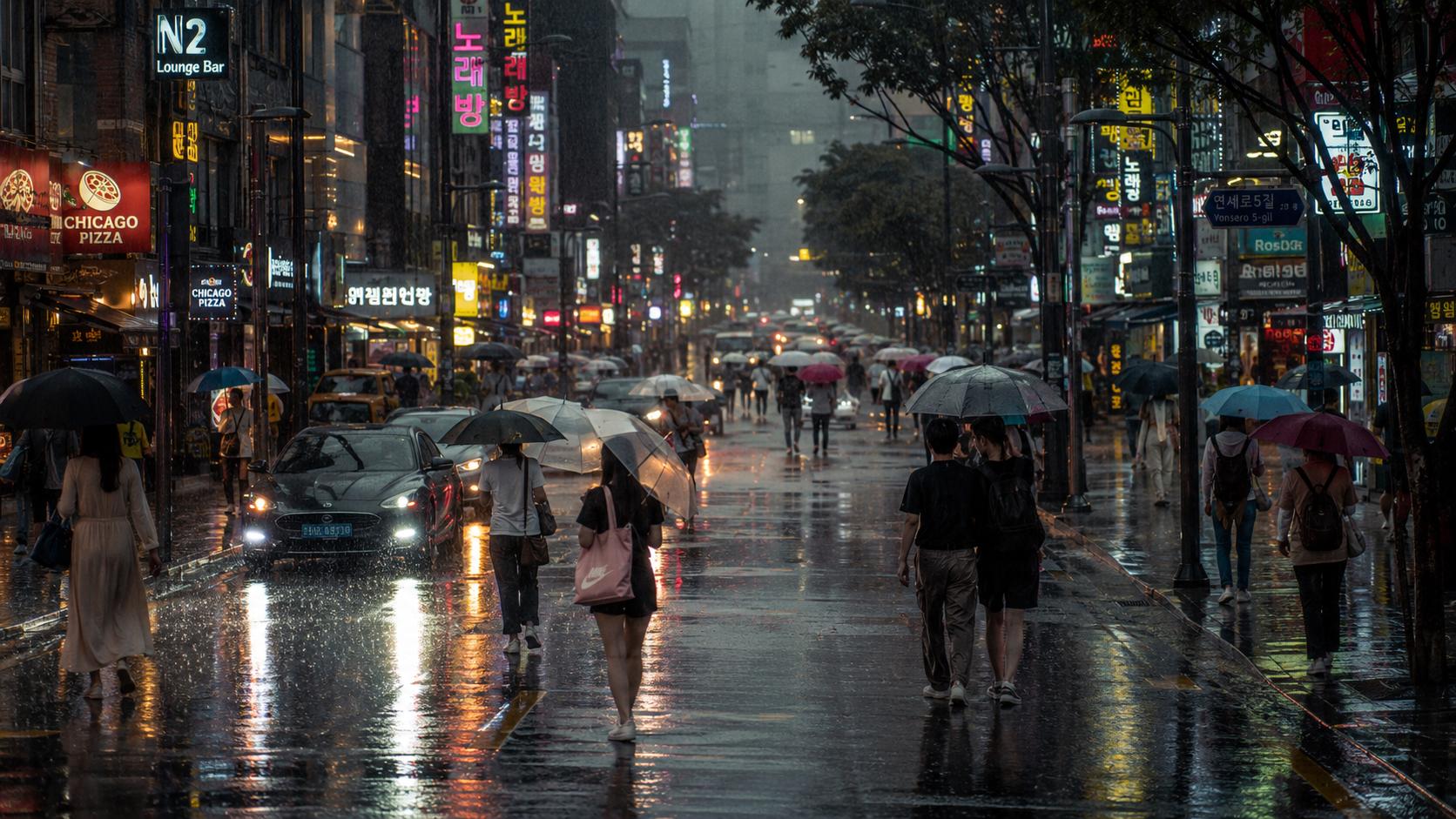
Jangma, Korea's summer rainy season, doesn't mean rain for a full month straight — but its unpredictable, localized downpours can still complicate travel plans from late June through July.
In This Article
Jangma — Korea's Rainy Season That Complicates Travel Plans
If you're planning a Korea trip and it happens to land in late June or July, there's one word worth knowing: jangma. Korea's rainy season has a reputation for nonstop downpours, but what actually happens on the ground is a bit more nuanced than that.
When Does It Happen, and How Much Rain Falls?
Jangma typically runs from mid-June through late July. It starts on Jeju Island first, then moves north through the southern provinces and into central Korea, including Seoul. Based on long-term averages, Jeju sees its rainy season begin around June 19, the southern regions around June 23, and the Seoul metropolitan area around June 25 — with the whole period lasting roughly 31 to 32 days. The exact dates shift from year to year. In 2025, jangma arrived in Jeju a week earlier than average, starting on June 12.
It's Not Constant Rain
The name suggests a month of uninterrupted rainfall, but that's not typically how it plays out meteorologically. Clear stretches and lulls in the rain are common throughout the jangma period. What's increased in recent years is localized, intense rainfall hitting specific areas hard — which creates the impression that it's "raining nonstop" even when the broader pattern includes plenty of dry hours. A nighttime pattern has also become more common, where the day stays calm and then heavy rain hits after dark. Even after jangma officially ends, unstable atmospheric conditions can trigger sudden, intense downpours through early August.
What Travelers Should Know
What makes jangma tricky for travel is less the rain itself and more its unpredictability — both in intensity and timing. An umbrella alone doesn't always cut it. Rainfall exceeding 100mm per hour has been recorded at multiple locations across Korea in recent years, and on those days, outdoor activity essentially isn't an option. If your trip falls between late June and mid-July, it's worth building both outdoor and indoor plans into the itinerary. Museums, cafés, and shopping malls make solid backup options, letting you adjust on short notice if a downpour rolls in.