


Manjanggul and the Geomunoreum Lava Tube System: Inside Jeju's UNESCO Underground
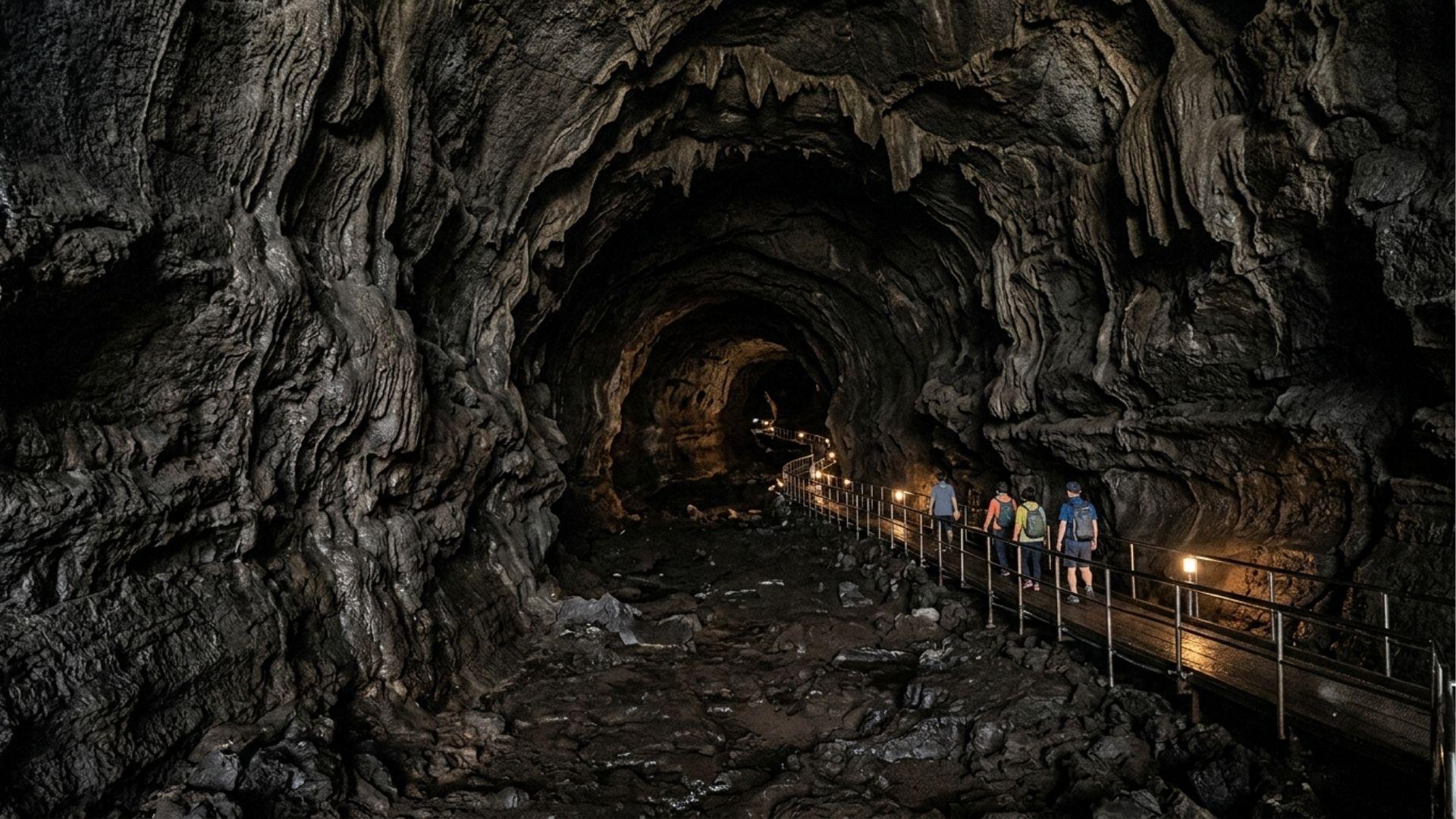
Beneath the surface of Jeju Island lies one of the most remarkable volcanic cave systems on earth. The Geomunoreum Lava Tube System — a network of tunnels formed by flowing lava some 300,000 years ago — stretches across the northeastern part of the island and culminates in Manjanggul, one of the longest lava tubes in the world. Recognized as part of the Jeju Volcanic Island and Lava Tubes, a UNESCO World Natural Heritage Site since 2007, these underground passages preserve geological formations of extraordinary rarity and scale. For visitors to Jeju, descending into Manjanggul is one of the island's most genuinely surprising experiences.
In This Feature
How the Lava Tubes Were Formed
The Geomunoreum Lava Tube System originated from a series of volcanic eruptions centered on Geomunoreum, a parasitic cone on the northeastern slopes of Hallasan. As lava flowed rapidly downhill toward the coast, the outer surface cooled and solidified while molten rock continued moving through the interior — eventually draining out and leaving behind a hollow tunnel. This process, repeated over thousands of years, produced a connected network of caves running nearly 13 kilometers from the eruption site to the sea.
What makes this system exceptional is not just its length, but the variety and quality of its internal formations. Secondary minerals deposited by groundwater over millennia have produced cave corals, stalactites, lava columns, and elaborate carbonate formations rarely found together in a single lava tube system anywhere in the world.
What You See Inside Manjanggul
Manjanggul is the only section of the system open to the public, and approximately one kilometer of its total 7.4-kilometer length is accessible by foot. The passageway is wide enough in places to feel like a cathedral — ceilings reach up to 23 meters in height — and the cave maintains a constant temperature of around 11°C regardless of season, making it naturally cool in summer and warmer than the outside air in winter.
The cave's most iconic feature is a 7.6-meter lava column near the end of the accessible section — one of the tallest of its kind in the world. Formed when lava dripping from the ceiling built up over time, it stands as a focal point of the visit. The lighting throughout the accessible route is deliberately minimal, preserving the cave's natural atmosphere while making the geological formations clearly visible.
UNESCO Recognition and Why It Matters
In 2007, the Geomunoreum Lava Tube System was inscribed as part of the Jeju Volcanic Island and Lava Tubes UNESCO World Natural Heritage Site — one of only a handful of natural sites in Korea to receive this designation. The UNESCO evaluation specifically cited the system's outstanding universal value in terms of geological history, noting that the combination of lava tube length, secondary mineral diversity, and preservation quality is unmatched globally.
The designation covers three components: Geomunoreum itself, the connected lava tube caves including Manjanggul, and the Seongsan Ilchulbong tuff cone on Jeju's eastern tip. Together they represent different aspects of Jeju's volcanic origin — from the eruption source to the coastal formations shaped by the same ancient geological forces.
Visiting the Geomunoreum Lava Tube System
Manjanggul Cave is located in Gimnyeong-ri on Jeju's northeastern coast, roughly an hour's drive from Jeju City. The cave is open year-round, and the one-kilometer accessible section takes approximately 30 to 40 minutes to walk at a relaxed pace. Sturdy footwear is recommended — the cave floor is uneven in places — and a light layer is advisable given the constant cool temperature inside.
Geomunoreum itself is accessible through a separate reservation-based guided tour, available on selected days of the week due to conservation restrictions. For visitors with a deeper interest in the geology of the system, combining a Geomunoreum hike with a Manjanggul cave visit offers a complete picture of the landscape above and below the surface.