


Why Are These Stone Grandpas Everywhere in Jeju?
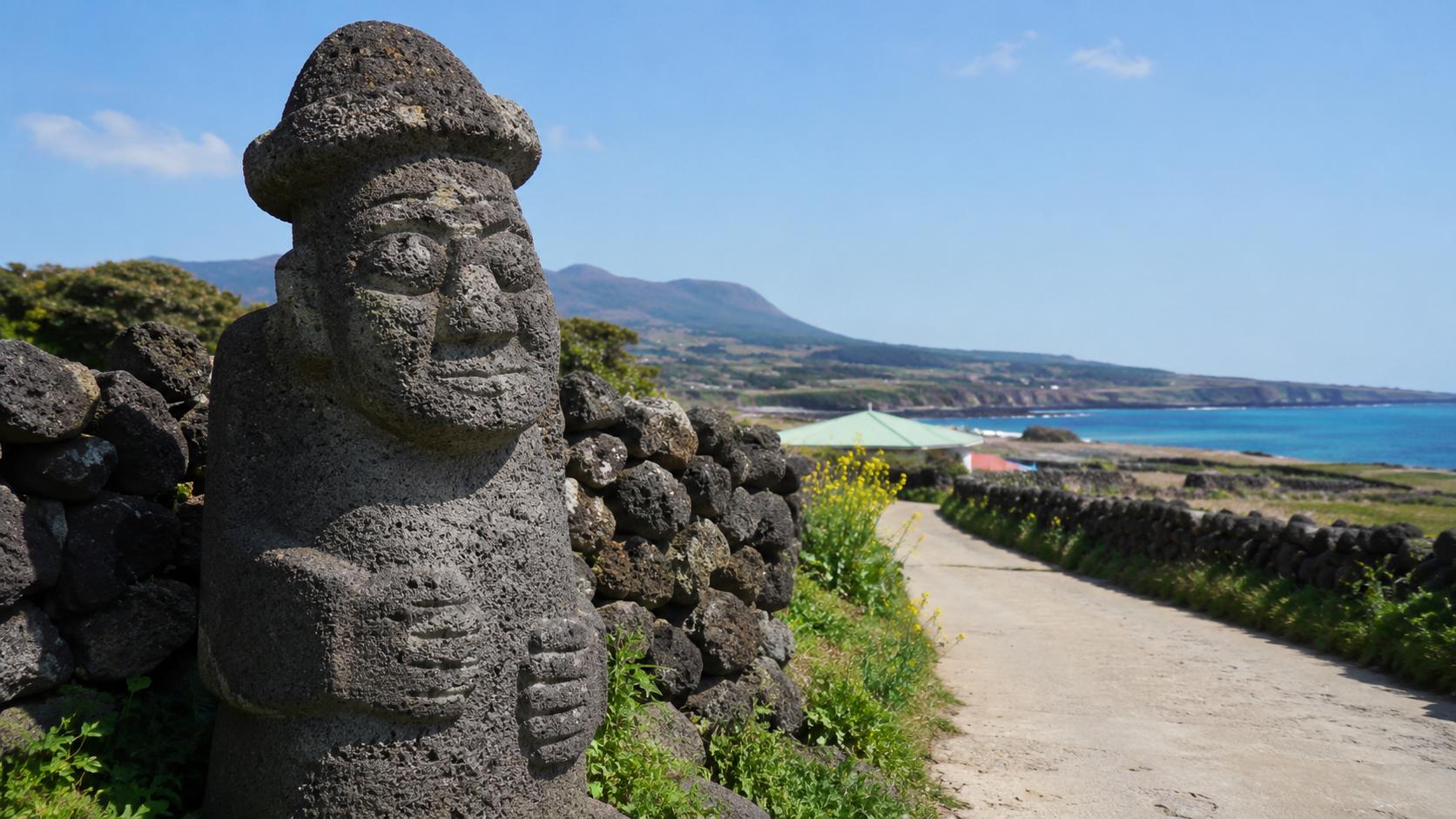
Visitors arriving on Jeju Island quickly notice a peculiar sight repeated almost everywhere: weathered stone figures with oversized heads, rounded eyes, and hands resting quietly on their stomachs. Known as Dol Hareubang, these volcanic stone statues have become one of Jeju’s most recognizable symbols. To many foreign travelers, they look playful or mysterious — often described as “stone grandpas” standing guard across the island. But behind their simple appearance lies a deeper story tied to Jeju’s history, spiritual beliefs, and centuries of local identity shaped by isolation and survival.
In This Feature
The Origins of Jeju’s Stone Guardians
Dol Hareubang, which literally translates to “stone grandfather,” first appeared in Jeju during the mid-18th century under the Joseon Dynasty. Historians generally trace their creation to around 1754, when local authorities commissioned them to stand outside the gates of major administrative centers. Carved from Jeju’s abundant volcanic basalt, the statues were shaped using one of the island’s most accessible natural materials — dark porous stone formed by ancient lava flows that define much of Jeju’s landscape today.
Unlike decorative sculptures created purely for aesthetics, Dol Hareubang served a practical and symbolic purpose. Jeju existed as a geographically isolated island for much of Korean history, often vulnerable to piracy, harsh weather, and limited external support. Communities developed strong traditions centered around protection, and these statues gradually came to embody that defensive role within local society.
What Dol Hareubang Actually Represent
At first glance, the statues appear almost humorous: large mushroom-shaped hats, exaggerated facial expressions, and short stocky proportions that make them seem unusually approachable compared to more formal monuments found elsewhere in Korea. Yet these design choices were never accidental. Their facial expressions were believed to project authority while remaining calm, while the distinctive hats reflected traditional headwear associated with officials and respected elders.
Local folklore often assigns spiritual meaning to the figures. Many island residents historically believed Dol Hareubang protected villages from evil spirits and misfortune, functioning as guardians positioned between the human world and unseen forces. Similar protective stone figures can be found across East Asia, but Jeju’s versions evolved into something uniquely local — reflecting both the island’s independent cultural development and its strong connection to folk religion.
Why They Became Jeju’s Cultural Symbol
Today, Dol Hareubang are no longer simply protective monuments. Over time, they have transformed into the unofficial face of Jeju itself. Visitors encounter them at airports, museums, parks, souvenir shops, and even cafés, where miniature versions have become one of Korea’s most recognizable regional icons. Their widespread presence often surprises international tourists, many of whom first assume they are decorative statues created specifically for tourism.
In reality, their persistence reflects something much older. Jeju has long maintained a cultural identity distinct from mainland Korea — shaped by volcanic geography, maritime traditions, and generations of relative isolation. Dol Hareubang remain one of the clearest physical reminders of that identity. They are not simply tourist mascots. They are cultural guardians that continue telling the story of an island that developed according to its own rules for centuries.