


Jeju’s Native Horses and a Forgotten Part of Korean History
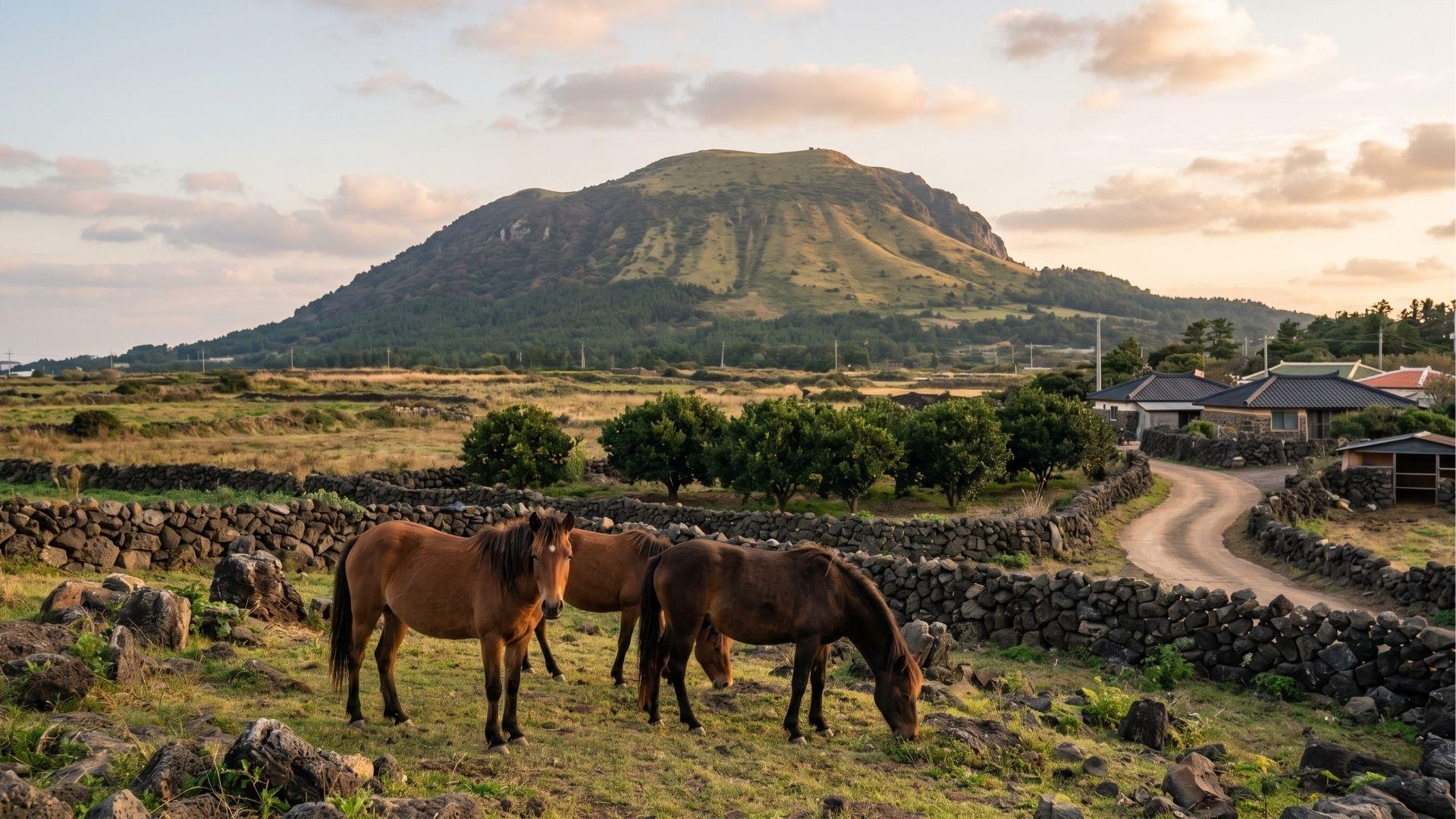
Most visitors to Jeju Island immediately notice its volcanic landscapes, black stone walls, and famous tangerine farms. What far fewer people notice is something that has shaped the island for centuries: horses. Long before Jeju became Korea’s most popular vacation destination, it was known across the Korean Peninsula as the country’s most important horse-breeding region. The small but remarkably resilient native Jeju horse carries with it a history tied not only to local farming culture, but also to Mongol invasions, military strategy, and one of the island’s oldest living traditions.
In This Feature
The Origins of Jeju’s Native Horses
The Jeju horse, known locally as Jeju-ma, is one of Korea’s oldest surviving native horse breeds. Smaller than the horses commonly seen in Western countries, Jeju horses typically stand around 115 to 125 centimeters tall. Their compact frame, however, hides remarkable endurance. Over centuries, these animals adapted to Jeju’s unusually harsh environment — strong coastal winds, rocky volcanic terrain, and long winters with limited vegetation.
Historical records suggest horses existed on Jeju long before Korea’s modern dynasties began documenting them. By the time of the Goryeo Dynasty, the island had already established itself as an important horse-breeding center. Horses raised on Jeju were highly valued for transportation, farming, and military purposes, making them one of the island’s most strategically important resources for hundreds of years.
How the Mongols Changed Jeju Forever
One of the most dramatic turning points in Jeju’s horse history came during the 13th century, when the Mongol Empire invaded Korea. After defeating the Goryeo Kingdom, Mongol rulers recognized Jeju’s ideal geography for raising horses and transformed large sections of the island into massive ranching grounds. They imported superior Mongolian horses and introduced advanced breeding methods previously unknown in Korea.
This period permanently reshaped Jeju’s agricultural identity. Over time, native horses interbred with Mongolian breeds, creating the distinct Jeju horse seen today. Even centuries after the Mongol Empire disappeared, the island retained horse-riding traditions and ranching practices that can still be traced back to this historical occupation. Few tourists realize that one of Korea’s most peaceful islands quietly carries the legacy of one of history’s largest empires.
The Ranch Culture Still Alive Today
Although horses are no longer central to daily transportation or military strategy, Jeju’s horse culture never disappeared. Across the island, open grazing fields known as mokjang — traditional ranches — continue to operate, preserving a lifestyle that has existed for generations. Local communities have historically depended on these ranching systems not only for breeding horses, but also for maintaining communal land management practices unique to Jeju society.
Visitors today often encounter horses while passing through areas like Hallasan’s foothills or the island’s eastern plains, but many assume they exist purely for tourism. In reality, these horses represent one of Jeju’s oldest living traditions. Behind the scenic vacation photos lies a forgotten piece of Korean history: an island whose identity was shaped as much by horses as by lava, wind, and the sea.