


The Philosophy of the Korean Bapsang: How a Single Table Conquered Space and Time
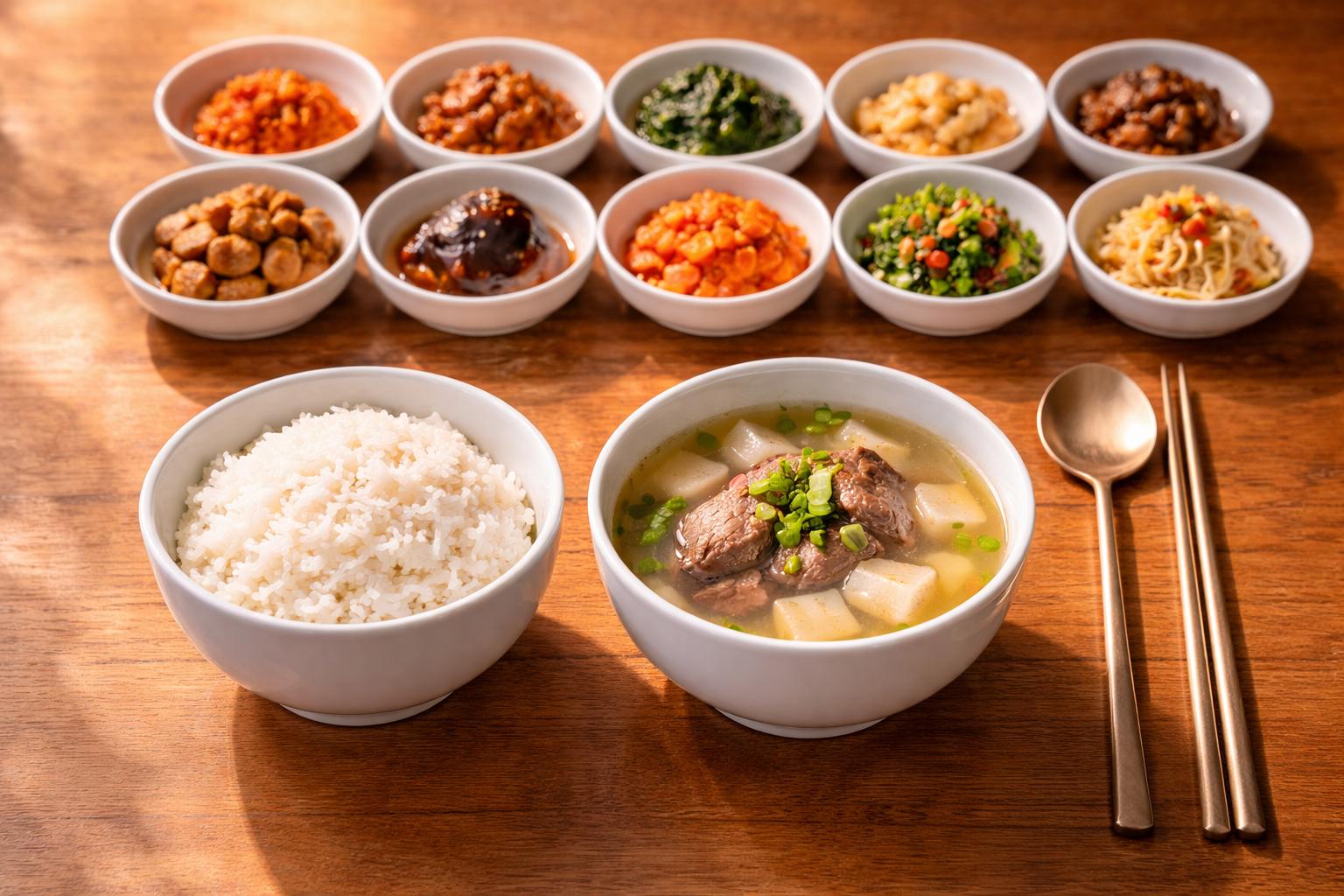
The K-food global phenomenon is changing. Beyond just tasting Kimchi or K-BBQ, travelers are now diving deep into the traditional architecture of the Korean "Bapsang."
In This Article
The Philosophy of the Korean Bapsang: How a Single Table Conquered Space and Time
When global food lovers think of traditional Korean cuisine (Hansik), fiery red stews and sizzling pork belly often steal the spotlight. However, locals don't just focus on the individual ingredients. Instead, their dining experience is anchored in a holistic visual and spatial layout—the Bapsang (traditional dining table).
In Korean culture, a meal is not simply a biological necessity; it is a meticulously arranged event designed to evoke balance, harmony, and social intimacy. This specific geometry of food has survived centuries, transitioning seamlessly from the quiet wooden verandas of Hanok houses to the bustling metropolitan restaurants of modern Seoul.
What makes this even more compelling is how this deep-rooted culinary architecture matches contemporary lifestyles. As documented by cultural institutes like the Korean Cultural Centre (KCCUK), the traditional orchestration of side dishes and main staples continues to inspire global food curators, drawing fresh curiosity toward how the table itself functions as a piece of art.
The Bapsang Was Not Just Furniture — It Was a "Space-Based" Dining System
Western fine dining relies heavily on a "time-based" progression—appetizers, main courses, and desserts arrive in sequential stages. In contrast, the Korean Bapsang operates on a sophisticated "space-based" format. Every single element of the meal is presented simultaneously on one surface.
This structural difference shifts the power dynamic of dining completely. Instead of passively accepting what the chef serves next, the diner looks across a vivid landscape of colors, temperatures, and textures, actively curating their own sequence of flavors with every single spoonful.
When a formal Hanjeongsik (full-course meal) is served, the visual impact expands dramatically. The table is so entirely covered with porcelain or bronzeware (Yugi) that the wooden surface beneath disappears entirely. It turns the simple act of sitting down to eat into a theatrical immersion of abundance.
Left Rice, Right Soup: Table Geometry as Daily Information
A traditional Bapsang is governed by highly specific mathematical and cultural rules. The basic layout centers strictly around the individual diner's perspective. Depending on the pairing, placement instantly reveals whether the meal is meant for the living or an ancestral tribute.
* Bap (Rice) on the Left: The essential source of vitality sits squarely on the left.
* Guk (Soup) on the Right: Warm liquids are placed on the right for ergonomic, right-handed accessibility.
* Banchan (Side Dishes) in Rows: Positioned further back, categorized by cooking style, temperature, and protein type.
* Sujeo (Spoon & Chopsticks): Set neatly to the far right, parallel to the soup bowl.
Reversing this alignment—placing the soup bowl on the left and the rice on the right—is a critical taboo in everyday life, as that exact configuration is reserved solely for Jesa (ancestral memorial rituals). In this way, the layout of a simple dinner table acts as a form of cultural information, wordlessly anchoring the family in the present world.
The Shared Core of Banchan and Global K-Food Trends
Modern dining elsewhere often favors individualized portions. However, the Joseon-era aristocratic households and modern Seoul apartments share a core philosophy: while rice and soup are personal, the vast matrix of Banchan (side dishes) is fundamentally communal.
Without saying a word, sharing stews and fermented delicacies from the same central plates establishes a unique social bond—a concept Koreans describe as "Jeong" (emotional attachment). As global tourists look for authentic cultural interactions over generic sightseeing, sitting around a shared Bapsang is fast becoming the ultimate gateway to understanding the true collective soul of Korea.