


Why Koreans Fight Over the Bill After Every Meal
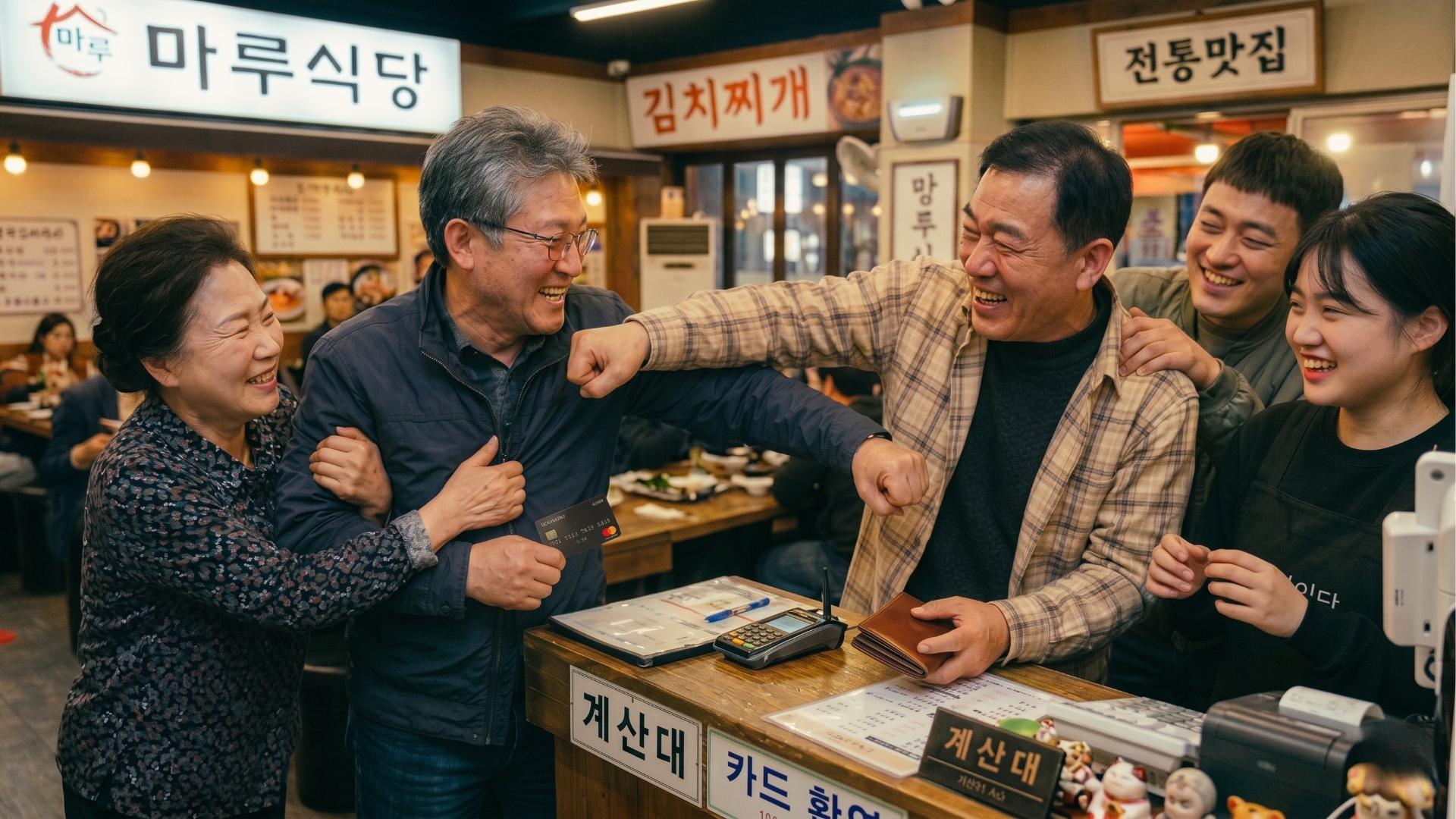
Walk into any Korean restaurant after a meal ends, and you will likely witness a small but intense confrontation near the cashier.
In This Article
Someone always insists on paying, and it is never an accident.
Walk into any Korean restaurant after a meal ends, and you will likely witness a small but intense confrontation near the cashier. Two or three people reaching for their wallets at the same time, hands batting each other away, voices rising just slightly. To an outsider, it looks like an argument. To a Korean, it is a ritual of care.
This is not generosity. It is grammar.
In most Western countries, splitting a bill is the default. It is clean, fair, and emotionally neutral. Nobody owes anyone anything when the meal ends. In Korea, the logic runs differently. Paying for someone else is not a grand gesture reserved for special occasions. It is a recurring social exchange embedded in how relationships are maintained. The person who pays this time expects, without saying a word, that the other person will pay next time. And they will. Both parties track this without a spreadsheet, without reminders. The memory is social, not financial.
Age and rank shape who reaches first
The exchange is not random. In Korean social structure, seniority carries weight. An older colleague, a senior in the same friend group, or a manager will typically pay before a junior does. This is not charity. It is an acknowledgment of the relationship. The junior accepts, and the cycle continues. The same dynamic plays out in family dinners, team lunches, and casual meetups between friends who have known each other for years. Nobody audits the ledger, but everyone senses when it has been too long since they last paid.
What it actually means when someone pays for you
In cultures where splitting is standard, being paid for can feel slightly uncomfortable, even transactional. In Korea, it signals something different. It says: I see you as someone worth investing in. I am choosing to be in a reciprocal relationship with you. The meal itself is almost secondary. The act of paying is a vote of confidence in the relationship. Refusing to accept it, on the other hand, can read as a refusal of closeness itself.
Foreigners almost always get this wrong at first
Most foreign visitors, conditioned by the logic of splitting, will immediately try to calculate their share or insist on paying their portion. This can inadvertently signal that they want to keep the relationship at arm's length. Accepting the meal, saying thank you genuinely, and picking up the next bill without being asked is the correct move. It is also, once understood, a remarkably warm way to operate. The tab becomes a quiet way of saying: we are still doing this, you and I.
Not a rule, but a feeling
None of this is written down anywhere. There is no formal obligation, no contract. But the expectation exists, and breaking it repeatedly does have consequences. Friendships cool. Colleagues become distant. The person who never pays, or who always finds a reason to slip away when the bill arrives, earns a reputation quietly and quickly. In a culture where relationships are maintained through small, repeated acts of giving, opting out is noticed.
A different definition of fair
The Korean approach to paying is not inefficient or irrational. It is simply built on a different premise. Where Dutch-pay cultures define fairness as equal contribution in the moment, Korean dining culture defines fairness as equal contribution over time. Both are logical. Both work. But only one of them turns every meal into an ongoing conversation about who you are to each other. Next time you see two Koreans arguing over a bill, do not intervene. Just watch. You are witnessing a friendship being maintained in real time.