


MAKGEOLLI(막걸리): From Farmers' Drink to Global Fermented Alcohol
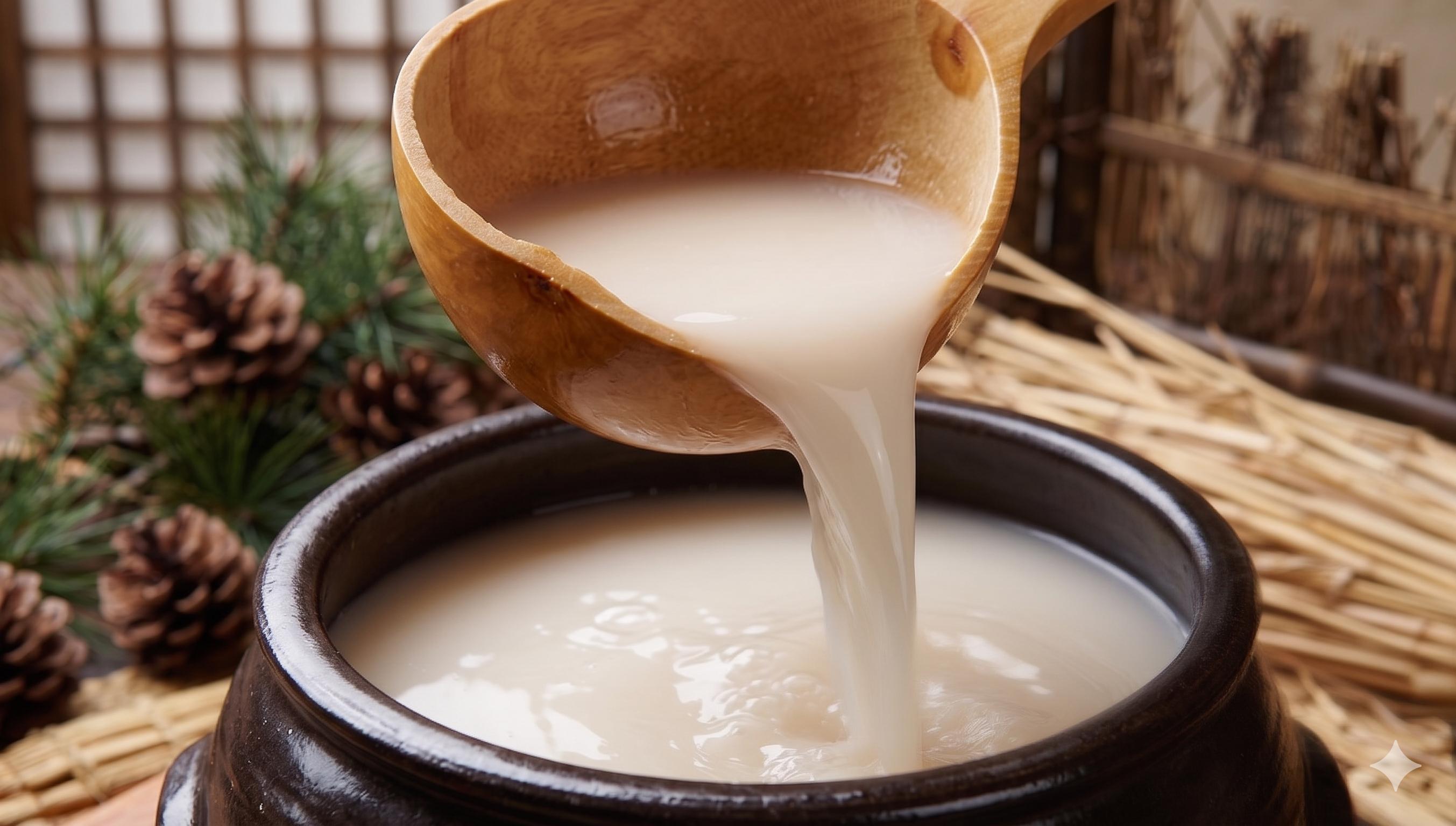
MAKGEOLLI (막걸리) is a traditional Korean fermented rice alcohol made from rice, water, NURUK (누룩, Korean fermentation starter), and yeast.
In This Article
What Is MAKGEOLLI?
MAKGEOLLI (막걸리) is a traditional Korean fermented rice alcohol made from rice, water, NURUK (누룩, Korean fermentation starter), and yeast. Unlike distilled spirits such as soju, it is produced through fermentation alone, with an alcohol content that typically sits around 6–8%.
Because rice solids are not fully removed after fermentation, the drink retains its characteristic milky white color and thick texture. The name itself reflects how it is made. “Mak” roughly translates to “roughly” or “carelessly,” while “geolli” derives from a verb meaning “strained.” Traditionally, the drink was filtered only lightly through cloth, leaving fine sediment behind — and that sediment is precisely what gives MAKGEOLLI its texture and depth of flavor.
Why Does It Look Cloudy?
Many people encountering MAKGEOLLI for the first time assume the white color comes from milk. It does not. The cloudy appearance comes entirely from suspended rice particles and yeast remaining in the liquid after fermentation.
Traditional production involved straining the liquid lightly through cloth, intentionally leaving fine sediment in. Modern commercial products vary widely — some are smooth and lightly filtered, while others carry visible sediment throughout.
Premium products often emphasize the natural rice texture as a deliberate quality signal, similar to how unfiltered sake or hazy IPAs are positioned in their respective markets. This visual identity has become one of MAKGEOLLI’s most recognizable characteristics internationally.
Fresh vs. Pasteurized: What Is the Difference?
MAKGEOLLI comes in two distinct forms: fresh (생막걸리, saeng-makgeolli) and pasteurized (살균막걸리, salgyun-makgeolli). The two differ in taste, storage requirements, and distribution.
Fresh MAKGEOLLI still contains active yeast and bacteria. Fermentation continues slowly inside the bottle, which means carbonation can increase over time, flavor shifts continuously, and refrigeration is essential.
Shelf life is relatively short. This is why some bottles sold in Korean convenience stores carry warnings to open carefully — pressure builds inside as fermentation continues.
Pasteurized MAKGEOLLI is heat-treated to stop microbial activity. The result is a product that is more stable for export, easier to distribute internationally, and less likely to build pressure inside the bottle.
For this reason, pasteurized products dominate the export market. However, many enthusiasts argue that the pasteurization process reduces the complexity and freshness of the flavor.
The divide mirrors a familiar debate in craft beer culture — fresh draft versus shelf-stable commercial product.
How Does MAKGEOLLI Naturally Become Fizzy?
The carbonation in MAKGEOLLI is not artificially injected. It develops naturally during fermentation.
As yeast consumes sugar, it produces two byproducts simultaneously: alcohol and carbon dioxide. When the drink is bottled before fermentation fully ends, some of that carbon dioxide remains trapped inside the liquid — creating MAKGEOLLI’s signature soft fizz.
The level of carbonation varies depending on temperature, sugar content, fermentation duration, and storage conditions. Some modern breweries deliberately control these variables to produce a champagne-like texture.
This characteristic — natural carbonation from active fermentation — is one of the key reasons international consumers are drawing comparisons between MAKGEOLLI and natural wine, kombucha, unfiltered sake, and craft beer.
Why Is MAKGEOLLI Gaining International Attention?
The growth of MAKGEOLLI in export markets is linked to a broader rise in global interest in Korean food culture.
Several factors are contributing: the international expansion of Korean restaurants, growing consumer interest in fermentation-based foods, and demand for lower-alcohol alternatives.
The comparisons international consumers draw between MAKGEOLLI and natural wine, kombucha, or hazy craft beer are accelerating this interest. The cloudy appearance, natural fermentation process, and relatively low alcohol content give it common ground with drinks that already have established audiences abroad.
Breweries are increasingly developing export-specific products, with improvements to packaging and pasteurization processes designed for international shelf stability.
A drink that was once considered old-fashioned in Korea is now being repositioned in global markets as a premium cultural product connected to craftsmanship, fermentation science, and regional identity.
This trajectory mirrors the broader reframing of Korean fermented foods — from kimchi to doenjang — as they gain recognition in international food culture.