


Why Do Koreans Say "It’s Refreshing" When It’s Hot? Understanding the Social Implications of Korea’s
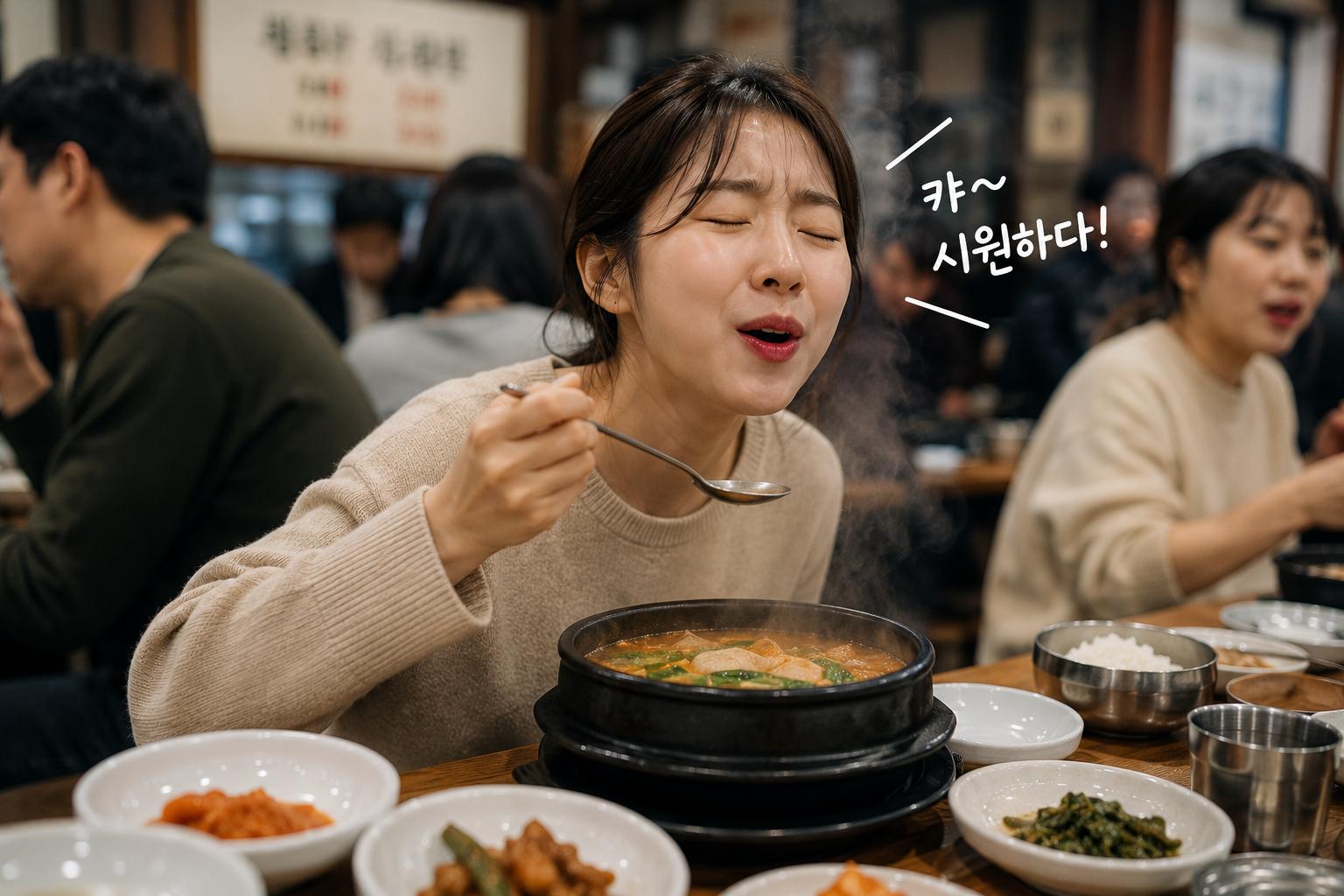
For Koreans, "Siwonhada" (refreshing) is more than just a temperature-related word. Through hot soup, it captures a unique emotional and physical sense of relief.
In This Article
Linguistic Paradox: Redefining "Siwonhada"
To foreigners, seeing a Korean shout "Ah, Siwonhada!" (refreshing/cool) while sipping hot broth is confusing. While the temperature is objectively "hot," Koreans describe it as "Siwonhada." Behind this linguistic contradiction lies a unique emotional and aesthetic appreciation deeply rooted in Korean culture.
In Korean, "Siwonhada" does not simply mean a physical low-temperature state. In the context of Korean soup culture, it represents a complex mix of sensations:
- Relief: A feeling of clearing out a stuffy or clogged stomach.
- Refreshing: A clean sensation that resets the palate after spicy or greasy food.
- Catharsis: The physical pleasure of tension being released as hot broth flows through the body.
The Social Function of Soup Culture
In Korea, soup dishes function as more than just a meal; they act as a tool for social bonding and healing.
The Sentiment of "Sok-puri": In Korean society, "Sok" (the stomach/inner-self) symbolizes personal health and emotions. The act of soothing a "Sok" damaged by stress or alcohol with hot soup is the most popular form of self-care.
The Aesthetics of Sharing: The culture of sharing a single pot with others serves as a medium that binds various side dishes together and is a powerful signal of affection among Koreans.
Soup in the Context of Korean Society
Soup dishes are central to the Korean dining industry. It is rare for a Korean daily meal to be without soup. Furthermore, the high correlation between high-stress days and the consumption of soup dishes proves that soup is an "emotional prescription" rather than mere nutritional intake for Koreans.
Conclusion: Soup as an Emotional Language
The exclamation "Siwonhada" is a cultural indicator showing how Korean society has endured hardships and stress. If you see someone in Korea saying "Siwonhada" after a hot bowl of soup, understand that they are not just drinking a hot liquid, but savoring a refreshing "rest" contained within it.