


The Politics of Picking Office Lunch: Why Is It Such a Daily Struggle?
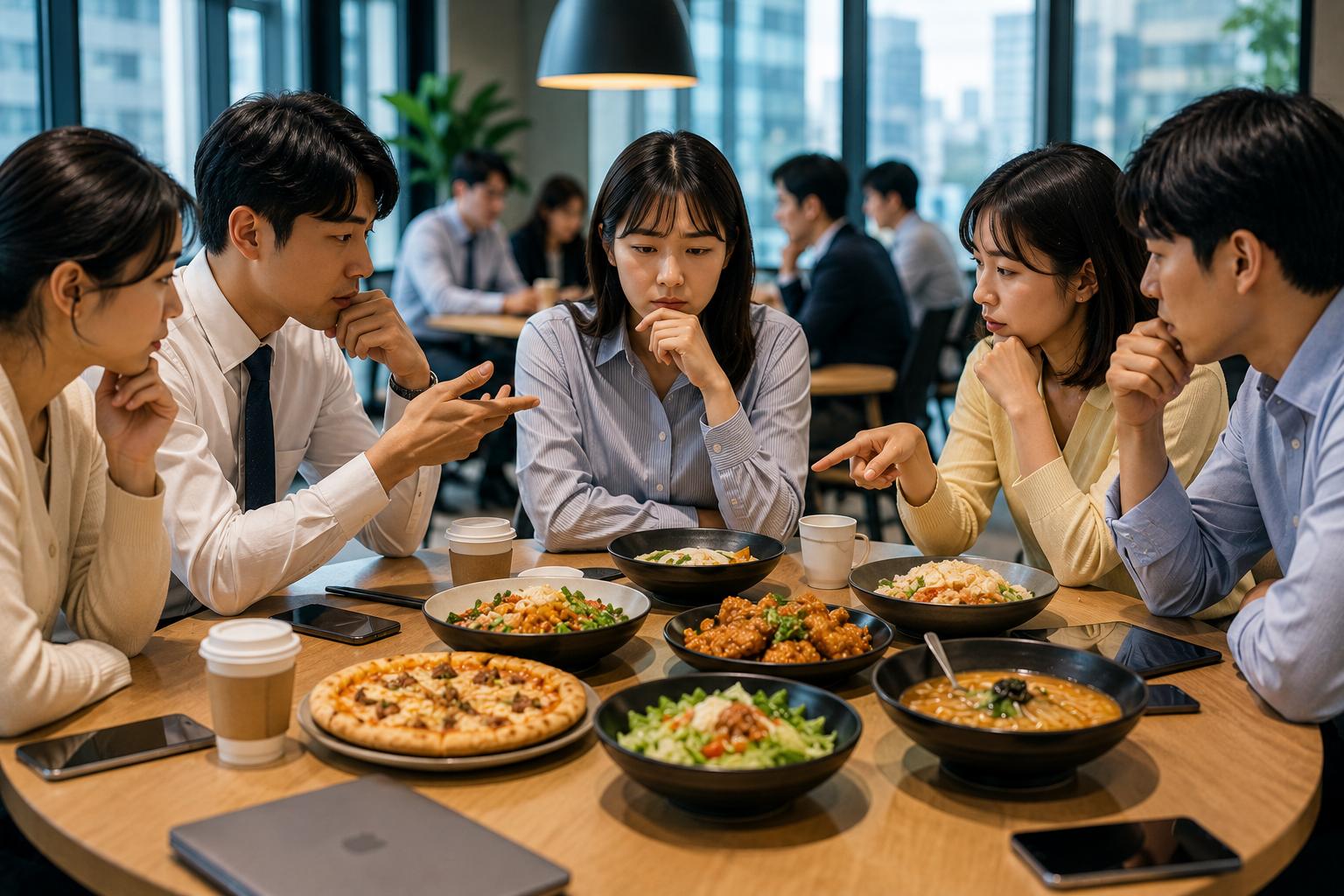
The daily question of "What should we have for lunch?" is more than a simple meal choice; it is a complex social interaction involving workplace hierarchy, relationships, and the conflict of personal preferences.
In This Article
Lunch: The Lightest Yet Heaviest Question
"What shall we have for lunch?" This short sentence carries the weight of many worries for office workers. The process of choosing a menu acts as a "litmus test" that reveals to what extent one can voice their opinion within an organization or how much one must harmonize with others.
The Political Dynamics of Menu Selection
Lunch is an extension of work. The subtle power dynamics involved in choosing a menu are as follows:
- The Boss's Decision-Making Power: A culture where the boss implicitly chooses the menu reflects the vertical structure of the organization. Proposing a menu can be seen as proactive, but sometimes it is viewed as disrupting the hierarchy.
- Compliance and Conformity: The process of matching the majority's opinion rather than one's own preference confirms the homogeneity of the organizational society. Behind saying "Anything is fine," there is a sense of "stability" gained by giving up one's preferences.
Why Is Choosing a Menu So Stressful?
Choosing a lunch menu is stressful because we think of lunch as "personal time," but in reality, it is consumed as a "public relationship."
Fragmentation of Taste: As a generation that values individual preference enters the workplace, uniform menu decisions become a seed of conflict. Furthermore, for modern people who are already exhausted by work, analyzing and coordinating lunch menus every day causes unnecessary cognitive overload.
The Rise of the 'Individual Lunch' Era
The trend of "eating alone" (honbap) among young office workers is an escape from this politics. Instead of paying the social cost of choosing a menu, they choose complete rest for themselves. Now, the worry of choosing a lunch menu has become a small ritual that examines the balance between "the self within the organization" and "the self as an individual."