


The Savory Depth of the Sea: Korean Galchi-sokjeot (갈치속젓)
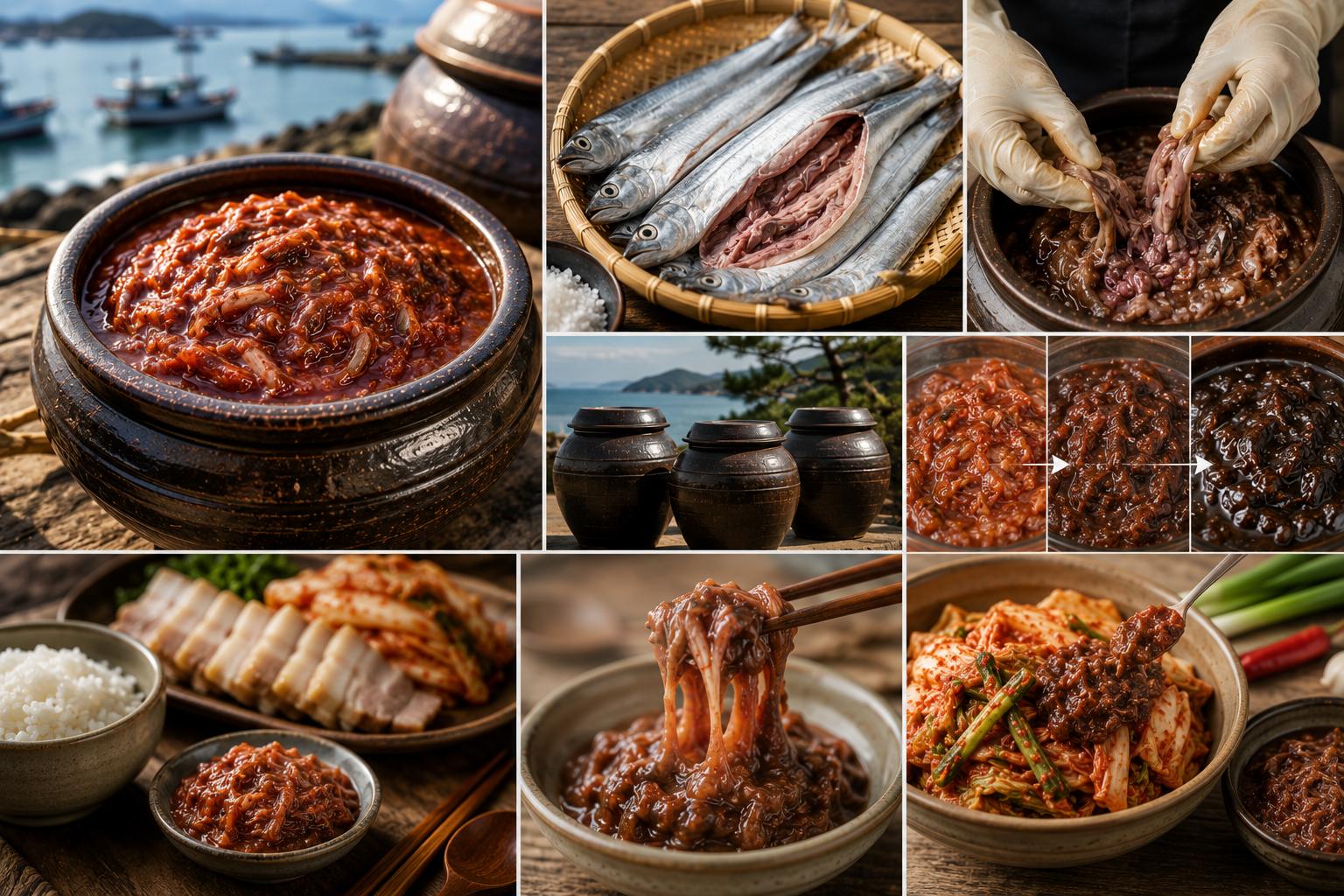
Galchi-sokjeot, a hidden contributor to the deep umami of the Korean table. We introduce the charm and value of this rich fermented food crafted from the internal organs of the hairtail fish.
In This Article
What Is Galchi-sokjeot?
In Korean food culture, Jeotgal (salted seafood) is more than just a side dish; it is an aesthetic of fermentation that maximizes the flavor of ingredients over time. Among these, 'Galchi-sokjeot' (salted hairtail guts), made from the internal organs of the hairtail fish, is a fermented food that has long been cherished, particularly in the southern coastal and Jeju regions for its deep, heavy umami.
Galchi-sokjeot is prepared by salting and fermenting the guts (insides) of the hairtail. Hairtail is a very familiar fish to Koreans, and the internal organs contain proteins, fats, and naturally occurring enzymes, which create a unique flavor during the fermentation process. Freshly made sokjeot has a reddish hue, which deepens into a dark reddish-brown over time, developing a more profound and complex taste.
Why Is It Special?
- Intense Umami: During the fermentation process, enzymes derived from the gut tissue and microorganisms break down proteins to produce amino acids and peptides. These components combine to complete the intense and deep umami characteristic of Galchi-sokjeot.
- The Wisdom of Natural Fermentation: Galchi-sokjeot is aged for a long time with sun-dried salt. During this process, naturally existing microorganisms participate in the fermentation, forming a uniquely Korean "taste of the sea" that is difficult to replicate with any other sauce.
Its Role on the Table
Galchi-sokjeot is an excellent side dish on its own, but it also excels as a supporting ingredient that maximizes the flavor of other dishes.
- Perfect Harmony with Meat: When served with grilled pork belly (samgyeopsal) or boiled pork slices (suyuk), it balances the oily taste of the meat and adds a rich umami kick.
- Regional Usage: In some kimchi recipes from Jeju Island and the southern coastal regions, it is used as a vital seasoning ingredient to add depth to the flavor.
The Wisdom of Coastal Communities
Galchi-sokjeot is a food infused with the wisdom of fishermen who caught hairtail in rough seas and utilized the ingredients as a valuable source of nutrition without wasting anything. It well reflects the philosophy of Korean coastal communities, which respected every part of the ingredients, lived in harmony with nature, and crafted flavors accordingly.