


Why Korea’s Fermented Rice Cake Is Unlike Any Other Tteok
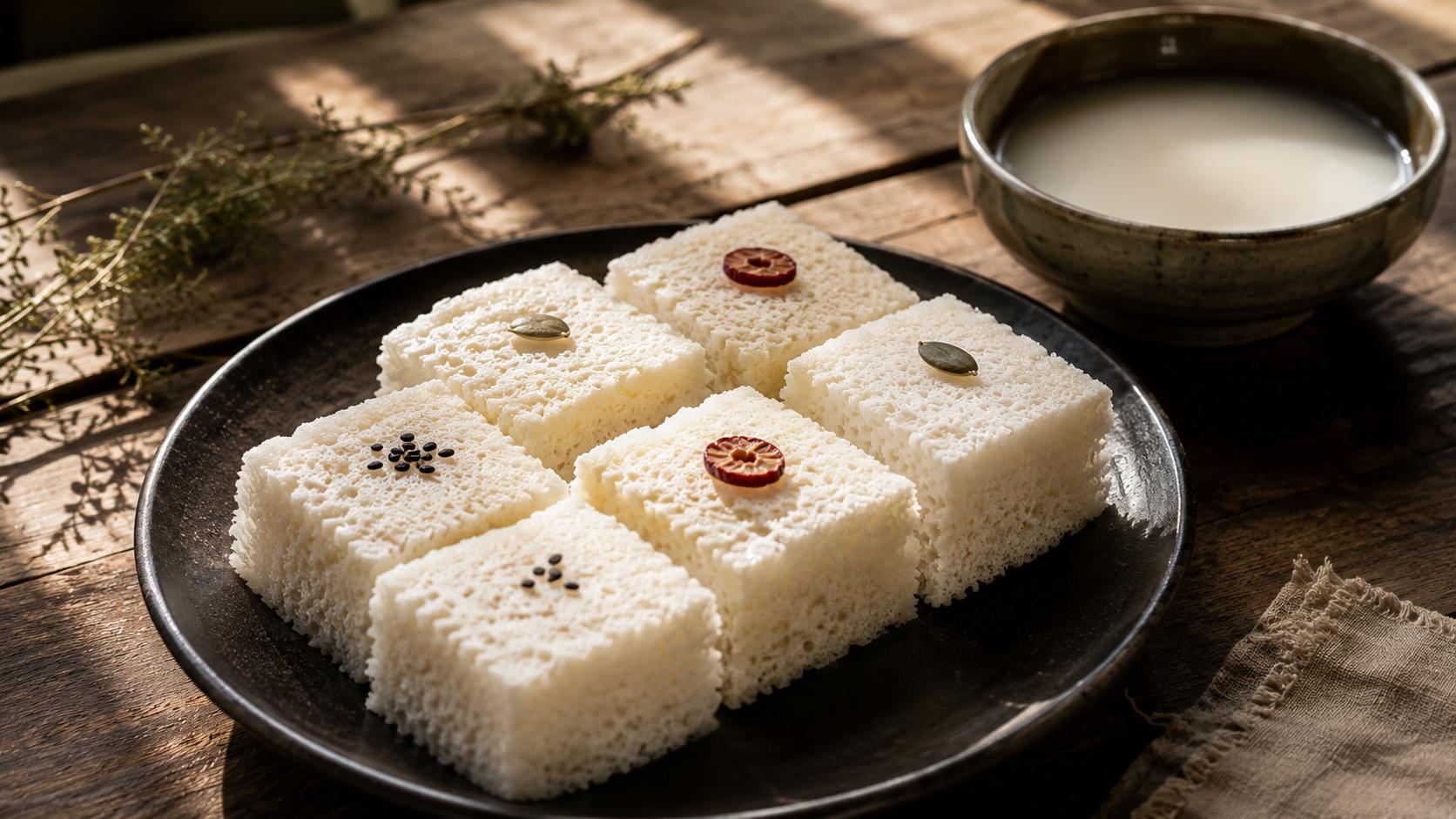
This fluffy Korean rice cake is made with fermented makgeolli and rises naturally, creating a texture unlike any other tteok.
In This Article
Why Korea's Fermented Rice Cake Is Unlike Any Other Tteok
Most Korean rice cakes are known for their dense, chewy texture. Sultteok is different.
Soft, airy, and filled with tiny holes, this traditional rice cake surprises many first-time visitors. Rather than being pounded into shape, it rises naturally through fermentation, giving it a texture that feels somewhere between a rice cake and a steamed bread.
Known by names such as sultteok, jeungpyeon, and gijeongtteok, it has been enjoyed in Korea for centuries. Yet despite Korea's growing global food popularity, this fermented rice cake remains relatively unknown outside the country.
For travelers interested in Korean fermentation beyond kimchi and makgeolli, sultteok offers a fascinating glimpse into another side of Korea's culinary tradition.
A Rice Cake That Rises Naturally
What makes sultteok unique is its preparation process.
Rice flour is mixed with makgeolli and left to ferment for several hours. During this time, naturally occurring yeast creates gas bubbles inside the batter, causing it to rise.
Once steamed, the result is a remarkably light rice cake filled with tiny air pockets. Its appearance is instantly recognizable, with a sponge-like interior that differs from the smooth, dense texture found in many other types of tteok.
The finished cake carries a subtle sweetness and a gentle fermented aroma, making it both delicate and surprisingly complex.
The Role of Makgeolli in Korean Fermentation
The word "sul" means alcohol in Korean, which is where sultteok gets its name.
The alcohol itself is not the point. Rather, makgeolli acts as a natural fermentation starter, helping the batter develop its characteristic texture and flavor.
Although most of the alcohol disappears during the steaming process, the fermentation leaves behind subtle notes that distinguish sultteok from ordinary rice cakes.
This connection to makgeolli also places sultteok within Korea's broader fermentation culture, which includes foods such as kimchi, doenjang, ganjang, and gochujang.
In many ways, it demonstrates how deeply fermentation has influenced Korean cuisine beyond the foods most international visitors already know.
One of Korea's Most Underrated Traditional Foods
While songpyeon often appears during Chuseok and injeolmi has become popular through Korean cafes and dessert shops, sultteok remains a quieter part of Korea's food culture.
Historically, it was especially popular during warmer months because the fermentation process helped create a softer texture that stayed enjoyable even after cooling.
Today, it can still be found in traditional markets and specialty rice cake shops throughout Korea, often topped with ingredients such as red dates, pumpkin seeds, sesame seeds, or pine nuts.
For international visitors searching for something beyond the usual Korean food checklist, sultteok offers a unique experience: a rice cake shaped not by pounding or molding, but by the invisible power of fermentation.
Long before sourdough became a global trend, Korea had already created its own naturally fermented rice cake—and it remains one of the country's most underrated traditional foods.