


The Chewy Delight of Nakjijeot(낙지젓): A Texture-Rich Korean Fermented Seafood
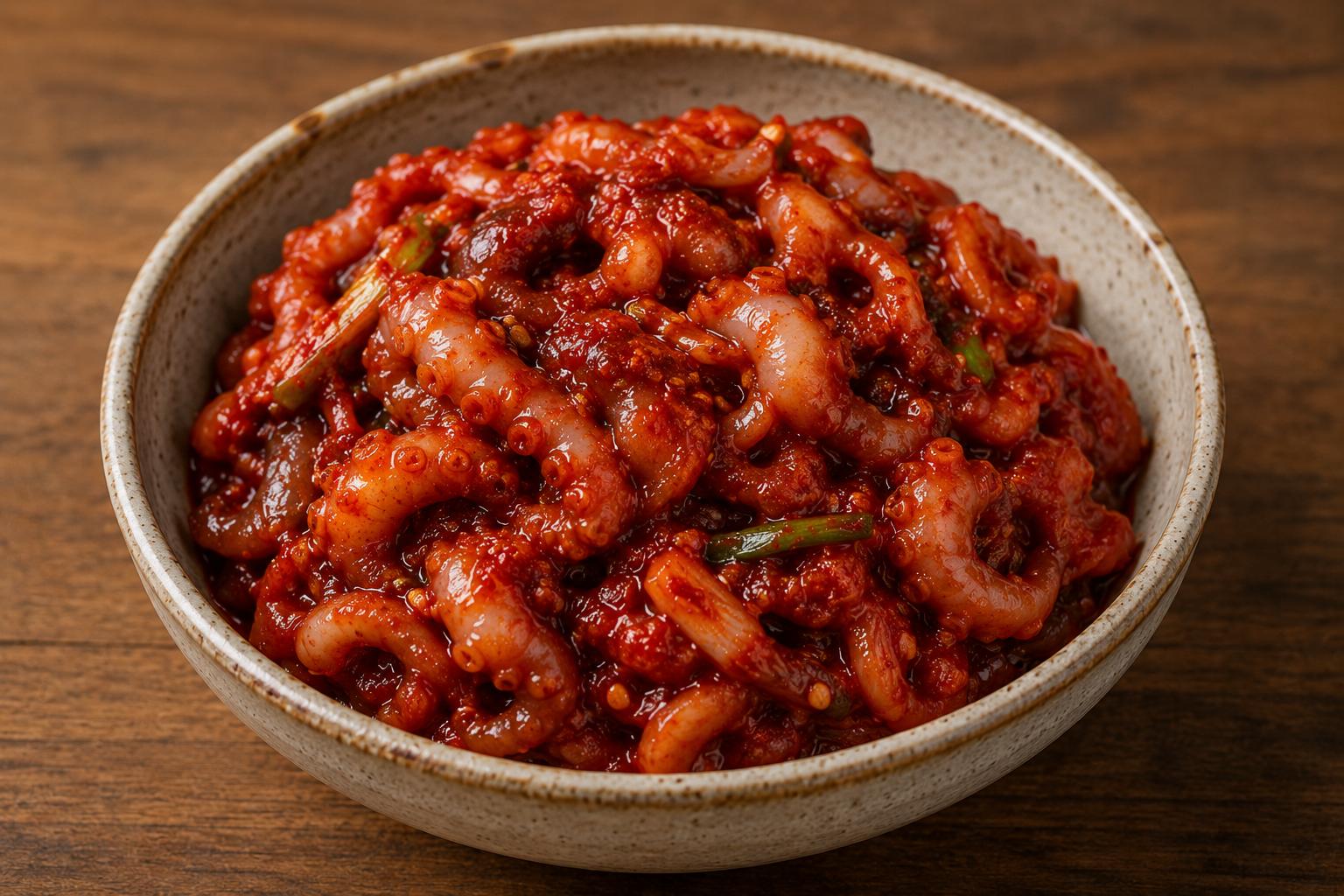
Nakjijeot, the ultimate "rice thief" that defines the Korean dining table. We introduce the charm of this fermented food, which combines a unique chewy texture with a spicy, savory flavor.
What Is Nakjijeot?
In Korean food culture, Jeotgal (salted seafood) is a product of wisdom that preserves natural ingredients and maximizes their flavor. Among these, Nakjijeot (salted octopus) is one of the most beloved varieties, cherished by Koreans for its signature chewy texture and the deep umami that is released with every bite.
Nakjijeot is prepared by slicing octopus bodies and legs, salting them, and then marinating them in a seasoned mixture of chili powder, garlic, and green onions before aging. The octopus retains its elastic texture even through the fermentation process, while the seasoning creates a deep, rich flavor profile.
Why Is It Special?
- Unrivaled Texture: Unlike other types of Jeotgal that are often soft or creamy, Nakjijeot maintains the distinct, chewy elasticity of the octopus. It is the essence of a "texture-driven" salted seafood that provides unique enjoyment when eaten with rice.
- Harmonious Flavor: The mild, clean taste of the octopus combines with the spicy kick of the seasoning and the savory, deep, rich flavor characteristic of salted seafood, making it an excellent rice companion that stimulates the appetite.
Culinary Uses
- Classic Side Dish: It is perfect when served simply on top of warm white rice. It pairs exceptionally well with scorched rice (nurungji) or sungnyung (rice water), where the spiciness of the Nakjijeot creates a beautiful harmony with the nutty, toasted flavors.
- Culinary Accent: It serves as a fantastic flavor point in modern cuisine, such as being used as a filling for gimbap or as a topping for bibimbap.
A Legacy of Fermented Seafood
Nakjijeot is a traditional Korean fermented food that evolved as a way to preserve and utilize fresh octopus for a longer period. Loved for its unique chewy texture and rich umami, it remains an essential part of Korea's fermented seafood culture today.