


The Science Behind Eoriguljeot(어리굴젓): A Korean Fermented Oyster Delicacy
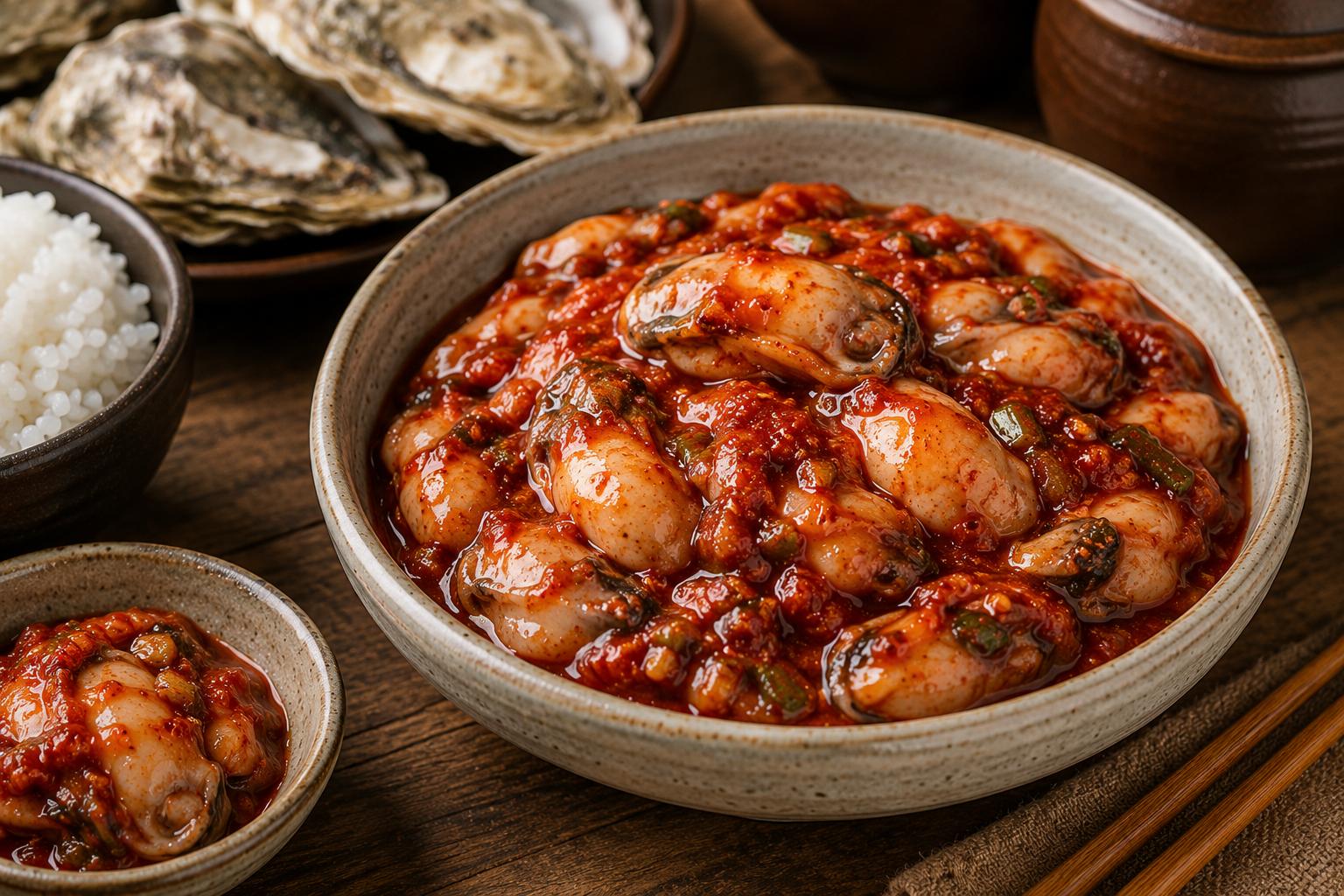
The briny depth of the sea, perfected through rapid fermentation: Introducing 'Eoriguljeot'. We explore the unique aging process where the freshness of oysters meets the wisdom of Korean fermentation.
In This Article
The Aesthetics of Aging: Short and Intense Fermentation
In the landscape of Korean fermented food culture, Eoriguljeot occupies a very special place. Unlike many other types of jeotgal (salted seafood) that require long-term aging, Eoriguljeot is characterized by its relatively short fermentation process, which preserves the delicate nature of the oyster.
To make Eoriguljeot, oysters are salted and then mixed with chili powder and other seasonings. While most jeotgal relies on extended periods of protein breakdown, this method aims to extract deep umami within a relatively quick timeframe. The chili powder and salt enhance the oyster's flavor while influencing the microbial ecosystem during the aging process to create a complex taste profile.
The Science of Texture and Flavor
Oysters have a high water content and soft tissue, making them prone to losing their shape during fermentation. Maintaining the correct salinity is key; it slows down the excessive breakdown of the oyster tissue, helping to preserve its signature soft yet elastic texture.
Furthermore, through the interaction between the oyster's internal proteolytic enzymes and the fermentation process, the dish achieves a deep, rich flavor in a relatively short period after preparation.
Role at the Dining Table
- The Ultimate Rice Companion: The true value of Eoriguljeot is best experienced when placed atop a bowl of freshly steamed hot white rice.
- Traditional Taste: Developed primarily in the western coastal regions, this dish continues to be cherished today as an important cultural heritage representing the fermented food traditions of Korea's coastal areas.
A Legacy of Fermented Seafood
Eoriguljeot is a traditional Korean fermented food that evolved as a way to preserve and utilize fresh oysters. The fermentation process serves as more than just a means of food storage; it transforms flavors, generates various metabolic byproducts, and embodies the unique culinary wisdom of the Korean people.