


Beyond Kimchi: Korea's Most Challenging Fermented Foods
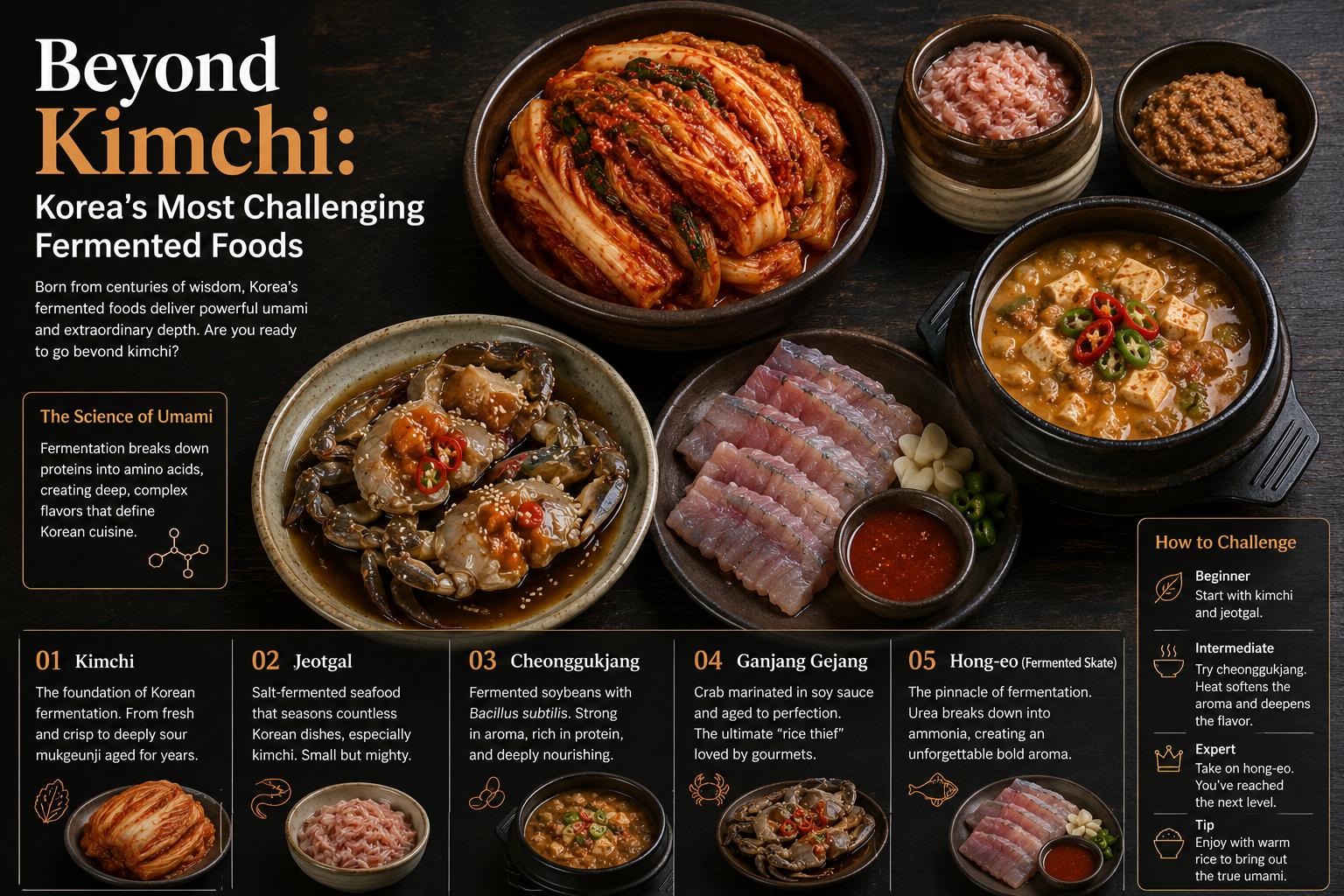
Korean fermentation is not just for taste; it is a product of centuries-old wisdom developed to preserve the bounty of the four seasons. Beyond Kimchi, we introduce the intense and unique fermented and matured foods that form the core of Korean "Umami."
In This Article
The Art of Fermentation
In Korean food culture, fermentation is more than a means of preservation; it is a "carefully controlled fermentation process" that utilizes healthy microorganisms to maximize the nutrition and flavor of ingredients. This technology was developed to store seasonal harvests for long periods during times without refrigeration.
A World of Intense Fermentation
- Kimchi: The cornerstone of Korean fermentation. Kimchi, made by fermenting vegetables with salted seafood and seasonings, offers a diverse range of flavors from fresh to "mukeunji," which is matured for 6 months to several years.
- Jeotgal: Fermented seafood salted and aged. While it is an excellent side dish on its own, it serves as a key seasoning that defines the taste of many traditional Kimchi recipes.
- Cheonggukjang: A dish fermented by Bacillus subtilis using soybeans as the main ingredient. It is characterized by its intense, rich aroma and is a nutrient-dense food rich in protein. The scent may feel quite strong to those trying it for the first time.
- Soy Sauce Marinated Crab: Technically a "marinated and matured" food rather than purely fermented. Fresh crabs are soaked in soy sauce to extract the deep flavor and umami of the roe. It is widely regarded as the ultimate "rice thief" by Korean gourmets.
- Fermented Skate: The pinnacle of fermented cuisine. It contains urea in its body, which breaks down into ammonia during the maturation process, creating an intense, pungent aroma that cannot be imitated.
Cultural Insight: The Science of Umami
These foods can be a "challenging" experience for foreigners due to the unique amino acid decomposition processes involved. However, once accustomed to this intense Umami, one begins to understand the deep, addictive flavor profile unique to Korean cuisine.
Foods like 'Eoriguljeot' (spiced salted oysters) reinterpret ingredients in a way distinct from European food culture, offering surprises to gourmets. Korean fermented food is more than just sustenance; it is the DNA of Korean gastronomy, imbued with the wisdom of ancestors.