


The Psychology of 'Jjik-meok' vs. 'Bu-meok': Crispiness or Flavor Harmony?
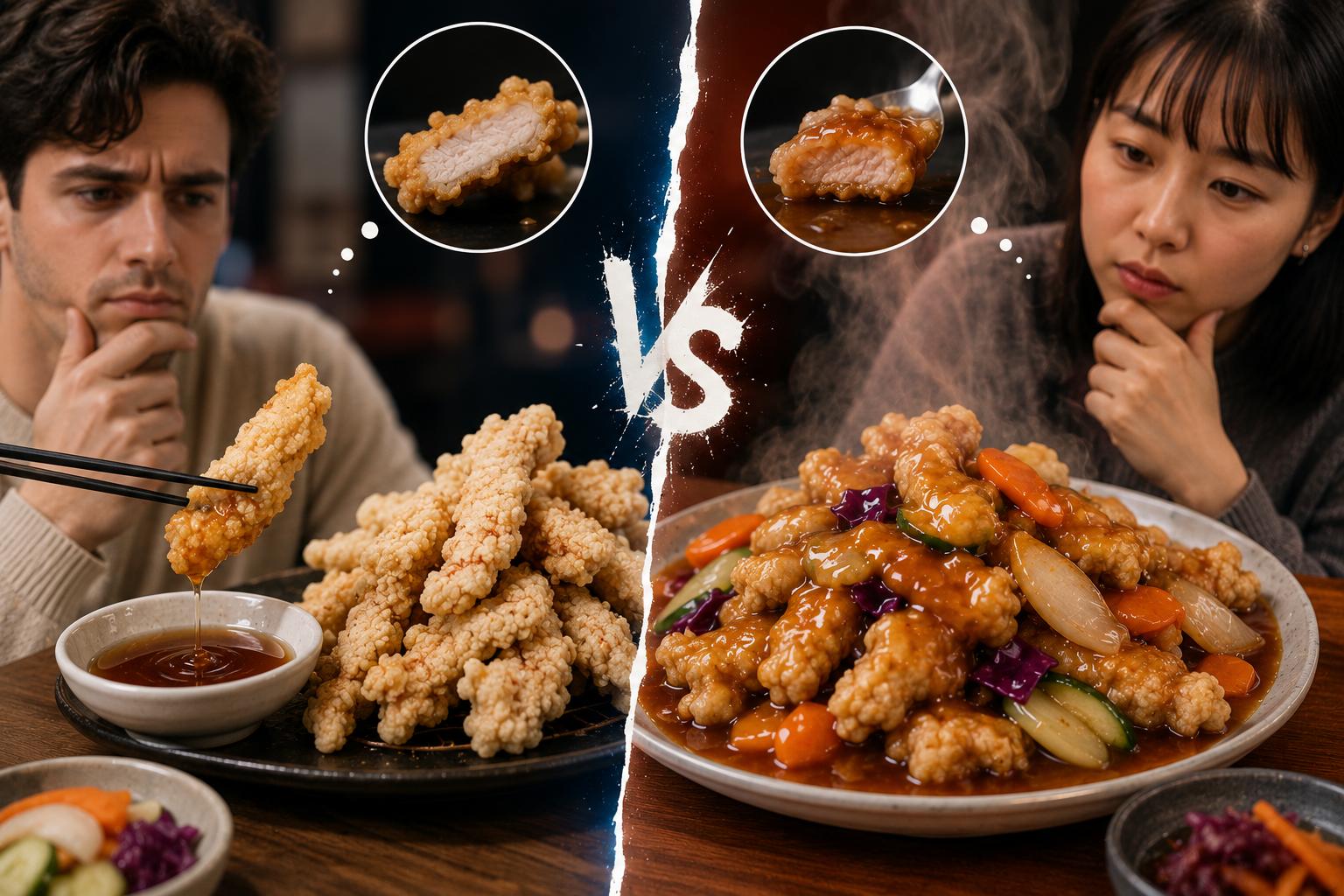
The debate over "Jjim-meok" (dipping) and "Bu-meok" (pouring) for Korean sweet and sour pork, Tangsuyuk, is a fascinating social phenomenon that reflects personality traits, psychology, and philosophies on food.
In This Article
"Jjim-meok" vs. "Bu-meok": The Endless War
In Korean Chinese restaurants, every time Tangsuyuk (sweet and sour pork) is served, a heated debate arises: how should the sauce be applied to the meat?
- Jjim-meok (Dipping): Those who prioritize the "crispiness" of the fried batter above all else. They tend to have an aesthetic approach, wanting to maintain the original texture until the very last piece.
- Bu-meok (Pouring): Those who pursue a "harmonious flavor" where the sauce seeps deep into the batter, becoming one with the meat. They are perfectionists who believe the dish is only complete the moment the sauce is poured.
The Psychology Behind the Debate
This lighthearted debate provides several psychological clues about individual differences.
Need for Control and Avoidance of Uncertainty: The "Jjim-meok" preference often reflects a desire to control the pace of eating and the amount of sauce applied. Conversely, "Bu-meok" can symbolize the flexibility to accept the flow of the situation—the natural fusion of sauce and batter—and enjoy the transformation of flavor.
Perfectionism vs. Spontaneity: Analysis suggests that those who prefer dipping may exhibit perfectionist tendencies, wanting their food to remain exactly as planned, while those who prefer pouring tend to value overall harmony and efficiency.
Food as a Tool for Conversation
In truth, the real value of the "Jjim-meok vs. Bu-meok" debate does not lie in finding the "correct" answer.
Social Ice-Breaking: This debate is the ultimate "ice-breaker" in Korean society—harmless yet passionate. The process of confirming and reconciling different eating habits serves as a social function to ease tension during meals and build bonds.
Learning Mutual Respect: Recently, as the debate has occasionally become too intense, serving the sauce separately has become the "basic etiquette" in many places. This can be seen as a mature process of culinary consensus, acknowledging and accepting that others have different tastes.
Conclusion: What is the Perfect Tangsuyuk?
Psychologically speaking, the happiest meal is not one where you win the argument, but one where you consider your companion's preferences. Whether it is pouring only half the sauce or respecting the opinions of those who prefer to dip, Tangsuyuk is a dish ultimately completed by the "Jeong" (affection) of the people sharing the experience.