


The Soul of Korean Fermentation: Understanding Nuruk
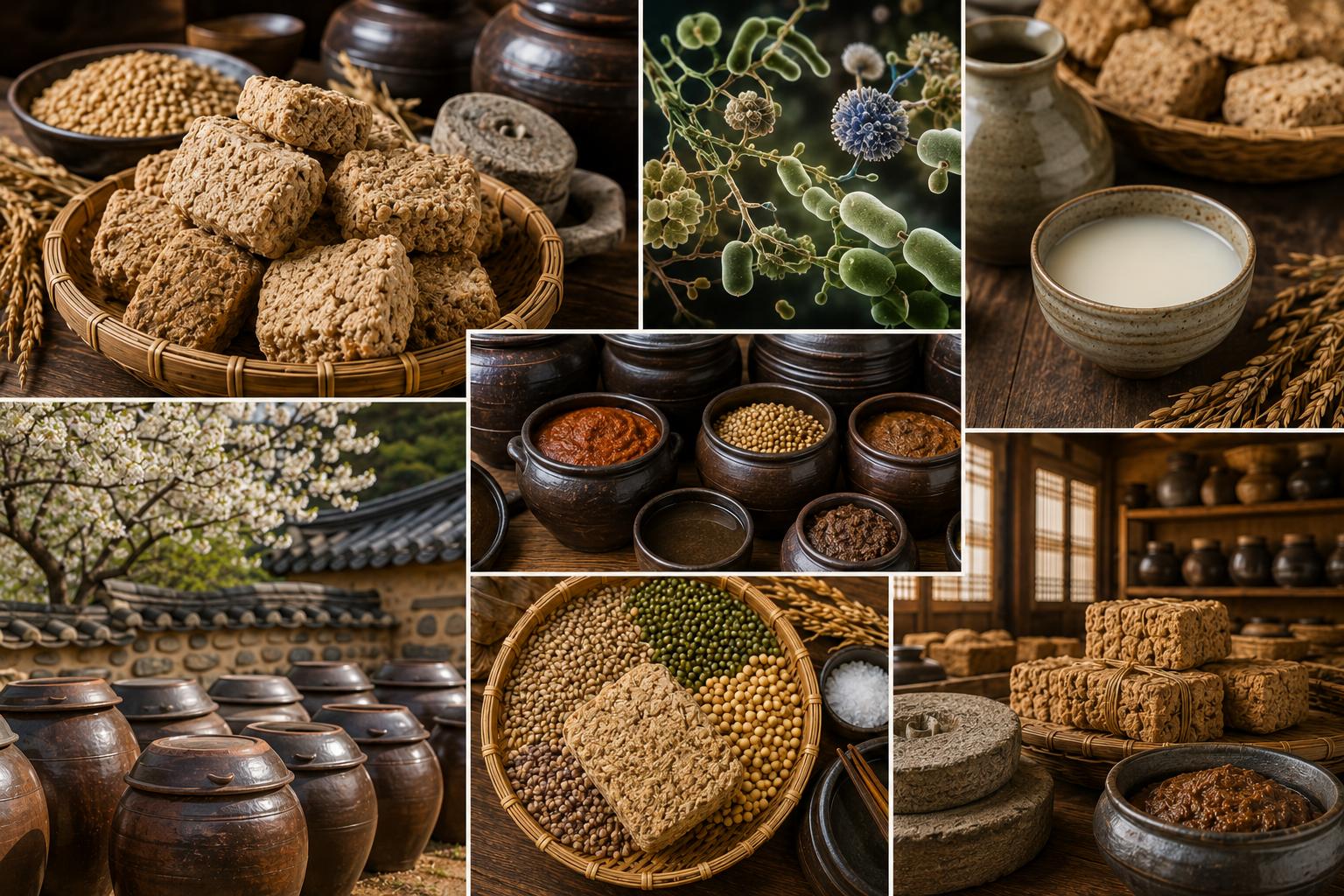
Where does the deep, complex flavor of Korean fermented food come from? We uncover the secrets of "Nuruk," the natural fermentation agent that makes traditional Korean spirits and pastes possible.
In This Article
What Is Nuruk?
Korean cuisine is often called "the art of time." At its core lies "Nuruk," a natural fermentation agent that utilizes the power of microorganisms to craft flavors. More than just an ingredient, Nuruk is essential to Korean fermentation culture, providing unique characteristics to the nation's traditional alcohols and foods.
Nuruk is created by coarsely grinding grains such as wheat, barley, or mung beans, forming them into cakes, and allowing natural microorganisms to cultivate. Unlike Japan's Koji, which primarily uses selected single strains (mainly Aspergillus oryzae), traditional Nuruk is a complex microbial community where molds, yeasts, and bacteria coexist. This natural diversity is what forms the rich and complex flavors unique to Korean fermented foods.
Why Is It the Core of Korean Fermentation?
- A Concerto of Microorganisms: The microbial community within Nuruk produces complex enzymes that break down the starches in grains into sugars, which are then converted into alcohol or organic acids. The numerous aroma compounds generated during this process combine to complete the rich umami and fragrance of Korean fermented foods.
- A Record of Region and Time: Nuruk captures the temperature, humidity, and atmospheric microbial environment of the region where it is made. This makes it a "highly human and eco-friendly fermentation agent" that yields different flavors depending on the maker and the location, even when the same ingredients are used.
Nuruk vs. Meju: Different Paths of Fermentation
Korean fermented foods are broadly divided into alcoholic beverages and fermented pastes. Grain-based Nuruk is used for brewing, while "Meju," fermented soybean blocks, is used for making doenjang (soybean paste) and ganjang (soy sauce). Meju also relies on microorganisms formed during the fermentation process to break down soybean proteins into amino acids, creating the deep umami that serves as the essential base of Korean cooking.
A Modern Perspective: Living Traditions
As the microbial ecosystem of Nuruk is being scientifically unraveled today, it is gaining significant attention beyond traditional methods in the modern bio-industry. The wisdom of Nuruk, which maximizes fermentation according to the laws of nature, is re-establishing itself as a vital value for modern people seeking healthy and rich flavors.